Exact matches only
Search in title
Search in content
Search in comments
Search in excerpt
Search in posts
Search in pages
Search in groups
Search in users
Search in forums
Filter by Categories
Academic Practice
Academic Writing Month
AcWri
AcWriMo
Blogging and Social Media
Book Editing
Book Literature Review
Book Marketing and Impact
Book Planning
Book Proposals
Book Publishing
Book Writing
Books
Citations and Referencing
Collaboration
Community
Conference Paper Abstracts
Conference Paper Editing
Conference Paper Literature Review
Conference Paper Marketing and Impact
Conference Paper Planning
Conference Paper Presenting
Conference Paper Writing
Conference Papers
Digital Publishing
Experimental Digital Publishing
Grant Abstracts
Grant Completion Reporting
Grant Impact Statement
Grant Literature Review
Grant Methods Section
Grant Writing
Grants
Journal Article Abstracts
Journal Article Editing
Journal Article Literature Review
Journal Article Marketing and Impact
Journal Article Peer Review
Journal Article Planning
Journal Article Writing
Journal Articles
Networking
News
Open Access
Productivity
Reading and Note-Taking
Reseach Project Planning
Resources
Tools
Uncategorized
Website
Weekly Wisdom #77 by Paul Gray and David E. Drew

DEVELOP A POOL OF RESEARCH REFERENCES STORED IN YOUR COMPUTER. It is one of the most useful things you can do. You will use the same references over and over as you do research, as you write pa­pers, and as you teach. You will add to this list as you read new articles and books in the literature. We personally recommend the software called EndNote although other similar kinds of software are on the market. Software for references contains three useful features: It provides a standard form for entering references so that you remember to include all the necessary data. Separate forms are provided for each type of reference (books, articles, newspa­pers, Internet URLs, etc.). It automatically converts the format to the reference style of the journal to which you are submitting. Lots of different styles are available. Since you may be sending an article to several journals sequentially before it is accepted, this au­tomated feature saves you hours of drudge work in converting reference formats. It provides space for including abstracts and notes so that you can record what the reference was about for future retrieval.

Weekly Wisdom #68 by Paul Gray and David E. Drew

REUSE THE LITERATURE SEARCH FROM YOUR DISSERTATION. If you conducted a thorough literature search for your dissertation, you will never need to do one again as long as you write in the same area. If you write in an adjacent field or on an adjacent topic or want to include the latest reference, your cycle time for the literature search is much, much shorter. Remember too that your students or graduate assistants will perform some of the slogging that needs to be done.

Weekly Wisdom #67 by Paul Gray and David E. Drew

PROTECT YOUR INTELLECTUAL CAPITAL WHILE TRAVELING.  You can publish your research findings in a journal after you presented a paper about them at a conference.   Be careful, however, not to present creative initial speculations and hypotheses,  that you are not yet ready to publish. They can be stolen by unscrupulous members of your audience.

Adapting to Scientific Styles of Writing by Katherine Reekie

Katherine Reekie is PhD2Published’s new Science Correspondent and she has recently joined Twitter as @katreekie.

Anyone who has ever read a scientific research article will be familiar with the somewhat formal and impersonal writing style in which they tend to be written. Adapting to reading this kind of prose can be a challenge. The way they are written can be very different to the informal style which tends to be used for most other forms of modern communication, and it is this “scientific style” which is in part to blame for the reputation of scientific articles being complicated and hard to understand. But how about writing it? It is unlikely that most people will have been required to write in this style before they are an undergraduate student, and even then it may only be for a project report in the final year. There is often no formal training for this kind of writing, and the degree of assistance provided can vary greatly. I know from my own experiences of editing undergraduate reports that one of the things which can be difficult to get across is the need for a specific tone and format, which is often in complete contrast to anything the student has written before. Adapting to this way of writing can also be one of the hardest parts of writing a PhD thesis or journal article, as it is something that scientists often pick up as they go along, rather than being taught.

So can the “scientific style” really be defined? It must be emphasised that the way in which research is reported tends to be guided by convention rather than anything else. In general, the tone is impersonal and devoid of opinion, factual and often highly technical. Scientific reports are intended to be functional, and the way in which they are written is designed to emphasise the facts without distracting from them with the use of flowery language.

Read more

Weekly Wisdom #66 by Paul Gray and David E. Drew

BACK UP, BACK UP, BACK UP YOUR RESEARCH. Don’t be victimized by unexpected electronic failures that could destroy your files. Always back up important electronic files, including your raw data and draft text for your research. If you have questionnaires or computer output, keep the originals at least until the dissertation is handed in. After editing or modifying a draft chapter, resave it on removable media.  Print out a copy from time to time.  Back up text material frequently. Similarly, keep all valuable devices (including computers and removable media) that hold important, valuable information secure from theft.  Do not assume that theft won’t occur in the ivory tower or when you travel.

…and All the Academics Merely Players

In this post, regular contributor Claire Warden offers her top tips for giving excellent conference presentations. She is Lecturer in Drama at the University of Lincoln where she has been working since 2010. She blogs at www.clairewarden.net and tweets as @cs_warden.

Here in the University of Lincoln’s drama department we are approaching our first performance fortnight of the year: a chance for students to showcase their talents and explore new methods. Currently I spend Thursday mornings amid a sea of robots, fake blood and apocalyptic visions as we rehearse a version of Karel Čapek’s R.U.R. In recent days I have been thinking a little about the way we ‘perform’ as academics. Our performance ability is particularly tested at conferences and, in this my third short meditation for PhD2Published, I want to consider the way we perform at these events.

For as a postgraduate I remember being taught about archives and writing journal articles and the need to develop a workable bibliographic system, but I cannot recollect ever really learning about conference presentation. The assumption, I imagine, is that it must come naturally to anyone considering an academic career or passionate about their research. Anybody who has sat through long days of conference proceedings will know that this is far from the case and, though I do not claim any real expertise in this area (I am the presenter whose Powerpoint didn’t work at my first major international conference as well as the panel chair who introduced a colleague with the wrong university affiliation), I have been considering what help us ‘performing arts types’ could provide to colleagues in different departments. So, below are my top tips for excellent conference presentation and, for those of you balking already at the thought of a drama scholar at the helm, I can promise that there will be no exuberant jazz hands, no actorly hissy fits and I will not call you ‘darling’ at any stage…

Read more

Luc Reid – The Will to Write: Getting Past the 6 Most Common Obstacles

Luc Reid is an author and blogger specializing on  habits and motivation found in recent psychological and neurological research. Visit his website for more writing tips, or his Amazon page to see his work. You can also follow him on Twitter (@LucReid).

Having done the preparatory research or critical thinking for a paper, article, or book, it would seem as though the hard part should already be over. The rest is just putting things you already know or have available into words, something we all do regularly throughout the day. When we enter into the realm of writing, however, often new obstacles appear as though out of nowhere. By understanding these obstacles, we can gain a new ability to clear the path to successfully completing the work.

Below I’ll describe the six most common obstacles to successful writing along with tactics for getting past them.

Emotional conflicts

Why are you doing this project in the first place? Is it something for which you have enthusiasm on your own, or are you doing it because you feel you have to, because a colleague has railroaded you into it, or because you think it’s what someone in your position should be doing?

We all are sometimes faced with projects that we wouldn’t take on if it were entirely up to us, and typically it’s harder to find motivation to complete this kind of work. To improve focus, motivation, and enjoyment for these projects, it helps to list out our personal reasons for getting the project done, along with reasons for not doing it.

It’s important that the reasons we list are our own. For instance, if a senior colleague invites me to collaborate on a paper, my reasons for accepting might have little to do with my colleague’s reasons for inviting me, and could include “cultivate a professional relationship with my senior colleague” and “learn from collaborating with someone whose work I admire.” My reasons for being reluctant might include things like “Will delay work on my own project” or “Have differences of opinion with prospective co-author.”

Once reasons are listed out clearly, it’s easier to make a conscious choice to accept the drawbacks and to pursue the advantages—or to realize that the advantages don’t outweigh the drawbacks and so choose not to pursue the project at all.

Lack of belief

Whether for logical or emotional reasons, it can sometimes be difficult to believe on a gut level that a particular project is even possible. Belief can be undermined by past difficulties; by a long-term pattern of fearing failure; by hesitation about tasks that are new to us; by lack of support from family, friends, or colleagues; by organizational problems; or in other ways. If these concerns aren’t addressed, a continuing lack of belief that the project can be completed will sap enthusiasm and focus, sometimes to the extent that the project fails for that reason alone.

While the factors that can contribute to lack of belief are too numerous and substantial to address here, the essential task when belief is an obstacle is to recognize the reasons for lack of belief and to bolster belief by other means. Some ways of doing this include talking with supportive friends and colleagues, talking to someone who has completed the same kind of project in the past, putting in additional organizational effort, and visualizing a successful result.

Anxiety about the quality of the result

In the same way that it’s sometimes difficult to feel confident that a project can be completed, people are often impaired in their efforts by worries that the end result will reflect badly on them. Sometimes this can be a result of feelings of unworthiness, unfamiliarity with some of the subject matter or tasks, unsupportive comments from others, high stakes, and related pressures. As with lack of belief, it’s important to get clarity on the reasons for any concern about results and to marshal resources that increase confidence. It can also be helpful for this kind of concern to find a person or group who can review the work before it becomes widely available and can either allay concerns or offer constructive criticism.

Inability to focus

If you’re committed to the project and fairly confident that you can produce good results but still have trouble focusing when you sit down to write, your distractions may be internal, environmental, or both.

Internal distractions often include conflicting priorities or lack of a specific identified task to do next. It can help to set aside a specific block of time during which you have decided your writing project is the most important task. If concerns about other things that need to be done arise, a reminder to yourself that you’ve already considered doing other things and have chosen this as the most important task can sometimes help. If you find yourself stopped by not knowing exactly what to do next, shift into organizational mode: identify the tasks and sections involved in your project and put your efforts into ordering and clarifying them. While this kind of structure isn’t always needed, it’s very often much easier to work from an outline or task list than from a pile of notes.

To minimize environmental distractions, try to choose a place to work where you’re unlikely to be disturbed. A library or coffee shop may in some cases be a more productive choice than home or office, both because people are less likely to interrupt you and because you have fewer of your own distractions available.

In many cases it can be helpful to find a place to work where you don’t have ready access to the Internet, although admittedly this is becoming less and less possible over time.

Trouble finding the time to write

Writing is often not assertive in the way other tasks can be. Meetings and scheduled events have time frames during which they automatically occur. Preparation, for instance for a lecture or presentation, tends to have deadlines. By contrast, writing deadlines, when there are any, are often far enough in the future that the project can be delayed much longer than is reasonable or effective.

Finding the time to write, then, requires creating shorter-term deadlines or generating ongoing enthusiasm for the work. The latter approach is especially useful: by visualizing the benefits of completing the work or taking even a few minutes to dwell on the aspects of the project that are attractive to us, we can create situations in which it’s natural and pleasurable to work and make progress.  In terms of creating deadlines, it can help to enlist the assistance of someone who is willing to take a look at the work before it’s due for feedback. Another useful technique is to spend time at the very beginning defining tasks and milestones, with deadline dates for each milestone.

Lack of enthusiasm

Natural enthusiasm for a project is one of the strongest means of creating the will to write, so it’s unfortunate that this is often in short supply. Lack of enthusiasm for a project can point to emotional conflicts of the kind described earlier in this article or can simply be an unavoidable feature of work that’s necessary but not a particular favorite.

Some techniques for generating additional enthusiasm include

·         Visualizing positive results

·         Identifying a specific element of the project you’re looking forward to

·         Reflecting on the impact of doing the project well on your career as a whole

·         Reviewing the reasons you want to do the project in the first place

·         Talking with someone who shares some of your interests having to do with the project

·         Identifying changes or additions to the project that could make it more attractive

While there are any number of factors that can adversely affect willpower and drive, the underlying deception is that whatever mental state we’re in now is the real or permanent attitude we’ll have toward the goal we want to achieve. In truth, our mental state is subject to many influences that are under our own control, so that a state of confusion, pessimism, or dread can be replaced by one of  focus, anticipation, and satisfaction.

Michael C. Munger – 10 Tips on How to Write Less Badly
http://www.flickr.com/photos/smithsonian/2422570279/

http://www.flickr.com/photos/smithsonian/2422570279/
This post is by Michael C. Munger, chairman of political science at Duke University, a position he has held since 2000. 

Most academics, including administrators, spend much of our time writing. But we aren’t as good at it as we should be. I have never understood why our trade values, but rarely teaches, nonfiction writing.

In my nearly 30 years at universities, I have seen a lot of very talented people fail because they couldn’t, or didn’t, write. And some much less talented people (I see one in the mirror every morning) have done OK because they learned how to write.

It starts in graduate school. There is a real transformation, approaching an inversion, as people switch from taking courses to writing. Many of the graduate students who were stars in the classroom during the first two years—the people everyone admired and looked up to—suddenly aren’t so stellar anymore. And a few of the marginal students—the ones who didn’t care that much about pleasing the professors by reading every page of every assignment—are suddenly sending their own papers off to journals, getting published, and transforming themselves into professional scholars.

The difference is not complicated. It’s writing.

Rachel Toor and other writers on these pages have talked about how hard it is to write well, and of course that’s true. Fortunately, the standards of writing in most disciplines are so low that you don’t need to write well. What I have tried to produce below are 10 tips on scholarly nonfiction writing that might help people write less badly. Read more

Rochelle Melander’s Write-A-Thon Techniques Part IV

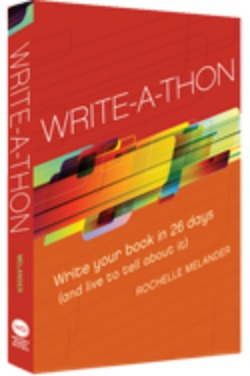
The following is an excerpt from Write-A-Thon: Write Your Book in 26 Days (And Live to Tell About It) by Rochelle Melander, now available from Writer’s Digest Books. Rochelle Melander is a certified professional coach and the author of 10 books, including a new book to help fiction and nonfiction writers write fast: Write-A-Thon: Write Your Book in 26 Days (And Live to Tell About It) (October 2011). Melander teaches professionals how to get published, establish credibility, and navigate the new world of social media. In 2006, Rochelle founded Dream Keepers Writing Group, a program that teaches writing to at-risk tweens and teens. Visit her online at www.writenowcoach.com.

Get Rewards

Before the reward there must be labor. You plant before you harvest.

—Ralph Ransom Read more

Matt Might – Writing Productivity Tips for Academics
http://www.flickr.com/photos/vblibrary/4384435939/

http://www.flickr.com/photos/vblibrary/4384435939/

Matt Might is a professor in the School of Computing at the University of Utah. He blogs at blog.might.net and tweets from @mattmight, here he rounds up some of his great advice on writing productivity for academics.

Academics must become productive, efficient writers.

Yet, many fledgling academics struggle to produce even a trickle of words (let alone the flood) that is required.

Fortunately, a few small tricks generate an outsized impact on the output of technical words per minute.

[These tips are an amalgam of my posts on crippling technology to boost productivity and general academic productivity hacks.]

Find your place

Measure your words per hour in your usual spots. Where do you write best? Is it at home? The office? The back yard? The coffee shop? The park? The library?

Once you’ve found the best place for you, make it better:

  1. Move your books to your place. This is a forcing function. You’ll go to your place more often because that’s where your references are.
  2. Get an ergonomic chair. Nothing beats the Aeron chair.
  3. Get a high-quality ergonomic keyboard. If you’re going to write a lot in a short amount of time, protect your wrists. I highly recommend the Kinesis Advantage. Read more

AcBoWriMo Motivational Speech!

How’s AcBoWriMo going? Written an insane amount yet? No? Not good enough people so I’m dishing up some tough love…

When I was about eighteen months away from finishing my PhD I had a phone call I will never forget. It broke the news to me that my oldest friend had died in a car accident with her boyfriend.

A couple of months later, as all writing productivity had ground to a halt, I tried to think of a way to motivate myself. Family and friends did an amazing job of keeping me going through this intensely difficult time, but the drive to succeed in my PhD – in anything – was definitely gone. Read more

Rochelle Melander’s Write-A-Thon Techniques Part III

The following is an excerpt from Write-A-Thon: Write Your Book in 26 Days (And Live to Tell About It) by Rochelle Melander, now available from Writer’s Digest Books. Rochelle Melander is a certified professional coach and the author of 10 books, including a new book to help fiction and nonfiction writers write fast: Write-A-Thon: Write Your Book in 26 Days (And Live to Tell About It) (October 2011). Melander teaches professionals how to get published, establish credibility, and navigate the new world of social media. In 2006, Rochelle founded Dream Keepers Writing Group, a program that teaches writing to at-risk tweens and teens. Visit her online at www.writenowcoach.com.

Get a Cheering Section

We can’t all be heroes because someone has to sit on the curb and clap as they go by.

—Will Rogers

We write more when we connect with others who are writing productively. As I mentioned in an earlier chapter, a recent study on friendship and obesity suggested that having just one overweight friend increases our chances of being overweight. Other recent studies suggest that happiness is also contagious. It just makes sense that having one friend who writes like mad increases our chances of doing the same. The success of NaNoWriMo suggests that writers get more done when they’re connecting with other writers. Other writers offer valuable support. Or, you are who you connect with. Read more

Rebekah Sheldon – Writing Game for AcBoWriMo
http://www.flickr.com/photos/br1dotcom/6319224845/

http://www.flickr.com/photos/br1dotcom/6319224845/

This post comes from Rebekah Sheldon who earned her Ph.D. in English from the CUNY Graduate Center, where she did work on contemporary American catastrophe discourse. She is presently the Provost Postdoctoral Fellow at the Center for 21st Century Studies at the University of Wisconsin-Milwaukee.

My husband lives a few hours south of me, in an eastern time-zone. So it was 7 am my time when he called to ask me to write two sentences on the political theorist Giorgio Agamben’s concept of bare life for a paper he’s writing. Now, two weeks ago, in the lead-up to a presentation on biopolitics and maternity, this same task took me several whole-day stretches before I gave up in disgust. This morning, however, out of the blue and with nothing at stake, I wrote two hundred words in less than half an hour.

They were not my most perfect sentences, but I got to the crux of the issue faster and more lucidly than I had in a week of working. In looking it over, I realized that I had just found my first AcBoWriMo strategy: the feint. Here’s what I propose as a way to trick myself into putting on paper what I know that I know:

On a bunch of paper scraps, write down writing tasks — anything from footnotes and edits to descriptions, analysis, and conclusions. Make them as specific or as general as your own needs and the needs of your audience. Mix them up in a basket or bag, and make sure to include a few rewards as well. Whenever you find yourself tempted to flip over to Facebook, or shifting the words around in the same few sentences, reach instead for the writing task bag. The important part is to do the task, whatever it is, as soon as you get it.

Or you can try Dacia Mitchell’s writing game instead, anything to keep those ideas flowing…

Nina Amir – How to Complete a Nonfiction Project in 30 Days

This post is by Nina Amir, Your Inspiration-to-Creation Coach, who inspires writers to create the results they desire—publishable and published products and careers as writers and authors.  She inspires writers to combine their purpose and their passion so they Achieve More Inspired Results. The author of the forthcoming book, How to Blog a Book: How to Write, Publish and Promote Your Work One Post at a Time (Writer’s Digest Books, April 2012) and the author of the popular workbook How to Evaluate Your Book For Success, Amir is a seasoned journalist, nonfiction editor, consultant, and writing, book, blogging, and author coach with more than 33 years of experience in the publishing field. She writes four blogs, including Write Nonfiction NOW! and How to Blog a Book, and two national columns at Examiner.com and serves as the weekly writing and publishing expert on Michael Ray Dresser’s popular radio show, Dresser After Dark (www.DresserAfterDark.com). For more information: www.ninaamir.com or www.copywrightcommunications.com.

November can constitute a busy month. It includes the end of Daylight Savings Time, Veterans Day and Thanksgiving as well as the beginning of the holiday shopping period. Writers could complain that there’s no time for writing. Read more

Rochelle Melander’s Write-A-Thon Techniques Part II

The following is an excerpt from Write-A-Thon: Write Your Book in 26 Days (And Live to Tell About It) by Rochelle Melander, now available from Writer’s Digest Books. Rochelle Melander is a certified professional coach and the author of 10 books, including a new book to help fiction and nonfiction writers write fast: Write-A-Thon: Write Your Book in 26 Days (And Live to Tell About It) (October 2011). Melander teaches professionals how to get published, establish credibility, and navigate the new world of social media. In 2006, Rochelle founded Dream Keepers Writing Group, a program that teaches writing to at-risk tweens and teens. Visit her online at www.writenowcoach.com.

Create Your Research and Development Team

Half of being smart is knowing what you’re dumb at.

—David Gerrold

“You can’t research and write a nonfiction book in a month! There’s not enough time!” said my client. Read more