Exact matches only
Search in title
Search in content
Search in comments
Search in excerpt
Search in posts
Search in pages
Search in groups
Search in users
Search in forums
Filter by Categories
Academic Practice
Academic Writing Month
AcWri
AcWriMo
Blogging and Social Media
Book Editing
Book Literature Review
Book Marketing and Impact
Book Planning
Book Proposals
Book Publishing
Book Writing
Books
Citations and Referencing
Collaboration
Community
Conference Paper Abstracts
Conference Paper Editing
Conference Paper Literature Review
Conference Paper Marketing and Impact
Conference Paper Planning
Conference Paper Presenting
Conference Paper Writing
Conference Papers
Digital Publishing
Experimental Digital Publishing
Grant Abstracts
Grant Completion Reporting
Grant Impact Statement
Grant Literature Review
Grant Methods Section
Grant Writing
Grants
Journal Article Abstracts
Journal Article Editing
Journal Article Literature Review
Journal Article Marketing and Impact
Journal Article Peer Review
Journal Article Planning
Journal Article Writing
Journal Articles
Networking
News
Open Access
Productivity
Reading and Note-Taking
Reseach Project Planning
Resources
Tools
Uncategorized
Website
Rochelle Melander’s Write-A-Thon Techniques Part I

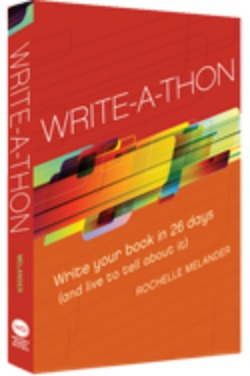
The following is an excerpt from Write-A-Thon: Write Your Book in 26 Days (And Live to Tell About It) by Rochelle Melander, now available from Writer’s Digest Books. Rochelle Melander is a certified professional coach and the author of 10 books, including a new book to help fiction and nonfiction writers write fast: Write-A-Thon: Write Your Book in 26 Days (And Live to Tell About It) (October 2011). Melander teaches professionals how to get published, establish credibility, and navigate the new world of social media. In 2006, Rochelle founded Dream Keepers Writing Group, a program that teaches writing to at-risk tweens and teens. Visit her online at www.writenowcoach.com.

Discover Writing Strengths

Every writer has strengths and weaknesses in the process of converting the ideas into words on a page. Some writers excel at research, others love doing the rough draft, and some revel in the rewrite. Even professionals struggle with stages of the writing process. For the purposes of the twenty-six day writing marathon, we are looking at strengths and weaknesses in the five stages of the writing process: research, prewriting, writing the rough draft, revising, and proofreading. Note that most writers do not move through the following five steps in order. Most writers repeat the steps during the writing process, sometimes multiple times. Read more

NaNoWriMo as AcBoWriMo Beta!
http://www.flickr.com/photos/wheatfields/3937933747/

http://www.flickr.com/photos/wheatfields/3937933747/

NaNoWriMo stands for National Novel Writing Month and it’s an initiative designed to turn the month of November into a month-long write-fest for current or would-be novelists. The idea is that you set yourself the task of writing 50 thousand words in November and bingo, you’ve got yourself a novel – or at least a first draft of a novel.

I did the bulk of my thesis writing in a fairly short amount of time. Not a month, I hasten to add, but I did embark on some intensive writing (as well as intensive Nutella-eating). Currently, I’m doing a Post-Doc in the US and part of why I’m here is so I can finish my first book. So after hearing about NaNoWriMo a colleague and I started wondering whether AcBoWriMo might be possible.

That’s right, we are here-by declaring November the first Academic Book Writing Month or AcBoWriMo Beta/0.1 or something. We are going to wear comfy clothes, drink a lot of coffee, probably nap in our offices at strange hours and see how close we can get to writing 50 thousand words in one month. I know, it’s totally insane, there can surely only be a handful of academics who can actually turn out decent material in such a short space of time. There are also a lot of differences between writing novels and academic books, but aren’t you just a little bit curious to know how much of a kick-start a dedicated writing month could give your book? Read more

Liz Gloyn – Turning a Chapter of Your Thesis into a Talk

This week’s guest post comes from Liz Gloyn, who has just completed her PhD in classics at Rutgers, the State University of New Jersey. She blogs on her research, teaching and classical receptions in popular culture. You can follow her on Twitter here. In this post, Liz talks about turning a section of your Ph.D. into a talk.

At some stage in your academic career, you are likely to need to turn a thesis chapter into a talk. You may be speaking at an academic conference in order to put your research into a wider public arena, or you may have been asked to prepare a presentation on your dissertation for a job interview. Putting aside the general issues of constructing an oral presentation, like keeping to the time limit, changing a chapter into a talk poses a number of special challenges. PhD2Published normally talks about how to take things the other way, how to get research into a publishable form from a conference paper, but there are a number of reasons you might decide to road-test an idea from your thesis in a public forum before preparing it for publication. You might want to check out how a particular argument fares in front of a jury of your peers before committing yourself to standing behind it in print. You might want to get some general feedback about your work, especially if you’re revising your thesis for publication and want some ideas about how you might broaden its appeal. Whatever you reason for talking about your thesis research, here are some things to bear in mind as you prepare your talk. Read more

Tim Rutherford-Johnson – Style vs Style

Today’s guest post comes from Tim Rutherford-Johnson. Tim is a freelance copy-editor who has been making academic authors more stylish for longer than they realise. You can follow Tim on twitter here.

Style? Simple: it’s Bryan Ferry, Oswald Boateng suits, Coco Chanel, the E-Type Jaguar. Right?

Well, for an editor ‘style’ also conjures up images of reference books, dictionaries and lists of acceptable abbreviations. It is – as far as such as thing is possible – a way of codifying certain characteristics of how an author writes, or how a publisher or journal would like to be represented.

A publisher’s stylebook is a guide for editors that gives definitive answers to most of the questions they will face when editing a text: 19th century or nineteenth century? Postmodern, post-modern or post modern? US or UK spelling (or U.S. or U.K.)? The idea is to make the whole text a consistent and even read, and to present it in a professional light. It goes further than pedantry: in large reference works, for example, it’s useful to have every instance of a person’s name, for example, spelt the same way. (This is especially important with the move to electronic searches.) Read more

Pete Langman – Promiscuous Penmanship

Here’s a lovely and creative a guest post from Pete Langman – an academic with his pen in a lot of inky pies. Pete muses (and meta muses) on what it’s like to try and work across a range of writing sectors today while lamenting a distinct lack of permanent lectureships .

It’s the beginning, isn’t it? It’s always the bloody beginning. How to start writing a piece? Since I became Dr Langman I have wrestled with this conundrum on many occasions. Here is a selection of recent first lines:

ThumP!

ThUmp!

CruMp!

CruuUnChH! Read more

Tim Rutherford-Johnson – Writing outside the Comfort Zone

This week Tim Rutherford-Johnson is looking at writing outside the comfort zone. Tim is an  academic copy-editor and proofreader with a plan to help writers feel more comfortable. (It starts with cake.)

It’s sad but true: even if the central chapters of a PhD thesis – the home of the research itself – are strong, things like the literature review, the introduction, the historical background and the conclusion are often written to a noticeably lower standard. When I’m proofreading, these framing chapters are often where I spend most of my time. Read more

Maria Rainer – “Lay Down Sally” & Other Grammar Errors

This week we explore something very close to my heart, grammar. Grammatical errors were something my PhD Supervisor constantly berated me for. Here Maria Rainier discusses what you should think about before pressing ‘enter’. Maria is a freelance writer and blog junkie. She is currently a resident blogger at First in Education where she writes about education, online degrees, and what it takes to succeed as a student taking a bachelors degree program remotely from home. In her spare time, she enjoys square-foot gardening, swimming, and avoiding her laptop.

There’s little more embarrassing or discrediting than being caught with a grammatical error in an otherwise pristine paper being considered for—or has already undergone—publication.  The green squiggly lines in Microsoft Word are no help, and Spell Check can’t correct the misuse of words like affect versus effect (which will be discussed below).  Instead, you’re better off knowing in advance what some common problem areas are and how to tackle these grammatical mishaps. Read more

Weekly Wisdom #34

Weekly Wisdom #34

If you haven’t before start taking an interest in grammar.

Weekly Wisdom #33

Weekly Wisdom #33

Learn to love writing.

Weekly Wisdom #31

Weekly Wisdom #31

Look to writers / academics you admire for inspiration!

Please allow me to introduce myself …

Hello and welcome to my first post as Managing Editor of phd2published. Now that Charlotte has secured her book contract she has, partially, passed the baton on to me, so I can document my progress toward and my experiences with getting my book published. Charlotte will still be documenting her experiences of writing her first book as well as contributing other relevant posts here and there.

I thought I would use this first post to introduce myself and my plans and ideas for what I want to bring to this site:

Who am I and why am I here?

I am a social scientist, more specifically a Development Geographer and my research interests lie in the areas of international environmental governance and development planning and financing, particularly in relation to sub-Saharan African countries. I completed my PhD in the Geography Department of King’s College London in 2010 and I am now working toward securing a post-doctoral research position and, as my examiners keep reminding me, publishing!

I came to this site through twitter, I love to tweet, as you meet so many new people and find invaluable pieces of information like this site. I looked through the pages and thought while I know how to approach post-doc research through a mass of grant and job applications, how do I address the issue of publishing? I suddenly thought that I really don’t know how to go about developing a publishing strategy, this worried me. Read more

Weekly Wisdom #24

Weekly Wisdom #24

Squeeze in an extra hour of writing at the start or end of your day!

Weekly Wisdom #22

Weekly Wisdom #22

Ensure you have a comfortable place to work, don’t underestimate the value of a supportive chair or spacious desk!

Guest Post: 5 ways to avoid annoying your copy-editor (and why you should care)

This is a guest post from Tim Rutherford-Johnson, a freelance academic copy-editor who has seen it all and has the scars to prove it.

If you’ve not published before – or even if you have, but only in smaller magazines and journals – then you won’t have been copy-edited before. That will change when your first book is accepted for publication.

To the unsuspecting author, copy-editing can appear both frustratingly hands-off (so, there are no changes for pages – what are you doing after all?) and surprisingly invasive (you’ve re-written my entire bibliography – what’s up with that?). The truth is, copy-editing occupies a pretty undefined, liminal space between writing and mechanical proofreading. It’s less than one and more than the other, but beyond that there are no hard boundaries. Copy-editing is, however, an absolutely essential step between getting your book off your laptop and onto the shelves in Blackwell’s. Read more

Guest Post: The Road to Yes!

This is a guest blog post from Cat Bennett author of The Confident Creative: Drawing to Free the Hand and Mind.

The Road to Yes

I’m a veteran writer of sorts. I’ve been writing all my life—journal entries, essays, stories. But I’ve always made my living as an artist, primarily as an illustrator.  Now I’m a newly published writer, the author of The Confident Creative / Drawing to Free the Hand and Mind.  Findhorn Press is my publisher and the day I received a yes from them was indeed a happy one. I remember reading once that getting a book published doesn’t really change your life, so writers shouldn’t hope for that. Published writers still get out of bed in the morning and do the things they do. Their bank accounts rarely burst at the seams from newly minted millions. It’s true my life is much as it was a year ago before my book was published. But it’s also radically changed—I feel a new freedom. Read more