Exact matches only
Search in title
Search in content
Search in comments
Search in excerpt
Search in posts
Search in pages
Search in groups
Search in users
Search in forums
Filter by Categories
Academic Practice
Academic Writing Month
AcWri
AcWriMo
Blogging and Social Media
Book Editing
Book Literature Review
Book Marketing and Impact
Book Planning
Book Proposals
Book Publishing
Book Writing
Books
Citations and Referencing
Collaboration
Community
Conference Paper Abstracts
Conference Paper Editing
Conference Paper Literature Review
Conference Paper Marketing and Impact
Conference Paper Planning
Conference Paper Presenting
Conference Paper Writing
Conference Papers
Digital Publishing
Experimental Digital Publishing
Grant Abstracts
Grant Completion Reporting
Grant Impact Statement
Grant Literature Review
Grant Methods Section
Grant Writing
Grants
Journal Article Abstracts
Journal Article Editing
Journal Article Literature Review
Journal Article Marketing and Impact
Journal Article Peer Review
Journal Article Planning
Journal Article Writing
Journal Articles
Networking
News
Open Access
Productivity
Reading and Note-Taking
Reseach Project Planning
Resources
Tools
Uncategorized
Website
Publisher Tips: Oxford University Press

Oxford University Press is the largest university press in the world and publishes in all academic fields from multiple offices across the globe. Here, they share their 5 publishing Top Tips…….

1. We are always glad to hear from prospective authors.  We offer both general guidance on submission  and a set of relevant contacts as it is sometimes best to send the relevant subject editor a brief email describing the project.

2. The hurdles at which most first-book proposals fall is a) suitability (for the list) and b) likelihood of achieving a sufficient level of sale.  An initial email may help signal a project’s chances of clearing those particular hurdles. If an editor can encourage a submission, he or she will advise what should be sent. Read more
Weekly Wisdom #8

Weekly Wisdom #8

Ask someone (who knows nothing about your field) to read your book summary and put it into their own words. They’ll likely do a better job of capturing its essence than you!

Publishing Markets Part II

or the last post we looked very generally at the main areas of publishing. So now we can move onto analysing the specific focus of different academic publishers and the easiest way to do that is by looking more closely at who they are selling to.

For the academic publisher, there are three main ways of breaking down their target markets.

Firstly this can be very easily done by country or language. The big presses will have offices in different parts of the world and, in theory, can target a range of global markets. Smaller presses will likely target buyers in their country of origin and may extend to overseas buyers, but perhaps only those that speak the same language.

Secondly this is done by selling primarily to libraries or libraries and individuals. Some publishers, like Ashgate, for example, focus very much on the library market. A publisher like this might be working with a print run of as little as 250 books. Others consider their market to be the university educated public more widely, like Cambridge University Press. A publisher like this might well produce a print run in excess of 3000 book. Read more

Author Tips: Marianne Coleman

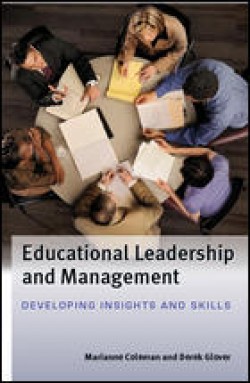
Marianne Coleman, author of Educational Leadership and Management, provides her top tips on how to get published:

1. Be absolutely clear about your focus and the main point(s) you are trying to get across.

2. Don’t be too ambitious in what you try and cover. Most people write more than they intend to not less.

3. Do market research on potential publishers. Find out who is likely to publish material in your area and proposed format. Read more

Weekly Wisdom #7

Weekly Wisdom #7

Consider that university libraries may well buy your book based on a very short, text-only description so try and nail the writing of this right from the start!

Publisher Tips: Prestel

Prestel Publishing is one of the world’s leading publishers in the fields of art, architecture, photography, design, cultural history and ethnography. Although not specifically an academic publisher, Prestel have offered us their top 5 tips for pitching to publishers……..

1. Think of the audience first. Who will buy it?
2. Listen to the publisher and be flexible.
3. Allow the publisher to demonstrate their expertise.

Weekly Wisdom #6

Weekly Wisdom #6

Summer is a bad time to pitch; people are at conferences or on holiday. Better to take the summer to work on it and get in fresh in September!

Publishing Markets Part I

ight, it’s going to be beneficial, before you go too far down the line of pitching to publishers, to learn a bit more of the basics about types of publishers, their imprints or departments, markets and lists or series. This is an area which you’d be forgiven for thinking you know all about; you read books all the time! Right? But don’t be fooled into thinking this gives you a knowledge of the publishing industry, it doesn’t! There are lots of publishing territories you won’t yet have mentally charted, and you need to have at least looked at a map before you set out.

So, over the next two blog posts, we’re going to take general look across the realm of publishing, eventually focusing in on the territory you need to claim: the beautiful land of academic publishing!

There are roughly five main types of publisher, these are:

Read more

Author Tips: Edward Shanken

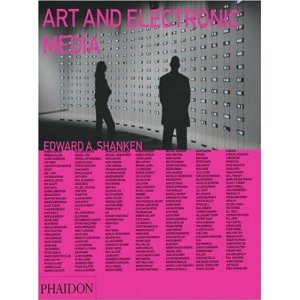
Edward A. Shanken, author of Art and Electronic Media, offers some insight on how he has been successful in getting published. He explains:

The only thing I can figure out about why I got published early in my career and continue to get published is that I wrote (and hopefully continue to write) about things few other people are writing about but that quite a few people are hungry to read about.

 1.    It helps that the things I write about are super cool!

2.    I try to have a catchy title and to start off with something that hooks the reader, whether it be an epigraph or a short anecdote.

3.    I clearly establish a position with respect to a polemical issue.

Read more

Publisher Tips: Ashgate

Ashgate is a leading indepdendent press dedicated to publishing the finest academic research. What are Ashgate’s tips for first time authors? We offer four short tips, and one long document to read…

1. Do follow the publisher’s submission guidelines (these are usually available online).

2. Do focus on why your book should be read, not only on what it is about.

3. Don’t send the entire typescript if you’ve completed it. A single sample chapter will suffice in the first instance.
Read more

Is Your Thesis a Book: Part II

f you’re still with me, and have decided to go ahead and at least think about publishing your thesis, the second thing to do involves looking at it in a completely different way. I have no advice on how to get the perspective you need for this next part except to suggest that leaving the thesis alone for a while (months if you can) would help, as would performing some sort of ritual purging of the ‘thesis-thinking’ (I destroyed my desk, but this was rash, you will still need a desk to work at!).

But the point is, you need to look at your thesis with fresh eyes and as much as possible, without seeing it as a thesis!

Read more

Is Your Thesis a Book: Part I

K, the second post for this new blog (on how to get a book published, and advance your career and understanding of academic publishing after completing your PhD) comes in two parts and is about considering the publishing potential of your thesis.

So, you’re still on board? You still think that publishing a book is your (academic) destiny? Well, now you need to decide what your book is going to be about. This may sound like a very simple task, no doubt you’ve spent X amount of years fashioning your cosy niche and now you’re ready to tell everybody about it; not to mention have them remark (in their droves) upon what a clever, cosy little niche it is. But its actually not that simple. Read more

Publisher Tips: Intellect

In the first of what will be a regular series of tips from academic publishers, Intellect give us their top five pieces of advice on getting published.

Intellect is an independent academic publisher in the fields of creative practice and popular culture, publishing scholarly books and journals that exemplify our mission as publishers of original thinking.

As a first step towards considering a new book project, we ask all authors to complete our author questionnaire (if a single authored monograph) or editor questionnaire (if an edited collection). Both can be found on our website under the Publish With Us section.

Intellect is also not keen on previously published material, textbooks, readers, companions and overviews that are aimed at the general reader. Make sure you aim your work at the academic market.

1. We are to provide a vital space for widening critical debate in new and emerging subjects, so think original and multidisciplinary and present scholarly work at the cross section of arts, media and creative practice.

Read more

Author Tips: Catherine Mason

In the first of what will be a regular series of tips from published authors, Catherine Mason provides her top five pieces of advice on getting published.

Mason’s first book was: A Computer In The Art Room: The Origins of British Computer Arts 1950-1980, and she was also one of the editors of: White Heat Cold Logic: British Computer Art 1960-1980.

1. Do your research. Locate the main players in your field who already publish similar books, and approach them first. Find out their preferred proposal formats (the publisher’s website will tell you this information often in great detail – follow it).

Read more