Exact matches only
Search in title
Search in content
Search in comments
Search in excerpt
Search in posts
Search in pages
Search in groups
Search in users
Search in forums
Filter by Categories
Academic Practice
Academic Writing Month
AcWri
AcWriMo
Blogging and Social Media
Book Editing
Book Literature Review
Book Marketing and Impact
Book Planning
Book Proposals
Book Publishing
Book Writing
Books
Citations and Referencing
Collaboration
Community
Conference Paper Abstracts
Conference Paper Editing
Conference Paper Literature Review
Conference Paper Marketing and Impact
Conference Paper Planning
Conference Paper Presenting
Conference Paper Writing
Conference Papers
Digital Publishing
Experimental Digital Publishing
Grant Abstracts
Grant Completion Reporting
Grant Impact Statement
Grant Literature Review
Grant Methods Section
Grant Writing
Grants
Journal Article Abstracts
Journal Article Editing
Journal Article Literature Review
Journal Article Marketing and Impact
Journal Article Peer Review
Journal Article Planning
Journal Article Writing
Journal Articles
Networking
News
Open Access
Productivity
Reading and Note-Taking
Reseach Project Planning
Resources
Tools
Uncategorized
Website
How I went from PhD to Published: Part II

As I said in my last post, I’ve signed a book deal and am walking you through the steps that got me there. Where were we up to? Oh yes, I’d set up this website but lost valuable book-pitching time to handling it alone.

With an intern to help me with PhD2Published and bit of time back, I decided to think strategically again. I looked at the topic of my book and what its significance would be at a broader level and realised that that it would gel with a project on the future of academic publishing in the arts. In fact, I noticed what had been staring me in the face from the start, both PhD2Published and my book were yet more examples of my fascination with broadcast tools in the arts. And then I noticed something even more important, my book could become the test case for the project! This meant the book and project could support and lend weight to each other – not to mention reciprocally nurturing PhD2Published.

With this academic alchemy in mind, I researched the people best able to support my vision for the project and, impressed by the work I’d already done with PhD2Published they all came on board. Read more
How I went from PhD to Published: Part I

I’ve signed a book deal and my first academic book is due to come out mid 2012! But how did this happen? Well, I’ll tell you one thing, it wasn’t down to magic! Nope, it’s pretty simple when you look back over the last few months. I’ll walk you through it.

I decided that I wanted to try more of the writing I’d learnt how to do with my PhD and figured that with the job market looking so bleak; it was a really good time to focus on getting my first book published.

I talked to everyone I knew who knew something about academic publishing and after one particularly useful bit of advice, I decided not to try and publish the content of my thesis now, but take a section that was of standalone interest and work it up into a book.

I read submission guidelines on a range of academic press websites and wrote a proposal. I made a list of courses I that might use my book and added it to the proposal.

I sent the proposal out and got rejected. Read more

Author Tips: Verina Gfader

This weeks authors tips come from Verina Gfader, author of ADVENTURE-LANDING a compendium of animation, Berlin: Revolver Publishing, 2011

Top 5 Tips for Getting Published:

1.    Don’t wait too long to approach publishers after completion. If you consider a later publication choose one which also includes post-doc research.

2.    What’s your preferred publisher? Try them first.

3.    Before that, identify what the book will be about? What kind of publication? Who is the reader/audience?

4.    Think about funding! (essential), identify possible funding bodies, sponsors

5.    Do you “need” the publication? It takes a lot of time. Think about what you want to do, career-wise

Weekly Wisdom #30

Weekly Wisdom #30

Build a potential market for the book before it even exists by marketing your area of research on social media sites & at conferences.

A Couple of Rules for Getting a Book Deal

stumbled across this great post: The Five Rules of Getting a Book Deal by writer Jean Hannah Edelstein and really liked it. It’s not primarily for academic writers, but rules two and three really got me thinking…

Rule two, according to Edelstein, is ‘Research the Business of Publishing’. She notes: “Yes, you should research your book, but you also need to research the business of publishing.” This is something that PhD2Published was specifically set up to help with. It’s all very well being told by your supervisor or other academic chums that you need to publish a book, but unless you wrote your thesis on academic publishing for the early-career academic (which now I think about it might have been a better idea), what on earth do you know about publishing? Edelstein goes on:

“What books have been published that are similar to yours, with which your book will compete? Who published them? How were they published? What market are they aimed at? Some aspiring writers think that they should just submit their work to everyone under the sun, until someone bites, but that’s a waste of your time (and theirs) – you want to identify the people who may be genuinely interested in your project and target them carefully.” Read more

Author Tips: Kelli Fuery

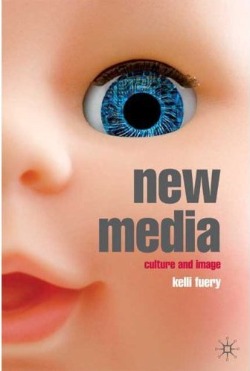
This week, Dr Kelli Fuery, author of New Media: Culture and Image, has given us her top tips for getting published organized around the theme of interdisciplinarity:

1. Interdisciplinarity: on Publishing

Previous tips in PhD2Published have emphasized the importance of learning the process of academic publishing. In my experience, I have divorced the world of academic publishing and Academia. Publishers, all publishers, have one main goal – to make money. So in very dry terms, you need to present them with a product that they can sell and the more people that they can sell that product to, the better. Academics rarely think about their research in that way but it is a great start when you begin to write monograph proposals. A PhD uncut needs reworking in order to become a product that can be sold.

Identifying the core claims of your Doctoral dissertation and connecting them to specific fields of publishers will also help you identify target market which publishers can pitch to. Learning which publishers sell textbooks and which don’t is a great asset.

Interdisciplinarity in publishing means presenting your product and making it appealing for more than one target audience. The subject, the methodology, the level of writing – all these things can be presented in such a way that offer variety, diversity and depth to publishers so that they become aware of how your research can be ‘sold’ to more than one market. How you present that and persuade them is up to you. Read more

How to Get Your First Academic Book Published

My five-point guide on how to get your first academic book published is out now at the Postgraduate Tool Box. I was delighted to be asked to contribute to their vast set of resources and hope it proves useful to other post-grads. They also have some useful resources you should check out for publishing.

It starts like this:

1. Learn About Academic Publishing. Unless you happen to be studying the publishing industry, it’s likely you don’t know enough about it to make a successful book pitch. What I mean is that, you need an idea of what academic publishing actually entails, so that you know exactly what you’re asking a publisher to do when you pitch to them. There are lots of ways of learning about publishing from, for example, industry websites including booktradeinfo, Publishers Weekly and theBookseller, but PhD2Published is also a good place to start…

Read more here…

Academic Guest Post: ‘On Pitching’

This is a great guest post from artist and academic Nathaniel Stern on his approach to pitching his thesis as a book.

Nearly 2 years after I submit my dissertation, I finally sat down this Summer to work on my book proposal. I cut my longest chapter entirely, reworked the thesis to be more in line with where the current interests are for my field, and did some overall structural editing that followed suit. I then read several new books from publishers I had been interested in, even penned a few book reviews, before deciding on whom I would approach first, and the “angle” I’d go with.

Like with the original dissertation, this research and new writing helped me to rediscover my passion for the text, as well as to figure the new directions necessary. Here are a few tidbits I think may have helped me: Read more

Weekly Wisdom #25

Weekly Wisdom #25

Line up a well-known and relevant academic to write a foreword for your book!

Academic Editor Guest Post: Anthony Levings Part IV

There are two questions I am frequently asked, and these concern: (1) whether or not Gylphi publishes texts concerned with periods of time outside the twentieth and twenty-first centuries; and, (2) if Gylphi publishes fiction.

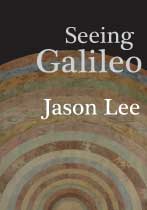
The answer to these two questions is succinctly provided by Seeing Galileo; which is the most recent publication due to be released by Gylphi in a couple of weeks.

It is as the name suggests about Galileo, it is also about Milton and a possible meeting between the two men. Placing the subject matter in the seventeenth century, but at the same time because of the way in which the text has been written – as a mix of biography, criticism, photography and poetry – it draws the past into the present. Read more

Academic Editor Guest Post: Anthony Levings Part III

It would appear to the average consumer that the future of reading is already here. The Kindle and the iPad making readable eBooks a reality, but in fact a closer look will tell you that a state of transition is actually in place.

It is not yet possible, for example, to fulfil all that is possible in print in digital form. It is also not yet possible to predict which formats (and associated copy protection) will be carried forward into the future.

More important than what the current digital formats can’t do however is what they can do: things not possible in print – e.g. audio and video, and links to external websites, among others. Creating a situation where there are trade-offs associated with both print and digital books, each capable of different things. Read more

Academic Editor Guest Post: Anthony Levings Part II

There are many analogies that could be used to describe a publisher, but one of the most apt appears to be that of the midwife/doctor/surgeon whose responsibility it is to oversee the delivery of a baby.

Surrounded by technology and a skilled team of professionals, and with the use of tools (the most important of which is knowledge), the midwife/doctor/surgeon delivers the baby into the world with as much or as little intervention as is necessary.

It goes without saying that each birth is coordinated with a number of other births that are occurring in the hospital/locale (read publishing house) at the same time. Recently, however, the frenetic nature of publishing has been on the increase as the number of multiple births (read book formats) has grown, and this is where the analogy of the hospital birthing unit starts to falter as the number of triplets and quadruplets shows no sign of abating. In fact quads have become the norm, and even sextuplets are not unusual for a publisher such as O’Reilly Media, for example. Read more

Academic Editor Guest Post: Anthony Levings Part I

For the next month, Anthony Levings, Managing Editor, Gylphi Limited will be guest blogging for PhD2Published to give readers a better idea of how a small academic press operates…

Here’s his first post:

Academic publishing is not only one of the most technically demanding forms of publishing, but also one of the most technological as well. And yet, there appears to be an opinion that academic publishing, like all other forms of publishing, is at a crossroads where self-publishing is the obvious way forward. Read more

The BubbleCow Guide to Academic Book Pitching: Part VI

Sadly this is the last instalment of BubbleCow’s guide to writing a great academic book proposal.

Sniff, sniff!

Now, we’ve looked at pitching and writing, but what about the essential review process which forms a large part of getting your academic book in print? Well, of course, the fact is, this won’t happen until after you’ve hooked the editor with your dazzling query letter, proposal and sample chapters, but is there anything you can do at the start to help with this process?

Sure there is!  Read more

Weekly Wisdom #18

Weekly Wisdom #18

Share your own experiences of pitching and writing a book with PhD2Published and help develop knowledge in this area!