


 Weekly Wisdom #24
Squeeze in an extra hour of writing at the start or end of your day!
 Weekly Wisdom #24
Squeeze in an extra hour of writing at the start or end of your day!
Weekly Wisdom #23Don’t forget your covering letter, it needs to be just as good (if not better) than the book itself!
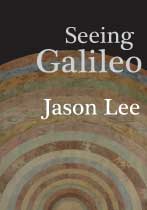
There are two questions I am frequently asked, and these concern: (1) whether or not Gylphi publishes texts concerned with periods of time outside the twentieth and twenty-first centuries; and, (2) if Gylphi publishes fiction.
The answer to these two questions is succinctly provided by Seeing Galileo; which is the most recent publication due to be released by Gylphi in a couple of weeks.
It is as the name suggests about Galileo, it is also about Milton and a possible meeting between the two men. Placing the subject matter in the seventeenth century, but at the same time because of the way in which the text has been written – as a mix of biography, criticism, photography and poetry – it draws the past into the present. Read more
Weekly Wisdom #22Ensure you have a comfortable place to work, don’t underestimate the value of a supportive chair or spacious desk!

It would appear to the average consumer that the future of reading is already here. The Kindle and the iPad making readable eBooks a reality, but in fact a closer look will tell you that a state of transition is actually in place.
It is not yet possible, for example, to fulfil all that is possible in print in digital form. It is also not yet possible to predict which formats (and associated copy protection) will be carried forward into the future.
More important than what the current digital formats can’t do however is what they can do: things not possible in print – e.g. audio and video, and links to external websites, among others. Creating a situation where there are trade-offs associated with both print and digital books, each capable of different things. Read more
Weekly Wisdom #21Don’t pimp your pitch with fancy fonts etc…. be plain and clear!

There are many analogies that could be used to describe a publisher, but one of the most apt appears to be that of the midwife/doctor/surgeon whose responsibility it is to oversee the delivery of a baby.
Surrounded by technology and a skilled team of professionals, and with the use of tools (the most important of which is knowledge), the midwife/doctor/surgeon delivers the baby into the world with as much or as little intervention as is necessary.
It goes without saying that each birth is coordinated with a number of other births that are occurring in the hospital/locale (read publishing house) at the same time. Recently, however, the frenetic nature of publishing has been on the increase as the number of multiple births (read book formats) has grown, and this is where the analogy of the hospital birthing unit starts to falter as the number of triplets and quadruplets shows no sign of abating. In fact quads have become the norm, and even sextuplets are not unusual for a publisher such as O’Reilly Media, for example. Read more
Weekly Wisdom #20Tell the publisher why your book is a must-read, not why it’s a must-write!

Welcome to this week’s Top Tips, which come from I.B.Tauris – and include a bonus tip!
1. Research potential publishers thoroughly. Make sure you’re aware of the subject areas that each publisher covers and ensure that your manuscript fits well with a publisher’s existing list before submitting. You are likely to be more successful if you can demonstrate clearly that your manuscript complements a publisher’s current books. Read more

For the next month, Anthony Levings, Managing Editor, Gylphi Limited will be guest blogging for PhD2Published to give readers a better idea of how a small academic press operates…
Here’s his first post:
Academic publishing is not only one of the most technically demanding forms of publishing, but also one of the most technological as well. And yet, there appears to be an opinion that academic publishing, like all other forms of publishing, is at a crossroads where self-publishing is the obvious way forward. Read more
Weekly Wisdom #19Take time to read and understand your contract before signing it; make sure it suits you and your career plans!

Sadly this is the last instalment of BubbleCow’s guide to writing a great academic book proposal.
Sniff, sniff!
Now, we’ve looked at pitching and writing, but what about the essential review process which forms a large part of getting your academic book in print? Well, of course, the fact is, this won’t happen until after you’ve hooked the editor with your dazzling query letter, proposal and sample chapters, but is there anything you can do at the start to help with this process?
Sure there is! Read more
Weekly Wisdom #18Share your own experiences of pitching and writing a book with PhD2Published and help develop knowledge in this area!
Welcome to penultimate post in the series that is: The BubbleCow Guide to Academic Book Pitching. Let’s review where we’re at.
In Part I we looked at what a book pitch needs to do and why, and did a bit of homework. Then, in Part II we learnt how to write the query or covering letter as preview of what we’ve got to offer. In Part III we focused on how to write a synopsis of the book, and in Part IV we tackled the marketing section by identifying our book’s buyers and the books that have established its market.
A guide like this can never be comprehensive, but if you’ve worked through all the tasks, you should be well on your way to writing your proposal and query letter and getting it right. Again, I can’t emphasise enough how important it is to be clear, spell everything correctly and READ THE SUBMISSION GUIDELINES CAREFULLY FOR EVERY PITCH YOU MAKE AND STICK TO THEM LIKE GLUE! Read more

This week we’re offering some publishing tips from Jussi Parikka, author of Digital Contagions and the forthcoming Insect Media:
1. To get published, the first thing you should get right is actually have something good to publish. In other words, write a good book. Sounds banal, I know, but when starting your PhD keep in mind the possibility that it is going to be a book one day and try to use that as motivation for your writing. In some countries (such as Finland) this is easier because your thesis needs to be published as part of the PhD process. As s a result, we already tend to think of them as books – which is also part of the reason why they are much more extensive than Anglo-American PhDs. Excitement in what you write about shows comes across to readers well! Read more
