


 Weekly Wisdom #13
Speak at as many conferences as you can and make sure you mention your planned book!
 Weekly Wisdom #13
Speak at as many conferences as you can and make sure you mention your planned book!

Manchester University Press is an international concern, publishing work by authors from all around the world and selling books to a global audience.
Here, they offer their top 5 tips for getting published…..
1. A thesis is not a book: if revising yours for publication then approach, frame and describe it as a new project.
2. It’s normal to spend at least a year on revisions to turn a thesis into a book. Read more
Weekly Wisdom #12Break book-pitching into short-term, medium-term and long-term tasks; don’t get overwhelmed!

art I of the Book Shelf Test looked at how your own book shelves can provide you with instant market research, showing you who is publishing what, and through which publishing houses.
If you already have your book planned in your mind (or indeed written) there’s another way of turning your book shelves into instant market research. Now you want to collect together all the books that most closely relate to the one you’re planning to pitch and write. Firstly, pile them up by publisher. This test is slightly less revelatory as you can probably predict the tallest pile before you start and you have probably also already made a mental note to pitch to this publisher. But is there a pile – even of only one book – that represents a publisher you hadn’t noticed before? If so, leap over to your computer and look them up and find out how they’ve categorised this book. The answer might be clear cut; that they publish books very relevant to your field but you hadn’t realised. Read more

This week we’re excited to offer a set of ten tips on publishing success from none other than Stan Hayward, who has had over thirty books published ranging from children’s stories to computer systems, as well as numerous projects to his name.
…And if you’re confused by the picture , it’s because Stan Hayward is also the creator of Henry’s Cat!

Gylphi is an academic arts and humanities publisher focused on the twentieth century and beyond. It is home to the Journal of British and Irish Innovative Poetry, the forthcoming Transgressive Culture journal and book series, and the SF Storyworlds book series.
Here, they offer their top 5 tips for getting published……
1. What’s in a title?
A title (not the subtitle) should describe the book as precisely as possible in as few a words as possible. If you are going to use a pun make sure it describes your text, it is no good being undecipherable and profound. You don’t want to be writing for a readership so narrow that only those who already know the subject inside out will understand the title and buy your book.
Think also about librarians and booksellers looking for books to purchase. Will they, without specialist knowledge, know what your book is about? Bear in mind that they draw their information from databases that can cut short long titles. If your title is long and ends with the title of the subject or an author name, then the short version of your title may give no real indication about what the book is actually about.
I was really excited to discover this article by Katharine Reeve on Times Higher Education – it’s, of course, excellent!
Reeve picks up on the key point that drives this website, which is that there isn’t much support for academic writers when it comes to learning how to propose and write a book. She states:
“While fiction authors are surrounded by advice books, websites and degree courses designed to help them get published, academic authors are left to their own devices. How are you supposed to know what is and what is not a publishable text? An academic is generally a researcher first and a writer second: you may be an international authority on Viking headwear or poststructuralist theory, but you are unlikely to be as expert at writing full-length publishable books. Unless you have a savvy supervisor or have learned by trial and error, getting into print can be tough.” Read more

ere we go, this is what I’m calling the Book Shelf Test (which it comes in two parts) and it’s going to save you a lot of time and answer a lot of questions so far as finding the right publisher is concerned.
In the last 2 part blog on Publishing Markets, I talked about publishing houses and their imprints. And I used the example that Indiana University Press has form in gender issues, and proved this for myself by looking at my own books. Well, rather than surfing for hours trying to connect some of these specialisms with publishing houses and imprints, you can do it just by looking at your own books.
So the first part of the Book Shelf Test is to test your own shelves for how they reflect the specific interests of different houses or imprints. And really, this is child’s play, because as most of them have logos, all you need to do is grab all the books from your shelves that have the same logo and then group them together into subject areas. Read more

This week, Jeff Johnson, author of American Advertising in Poland , offers us some of his own insight on getting published for the first time.
1. Talk to former professors, your friends, colleagues and any other people you have known in academia about your project. Ask them to share their publishing contacts and any information they may have. The people we know best can often help us a lot, we don’t often ask though.
2. A few weeks before a conference, make appointments with any relevant attending book editors to talk about your upcoming book projects. Have a prospectus for any book projects you are working on and a copy of your CV. Even if an editor isn’t interested in your current project, he/she may want to publish one of your future books. Keep in contact with the editors you meet and always make a point to say hi whenever both of you attend the same conference. Read more

Oxford University Press is the largest university press in the world and publishes in all academic fields from multiple offices across the globe. Here, they share their 5 publishing Top Tips…….
1. We are always glad to hear from prospective authors. We offer both general guidance on submission and a set of relevant contacts as it is sometimes best to send the relevant subject editor a brief email describing the project.
2. The hurdles at which most first-book proposals fall is a) suitability (for the list) and b) likelihood of achieving a sufficient level of sale. An initial email may help signal a project’s chances of clearing those particular hurdles. If an editor can encourage a submission, he or she will advise what should be sent. Read more

or the last post we looked very generally at the main areas of publishing. So now we can move onto analysing the specific focus of different academic publishers and the easiest way to do that is by looking more closely at who they are selling to.
For the academic publisher, there are three main ways of breaking down their target markets.
Firstly this can be very easily done by country or language. The big presses will have offices in different parts of the world and, in theory, can target a range of global markets. Smaller presses will likely target buyers in their country of origin and may extend to overseas buyers, but perhaps only those that speak the same language.
Secondly this is done by selling primarily to libraries or libraries and individuals. Some publishers, like Ashgate, for example, focus very much on the library market. A publisher like this might be working with a print run of as little as 250 books. Others consider their market to be the university educated public more widely, like Cambridge University Press. A publisher like this might well produce a print run in excess of 3000 book. Read more
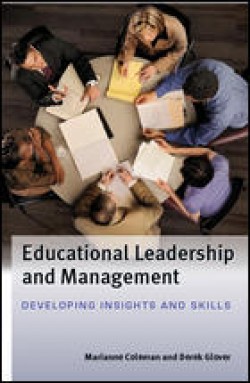
Marianne Coleman, author of Educational Leadership and Management, provides her top tips on how to get published:
1. Be absolutely clear about your focus and the main point(s) you are trying to get across.
2. Don’t be too ambitious in what you try and cover. Most people write more than they intend to not less.
3. Do market research on potential publishers. Find out who is likely to publish material in your area and proposed format. Read more

Prestel Publishing is one of the world’s leading publishers in the fields of art, architecture, photography, design, cultural history and ethnography. Although not specifically an academic publisher, Prestel have offered us their top 5 tips for pitching to publishers……..
Weekly Wisdom #6Summer is a bad time to pitch; people are at conferences or on holiday. Better to take the summer to work on it and get in fresh in September!

ight, it’s going to be beneficial, before you go too far down the line of pitching to publishers, to learn a bit more of the basics about types of publishers, their imprints or departments, markets and lists or series. This is an area which you’d be forgiven for thinking you know all about; you read books all the time! Right? But don’t be fooled into thinking this gives you a knowledge of the publishing industry, it doesn’t! There are lots of publishing territories you won’t yet have mentally charted, and you need to have at least looked at a map before you set out.
So, over the next two blog posts, we’re going to take general look across the realm of publishing, eventually focusing in on the territory you need to claim: the beautiful land of academic publishing!
There are roughly five main types of publisher, these are:

