


 Weekly Wisdom #30
Build a potential market for the book before it even exists by marketing your area of research on social media sites & at conferences.
 Weekly Wisdom #30
Build a potential market for the book before it even exists by marketing your area of research on social media sites & at conferences.

stumbled across this great post: The Five Rules of Getting a Book Deal by writer Jean Hannah Edelstein and really liked it. It’s not primarily for academic writers, but rules two and three really got me thinking…
Rule two, according to Edelstein, is ‘Research the Business of Publishing’. She notes: “Yes, you should research your book, but you also need to research the business of publishing.” This is something that PhD2Published was specifically set up to help with. It’s all very well being told by your supervisor or other academic chums that you need to publish a book, but unless you wrote your thesis on academic publishing for the early-career academic (which now I think about it might have been a better idea), what on earth do you know about publishing? Edelstein goes on:
“What books have been published that are similar to yours, with which your book will compete? Who published them? How were they published? What market are they aimed at? Some aspiring writers think that they should just submit their work to everyone under the sun, until someone bites, but that’s a waste of your time (and theirs) – you want to identify the people who may be genuinely interested in your project and target them carefully.” Read more
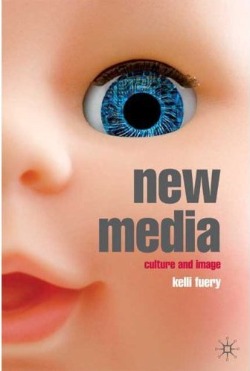
This week, Dr Kelli Fuery, author of New Media: Culture and Image, has given us her top tips for getting published organized around the theme of interdisciplinarity:
1. Interdisciplinarity: on Publishing
Previous tips in PhD2Published have emphasized the importance of learning the process of academic publishing. In my experience, I have divorced the world of academic publishing and Academia. Publishers, all publishers, have one main goal – to make money. So in very dry terms, you need to present them with a product that they can sell and the more people that they can sell that product to, the better. Academics rarely think about their research in that way but it is a great start when you begin to write monograph proposals. A PhD uncut needs reworking in order to become a product that can be sold.
Identifying the core claims of your Doctoral dissertation and connecting them to specific fields of publishers will also help you identify target market which publishers can pitch to. Learning which publishers sell textbooks and which don’t is a great asset.
Interdisciplinarity in publishing means presenting your product and making it appealing for more than one target audience. The subject, the methodology, the level of writing – all these things can be presented in such a way that offer variety, diversity and depth to publishers so that they become aware of how your research can be ‘sold’ to more than one market. How you present that and persuade them is up to you. Read more

ell, it’s official: the PhD2Published method works!
We’ve had our first success story: me (Charlotte Frost PhD2Published’s founder)!
Yes, that’s right, I’m writing this blog post as someone who has signed a contract to get their first academic book published! You may have already seen me get excited about this!
Around the time I set up this resource, I wrote my first book proposal and had an instant rejection. I licked my wounds and set about learning how to make a successful pitch (which led me to establish this site – why not pass on my research?!). I then wrote draft two, which did get sent out to another publisher, but before they had the chance to reply I made a third even sharper draft (after receiving some excellent advice from Gary Smailes of BubbleCow). It was this third version that received the following response from Gylphi editor Anthony Levings: Read more
Weekly wisdom #28Write Something that expands upon one section of your thesis, rather than grapple with the whole thing.
Weekly Wisdom #27Ask your supervisor whether they honestly think you’ve got the bones of a publishable book in your Ph.D research

My five-point guide on how to get your first academic book published is out now at the Postgraduate Tool Box. I was delighted to be asked to contribute to their vast set of resources and hope it proves useful to other post-grads. They also have some useful resources you should check out for publishing.
It starts like this:
1. Learn About Academic Publishing. Unless you happen to be studying the publishing industry, it’s likely you don’t know enough about it to make a successful book pitch. What I mean is that, you need an idea of what academic publishing actually entails, so that you know exactly what you’re asking a publisher to do when you pitch to them. There are lots of ways of learning about publishing from, for example, industry websites including booktradeinfo, Publishers Weekly and theBookseller, but PhD2Published is also a good place to start…

This is a great guest post from artist and academic Nathaniel Stern on his approach to pitching his thesis as a book.
Nearly 2 years after I submit my dissertation, I finally sat down this Summer to work on my book proposal. I cut my longest chapter entirely, reworked the thesis to be more in line with where the current interests are for my field, and did some overall structural editing that followed suit. I then read several new books from publishers I had been interested in, even penned a few book reviews, before deciding on whom I would approach first, and the “angle” I’d go with.
Like with the original dissertation, this research and new writing helped me to rediscover my passion for the text, as well as to figure the new directions necessary. Here are a few tidbits I think may have helped me: Read more
Weekly Wisdom #25Line up a well-known and relevant academic to write a foreword for your book!
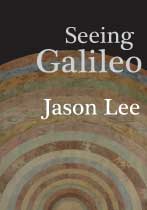
There are two questions I am frequently asked, and these concern: (1) whether or not Gylphi publishes texts concerned with periods of time outside the twentieth and twenty-first centuries; and, (2) if Gylphi publishes fiction.
The answer to these two questions is succinctly provided by Seeing Galileo; which is the most recent publication due to be released by Gylphi in a couple of weeks.
It is as the name suggests about Galileo, it is also about Milton and a possible meeting between the two men. Placing the subject matter in the seventeenth century, but at the same time because of the way in which the text has been written – as a mix of biography, criticism, photography and poetry – it draws the past into the present. Read more

It would appear to the average consumer that the future of reading is already here. The Kindle and the iPad making readable eBooks a reality, but in fact a closer look will tell you that a state of transition is actually in place.
It is not yet possible, for example, to fulfil all that is possible in print in digital form. It is also not yet possible to predict which formats (and associated copy protection) will be carried forward into the future.
More important than what the current digital formats can’t do however is what they can do: things not possible in print – e.g. audio and video, and links to external websites, among others. Creating a situation where there are trade-offs associated with both print and digital books, each capable of different things. Read more

There are many analogies that could be used to describe a publisher, but one of the most apt appears to be that of the midwife/doctor/surgeon whose responsibility it is to oversee the delivery of a baby.
Surrounded by technology and a skilled team of professionals, and with the use of tools (the most important of which is knowledge), the midwife/doctor/surgeon delivers the baby into the world with as much or as little intervention as is necessary.
It goes without saying that each birth is coordinated with a number of other births that are occurring in the hospital/locale (read publishing house) at the same time. Recently, however, the frenetic nature of publishing has been on the increase as the number of multiple births (read book formats) has grown, and this is where the analogy of the hospital birthing unit starts to falter as the number of triplets and quadruplets shows no sign of abating. In fact quads have become the norm, and even sextuplets are not unusual for a publisher such as O’Reilly Media, for example. Read more
Weekly Wisdom #20Tell the publisher why your book is a must-read, not why it’s a must-write!

Welcome to this week’s Top Tips, which come from I.B.Tauris – and include a bonus tip!
1. Research potential publishers thoroughly. Make sure you’re aware of the subject areas that each publisher covers and ensure that your manuscript fits well with a publisher’s existing list before submitting. You are likely to be more successful if you can demonstrate clearly that your manuscript complements a publisher’s current books. Read more

For the next month, Anthony Levings, Managing Editor, Gylphi Limited will be guest blogging for PhD2Published to give readers a better idea of how a small academic press operates…
Here’s his first post:
Academic publishing is not only one of the most technically demanding forms of publishing, but also one of the most technological as well. And yet, there appears to be an opinion that academic publishing, like all other forms of publishing, is at a crossroads where self-publishing is the obvious way forward. Read more
