Exact matches only
Search in title
Search in content
Search in comments
Search in excerpt
Search in posts
Search in pages
Search in groups
Search in users
Search in forums
Filter by Categories
Academic Practice
Academic Writing Month
AcWri
AcWriMo
Blogging and Social Media
Book Editing
Book Literature Review
Book Marketing and Impact
Book Planning
Book Proposals
Book Publishing
Book Writing
Books
Citations and Referencing
Collaboration
Community
Conference Paper Abstracts
Conference Paper Editing
Conference Paper Literature Review
Conference Paper Marketing and Impact
Conference Paper Planning
Conference Paper Presenting
Conference Paper Writing
Conference Papers
Digital Publishing
Experimental Digital Publishing
Grant Abstracts
Grant Completion Reporting
Grant Impact Statement
Grant Literature Review
Grant Methods Section
Grant Writing
Grants
Journal Article Abstracts
Journal Article Editing
Journal Article Literature Review
Journal Article Marketing and Impact
Journal Article Peer Review
Journal Article Planning
Journal Article Writing
Journal Articles
Networking
News
Open Access
Productivity
Reading and Note-Taking
Reseach Project Planning
Resources
Tools
Uncategorized
Website
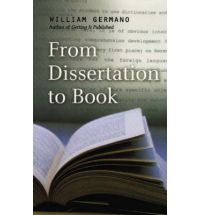
Thinking From Dissertation to Book, and back again…A review of William Germano’s From Dissertation to Book by Helen Wainwright

Todays post is written by Helen Wainwright. Helen is a final year PhD Candidate from The Department of Art History at The University of Nottingham, researching conceptual art’s supposed demise in the early 1970s in New York, and the concurrent redefinition of the spaces and/or places of artistic practice and dissemination stemming from the period. She is particularly interested in the work three separate artists: Stephen Shore (1947-present), Gordon Matta Clark (1943-78) and Anthony McCall (1946-present), and the gap that exists between their early works and later (re)interpretations of them.

Twitter: @adxhw1

http://nottingham.academia.edu/HelenWainwright

Recently, the thoughts of what to do post-PhD have started to worm their way into my mind – a good six months ahead of schedule. Rather than ignoring my subconscious efforts to prompt me into a premature job search, I used them as a nudge in the right direction to think about what I really want to accomplish in the year leading up to my viva, and likewise what I would need to accomplish in the subsequent year (or two) after it. This is when I metaphorically stumbled, via Twitter, across William Germano’s book From Dissertation to Book, an extremely useful and accessible text first published in 2005 by University of Chicago Press. I initially approached it with caution, thinking it would ultimately lead to a flurry of self-doubt, but what I actually found was an insider’s guide to what it takes, and how to make the first moves towards publishing your thesis as a book, and what decisions and barriers will more than likely be encountered along the way.

As the Dean of the Faculty of Humanities and Social sciences at Cooper Union for the Advancement of Science and Art, and a former Vice President and Publishing Director at Routledge, William Germano knows exactly what it takes to take those first steps towards publication. The message running throughout the book is clear: be willing to revise, rework and even rethink your PhD research. This advice is coupled with a hefty warning: a thesis is not a book manuscript and will more-often-than-not be rejected by a publisher without any form of editing. Germano provides his readers with a list of eight options to choose from when considering what to do with the thesis once complete: ‘do not resuscitate’; ‘send the dissertation out as is…’; ‘publish the one strong chapter’; ‘publish two or three chapters as articles’; ‘revise the dissertation lightly’; ‘revise the dissertation thoroughly’ or ‘cleave the ample dissertation in two’ (p.38). It is safe to say that readers of From Dissertation to Book are most likely seeking advice on just that topic, and are thus left with the sole prospect of gentle/hefty revision. However, reading between the lines, I think the underlying message of the book is clear: there are more routes towards writing your first book than simply turning your doctoral dissertation straight into a manuscript.

One suggestion is the transformation of chapters into publications. Not only will this allow ideas to be transmitted to a larger audience; gaining much needed publicity, but it will grant the opportunity for a moment’s pause to deliberate whether these ideas could actually form the basis of further research, and lay the foundations for an entirely different book proposal. Likewise, such reflection may aid in the dissection of the thesis as a whole; allowing it to be sliced in two, moving both parts in separate directions, and therefore furthering the possibilities of future research and publication. Alternatively, as Germano continually recommends: revision is the key. Whilst attempting to re-work the thesis, it is also highlighted that a publisher who can recognise the potential audience for a book is far more likely to accept a manuscript or proposal, because they can clearly see who the text is aimed at and who it will be sold to. In contrast to the doctoral thesis, which will only ever meet the eyes of a handful of people, despite best wishes, the book must have a definite audience, and therefore a direct and highly relevant message. If you can argue this case straight away, then perhaps you are on to a winner.

The awareness of your thesis as something far from finished, but as the stepping stone into the world of academia is a daunting prospect, given the amount of blood, sweat and tears which are poured into the work. However, this realisation is also entirely invigorating when realisation dawns that all the routes of thought that had to be closed off in order to concentrate on getting to the finish line, could one day be re-opened. As a researcher you are expected to be adaptable and full of belief in your ideas, and From Dissertation to Book echoes these basic assumptions, asking its readers to think in the same way about their doctoral research: that it is malleable and full of potential, whether published as a book on first attempt, or not.

A primer on preparing to publish by Prof. Jan Draper

Today’s post by Prof. Jan Draper reflects on her own experiences of carving up her PhD thesis into publications and provides excellent advice for post PhD-ers about what to consider and how to do it. Jan is a Professor and Director of Nursing at the Open University, UK, in the Faculty of Health and Social Care.

I don’t have an academic book (unfortunately!) but when I completed my PhD (2000) I did approach a number of publishers to see if they were interested. I think my recollection from this (very dated now of course) was that the publishers could ‘spot’ a PhD ‘conversion’ a mile off, so you have to be very careful in this regard. Some publishers are very happy to consider conversions from PhDs, others are not. So in order to maximise chances, I think one needs to be very well informed about which publishers do what.

With that in mind here are my Top 5 Tips for getting published:

  1. Write a good PhD in the first place! Sounds obvious but you would be surprised at the range! Include in this writing a very solid theoretical foundation. Theory can really liberate and help make connections that otherwise might not be made.
  2. Make sure that you have a good publication strategy arising from your PhD. You may need to seek some help in gauging this – either supervisors or other colleagues, depending on the nature of your work. If you are located in a practice-based discipline for example, in addition to conventional academic papers arising from your thesis, there will also be professional/practice-related papers that you could write. So think very carefully about how you ‘cut’ your thesis.
  3. Think creatively about the above. Don’t just think the obvious i.e. the description of the project and the findings. Is there something about the method that was innovative, that I can write about? Was there something about the theory I used? How helpful was this theory? Did my work advance the theory in any way? Was there something about ethical considerations that was more unusual in my study that could be of benefit to the wider community in some way? Think also about conference presentations – not just papers.
  4. Think very carefully about where to publish. This may sound very obvious. But, I was very fortunate that I ‘stumbled’ across this important factor. Don’t settle for low impact journals but think about your academic career – if of course, that is something you wish to develop and enhance. Go for high impact journals that will get your work noticed. Not only will it get your work noticed, but it is likely that the feedback you get from reviewers will be of excellent quality. I learned so much from the feedback from reviewers working for The Sociology of Health and Illness not only about the papers but also about the process of reviewing. Their contributions to me as a writer have influenced by ongoing, longer-term work as a reviewer. Strange!
  5. Don’t underestimate the time it will involve! Cutting up a thesis is a traumatic and bloody affair! It has taken so long to write the thesis to get it to its current format, so to think about carving it up in a different way can actually be quite difficult. This is where wise counsel from either supervisors or other colleagues can be helpful. But my advice would be that no matter how hard it feels – just do it! To get to this stage and not publish would be a travesty so I would always encourage students that no matter how hard it feels, you must do it! From my own personal experience, I know that getting 5 good papers out of my PhD created a solid platform for my ongoing academic career. So it is worth it – honest!

Announcing AcWriMo!

Remember AcBoWriMo, last year’s experiment in a month-long writing productivity drive? Well, it’s back, bigger and better than ever – but without the ‘Bo’!

The idea hails from NaNoWriMo (National Novel Writing Month) an initiative designed to turn the whole of November into a month-long write-fest for current or would-be novelists. The idea is that you set yourself the task of writing 50 thousand words in November alone and bingo, you’ve got yourself a whole big chunk of novel!  In 2011 I decided academics should give something similar a go and, I can happily report, it went brilliantly!

For AcBoWriMo, I invited people to join me in wearing comfy clothes, drinking a lot of coffee, napping at strange times and seeing how close we could each get to writing 50 thousand words. I admitted at the time that it was an insane target, but that it wasn’t the word count that was the point. Rather, it was a bid to gather people together for mutual support in the, at times, painfully difficult and soul-crushingly lonely task of academic writing. In the last year alone, I’ve watched with awe and excitement as so many academic communities have grown and expanded on social media platforms like Twitter (examples include #phdchat, #ecrbook, #digped, #fycchat with plenty more to be found here). Not to mention that our own AcBoWriMo off-shoot (and collaboration with Jeremy Segrott), the regular live Twitter chat on academic writing, #AcWri, has co-ordinated a huge amount of valuable discussion. Nice work Anna and Jeremy!

So I decided it was worth giving it all another go – with some revisions…

This year’s event will focus on ALL aspects of academic writing, and will encourage participants to set their own (wild) goals. As a result of that, and the strength of the AcWri community, it will be called AcWriMo. Just like Craig David, I copped some flack for the ‘Bo!’ part. Although I never intended to promote the idea that an entire academic book could be written in a month, by calling the event Academic Book Writing Month, it seems I over-emphasised that part. But we still want you to join in on setting yourself some unrealistic targets and fighting alongside us to achieve them.

So, here are the rules for #AcWriMo 2012

1. Set yourself some crazy goals. Try and come up with some outcomes that would really push you beyond anything you ever thought possible. I always said 50,000 words is a bit of a nutty goal for academic writing in one month (it works out at something like 2,500 words a day and that’s just bonkers) but if you’re bonkers, go ahead and set that target. Otherwise, think about how much you are comfortably able to write a day and set yourself the task of regularly exceeding that amount. If you can manage 300 words a day then we want 400, if you can do 1000, then we want 1500 – something like that. Last year, a lot of people preferred setting themselves a time-based goal. They would try to write for so many hours a day or week and often used the Pomodoro technique to count units of productive time. If that’s your thing, go for it! How about sneaking in an extra Pomodoro a day? Or, look at all the writing tasks you’ve got to achieve over the next few months and decide to get a set amount of them done in November. In the US it’s job season, so how about you count your job-letter-writing-time. Or article drafts maybe?

2. Publicly declare your participation and goals. You can do this by adding to the comments of this very blog post, by tweeting using the hashtag #AcWriMo, or by writing on our PhD2Published Facebook page. Being accountable is key to this working for you as a way to push yourself, but if you want to silently take part, at least tell a friend who is likely to hold you to it. [edit: you can now also add your goals to and keep track of your progress with Jenn’s AcWriMo Accountability Spreadsheet – thanks Jenn!]

3. Draft a strategy. This is essential if you’re going to make a success of this. Sitting down to write without preparation is the first step towards being struck down with writer’s block. We’ll be blogging and tweeting lots of ideas to help you, so before you start, work out a strategy for how you’ll tackle your set tasks. For example, establish how much you’ll need to write a day, and on which days you can definitely do this. Offload as much other work as you can, and get in some supplies (we recommend stocking up on decent coffee of course). Think about how you work best and adopt that approach from the start – this means planning everything from comfy clothes to reading sessions.

4. Discuss what you’re doing. OK so being on Twitter and Facebook with us all day isn’t acceptable – you’ve got work to do – but checking-in at certain times is imperative! We want to know how you’re getting on? What is working for you and what isn’t? We want you to tell us all if you need help with something but also to celebrate your successes with us too. And nothing is TMI when it’s AcWriMo because that’s the point: sharing!

5. Don’t slack off. As participant Bettina said of AcBoWriMo, you must ‘write like there’s no December!’ But guess what? If you work super hard now, there’s going to be more December to go round. Remember how December usually creeps up on you and suddenly its Christmas Eve and you’ve failed to buy gifts or take time out for yourself. Well, if you put the work in now, there’ll be so much December you won’t know what to do with it all!

6. Publicly declare your results – and please be honest! As a writing community, we’ll all benefit from sharing in your achievements, but it is also good to see what works and what doesn’t. And if you don’t make your targets, you’ll still be achieving the selfless goal of making the rest of us feel more normal – so it’s a community win/win really.

We’re raring to go, we hope you are too?! 🙂

How to be a Hackademic #3 by Charlotte Frost & Jesse Stommel
Image by http://www.flickr.com/photos/fiddleoak/ under this licence: http://creativecommons.org/licenses/by-nc-sa/2.0/deed.en_GB

Hybrid Pedagogy’s Jesse Stommel and our very own Charlotte Frost rethink academic life and writing productivity in this on-going series of hints, tips and hacks.

 GET A HOBBY. It might seem strange for us to suggest that you should take on more projects that might be potentially distracting to your primary professional focus; however, side-projects are necessary as an outlet for preoccupations that gobble up precious mental resources. For example, if you find yourself incessantly thinking about your garden every time you sit down to write, then go work on your garden for an hour and you’ll probably be more productive when you get back to your computer. Or find a hobby that clears your mind and refreshes you in between writing sessions. Sometimes making something and seeing it progress steadily can compensate for the frustrations of editing where it can feel like you¹re taking as many steps back as forwards.

Want more tips on Hackademic? Click here!

#acwri live chat summary. Using Twitter for academic writing. Thursday 20th September 2012

This week the #Acwri live chat was all about using Twitter for Academic Writing. This chat was well attended and lively and encouraged a lot of discussion. A written summary of the chat can be read in todays post but if you would like to read the chat in full, which includes the key Tweets from the discussion, you can view them on Storify.

The conversation started with some reflection on why academics are using Twitter. Responses ranged from finding relevant communities of practice, keeping in touch with people efficiently and quickly, keeping networks alive, reaching a bigger audience, making connections across space and between groups, to be social, to find out about things and stay up to date, to share #acwri outputs, and to be at the intersection of multi-disciplinary conversations relevant to individual work. These responses indicate the diversity of reasons for using Twitter as an academic.

Others also consider it good for practicing concise writing (in only 140 characters), setting goals and asking questions. One user even argued that they use Twitter as a way of keeping notes (@strictlykaren).  This led to some discussion about using Twitter to link to other content, such as blogs, where discussion can continue elsewhere.

A significant thread of conversation in the early stages of the chat was that many enjoy live Tweeting from conferences, but also have some concerns about it. People question when it is appropriate to do it and how often, during a talk for fear of taking over Twitter feeds.

Challenges with Twitter writing were also explored. Errors in spelling and grammar were commonly discussed. One Tweeter felt that tweets were less coherent and bitty, rather than an argument (@spani3l). Some did not like when people swear and rant, and others dislike when individuals write lots of Tweets one after the other. @helen_kara responded to this well saying “Don’t drink (much) & Tweet”. This led to a conversation about how Twitter is used. Many use it semi-professionally or professionally. Consequently developing an academic identity on Twitter is important. Many are aware of the public nature of Twitter content and therefore the need for appropriate conduct. There was a difference in opinion about using Twitter only for professional discussion and sometimes for including more casual talk. An interesting distinction was made between the use of Twitter for work and Facebook for personal interaction.

The conversation ended with some discussion of the use of G+ (Google Plus) rather than Twitter for academic writing and communication. Conversation was described as much more natural and substantial on G+, despite the fact that less academics are currently using it than Twitter. There is some resistance to being on another social network but @spani3l likes the fact that it can be used for multiple tasks such as video conferencing and having more sustained conversations.

What are your opinions on using Twitter for academic writing? Does anyone have any experience of G+?

Publishing your Thesis as a Book: a Question of Planning. Part Two by Karen McAulay

Todays post by Karen McAulay follows on from her first, and discusses her experiences of publishing her thesis as a book. At the end of Part One, Karen had received the contract for writing her book and Christmas 2011 had arrived. So what next? This is when the Planning, Prep and writing really began.

Planning and Preparation

Although I hadn’t been asked to rewrite anything, I wanted to go through the manuscript with a fine toothcomb, looking for anything too wordy, unclear, or where a footnote could be pared down or incorporated into the text.  Adopting the same approach that I’d taken with my thesis, I counted the chapters, introduction, appendices and bibliography, and allocated a set portion of time to each, with a bit more for the new chapter.  So long as I kept to my own deadlines, I knew I’d be fine.  To ensure I wouldn’t come unstuck, I booked a couple of weeks’ leave from the day-job, in the run-up to submission day.

Now, I know that sometimes one fixates on trivial details as a form of procrastination.  In my case, I awoke on 2nd January, after a dreadful night’s sleep, convinced of just one thing: I needed a new laptop.  Showing resolution over and above my customary bloody-minded determination, I went online, checked the PC World website, then leapt in the car and bought one.  (In my own defence, I have to explain that my very old PC had a couple of problems that I’d been unable to resolve.  USB drives and dependable internet connections are somewhat crucial when it comes to writing a book!)

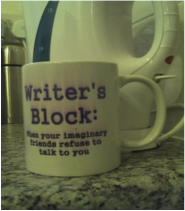
And I treated myself to a new mug (featured in the image above): ‘Writer’s block – when your imaginary friends refuse to talk to you.’  I’ve often said that I know more dead people in Edinburgh than live ones.  Since they were all getting an honourable mention in the book, I decided my ‘imaginary friends’ might just as well sit right there on my desk with me while I wrote!  I only used that mug when I was working on the book, as a point of principle.  Don’t knock it: it worked for me!

That sorted, I was able to get on with the job in hand.  I started a blog (another blog) for the purpose of monitoring my progress, in the hope that friends and colleagues would occasionally murmur the odd word of encouragement.  ‘True Imaginary Friends’ has been a useful outlet.  It provided me with somewhere I could write informally, and jot down any problems I came up against.   Such as the day I realised that the new chapter was far from the walk in the park that I’d anticipated

On the whole, the existing chapters didn’t take long to tidy up, but I had to pare down the chapter that would precede the new one, add some of the pared material to the new chapter, and rearrange the entire new chapter to accommodate the work I’d done in recent months.  Apart from the intellectual exercise involved, it was also rather time-consuming.

Time

Having a full-time job places constraints on my writing time – I’ve become used to that.  I did my PhD part-time, after all.  I just book annual leave when the need arises.  Where I nearly came unstuck, though, was when I then got the opportunity to do a few lectures at another institution.  I was already committed to the book; and to writing and presenting two conference papers; and now I had lecture-plans to prepare.  There followed an invitation to speak to a local piping society.  (Bagpipes, that is. I’m not a piper myself, but my subject interests pipers.)  Could I say no?  Certainly not!  It’s all advance publicity for the book, after all.

Images, Maps …

Whilst I had no illustrations in the thesis, I thought a few well-chosen images would enhance the book.  One per chapter … so I scanned some of my Victorian song-collections.  The scans weren’t quite up to publication quality.  I ordered up the appropriate images from the uni library.  They, and another one, had permissions to be sought.  Gradually I whittled away at the list, until there was just one problem: finding a map.  I didn’t want just any old map – it had to have the names of various Hebridean islands and key Scottish locations, but nothing else.  If you want a map drawn, Daniel Dalet, c’est l’homme – he’s the French cartographer who runs D-maps.com.  And he’s very helpful indeed!

And an Indexer

As I worked on the manuscript, questions kept occurring to me.  One concerned the indexing.  Find out what your publisher prefers: I had the choice of having the indexing fees subtracted from my royalties; doing it myself using the facilities available on a pdf; or engaging my own indexer.  Conference networking proved its worth, when I was lucky enough to be put in touch with an indexer actively looking for indexing in my general subject area.

Looking Ahead

At the time of writing, my book has an ISBN; is in editorial/production; and is advertised on Ashgate’s website.  Oh, and it has a publication date: March 2013.  It’s really happening!   There’s only one problem: what shall I write about next?

Websites and Contact Details

  • Tweet me @Karenmca
  • Email: K.McAulay@rcs.ac.uk

How to be a Hackademic #2 by Charlotte Frost & Jesse Stommel
Image by http://www.flickr.com/photos/fiddleoak/ under this licence: http://creativecommons.org/licenses/by-nc-sa/2.0/deed.en_GB

Hybrid Pedagogy’s Jesse Stommel and our very own Charlotte Frost rethink academic life and writing productivity in this on-going series of hints, tips and hacks.

DON’T WASTE. Make sure that what you do outside of your professional life is both a respite and also feeds your academic work. If an extracurricular project you’re working on is monopolizing too much of your time, find a way to elevate it to a serious component of your research. For example, if you are an English professor and find yourself spending too much time making self-produced b-movies with your iPhone, why not do some research on the history of low-budget filmic experimentation. Find ways to instantly apply new discoveries or re-purpose tasks to add value. If you have a pile of grading to do, why not create a quick project that allows you to reflect on assessment? Did you just write a new bio for a conference? Where else can you put that new bio? Have you had an article rejected? Can you turn at least some of it into a blog post for a site with a large audience?


Want to be a full-time Hackademmic ?Get on track and read this tips.

5 tips for publishing a book from your dissertation by Gina Neff

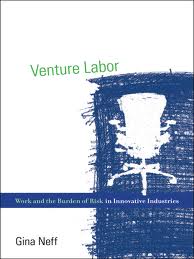
Today’s post is by published author Gina Neff. She is an Associate Professor in the Department of Communication at the University  of Washington. She is also a Chair of the Communication and Information Technologies Section, American Sociological Association and the author of Venture Labor: Work and the Burden of Risk in Innovative Industries. You can follow her on Twitter at @ginasue.

1. A dissertation is not a book. Figure out what makes your research useful, interesting, and relevant to your field. There are obvious differences between dissertations and books, of course, but when you start to “speak” like a scholar instead of a graduate student your work and your ideas will be heard differently. The wisdom of William Germano’s From Dissertation Into Book cannot be overstated.  Repeat: cannot be overstated. If you get a rejection notice (and expect to get one) that says you should read Germano, you’ve not done your homework.

2. Get advocates for your book. Books do not publish themselves (unless you’re thinking of self-publishing, and if you are thinking such silly thoughts as a junior academic then shame on you). Books, like all cultural and media products, are produced in social networks. Figure yours out and get advocates for your book who are established within that network or scholarly community. You already have advocates for your dissertation (presumably your chair, your committee, co-panelists from professional presentations). Figure out who will support you in revisions, proposal writing, picking the right press, finding the right series, etc.

3. Focus. This is advice for both you and your manuscript. Revising a dissertation into a book is hard. Figure out what you want to say to your field, what contributions you have, and focus that into a coherent manuscript. Along the way, you’ll need to find time to focus yourself – turn off the internet, step outside of the classroom, get to the library or shut your office door, and sit down and write.

4. Think about markets. Books are products. Even if you’re in a relatively small and specialized field (or perhaps because of it) you’ll need to think about who will buy your book and why. Your potential editors will be thinking these thoughts. Does your work speak across disciplinary lines? With a little work can you make your work relevant, readable, and intelligible to interested scholars in related fields? Thinking about how the book might be marketed shouldn’t be your first or primary consideration, but it should be one thing you consider when revising your dissertation.

5. Write your book. A first book is not for your dissertation chair, your department chair, or your tenure review committee chair. Those voices, or fears of those voices, may be in your head as you tackle the difficult job of revisions. But the book is yours—own it and advocate passionately for the ideas that lead you to pursue this work in the first place.

How to be a Hackademic #1 by Charlotte Frost & Jesse Stommel
Image by http://www.flickr.com/photos/fiddleoak/ under this licence: http://creativecommons.org/licenses/by-nc-sa/2.0/deed.en_GB
[Photo by Flickr user fiddle oak]http://www.flickr.com/photos/fiddleoak/6908080437/

Hybrid Pedagogy’s Jesse Stommel and our very own Charlotte Frost rethink academic life and writing productivity in this on-going series of hints, tips and hacks. 

WRITE. Establishing a writing lifestyle is perhaps the most important step you can take in securing your successful academic career. If you devise a routine right from the start, it’ll seem like second nature. There are all sorts of ways of doing this, but suffice to say you must build writing into your working week. In fact, preferably, you should make writing a part of your daily routine. Once you’ve gotten into the swing of things, writing will no longer seem like a chore, your productivity will increase, and you’ll excel in your field. And it really can be as simple as just pulling up a chair and writing. In fact, we’re guessing there’s a writing project you should be doing right now, so our first tip is to stop reading this and write at least 250 words on any project you have underway. And, yes, we do mean right now! Want more tips on Hackademic? Click here!

Susan Nance, the Grad School Ninja talks book publishing with an academic press
(C) http://www.flickr.com/photos/james_scott/

(C) http://www.flickr.com/photos/james_scott/

Today’s post, is the third in a short multi-authored series on PhD2Published where I have been collecting hints and tips from published academic authors, all about successfully getting an academic book published.  Today’s tips are offered by Susan Nance, an Associate Professor of US History and Affiliated Faculty with the Campbell Centre for the Study of Animal Welfare at the University of Guelph. Her next book, Entertaining Elephants: Animal Agency and Business in the American Circus, is due out from the Johns Hopkins University Press in January 2013. For more information, you can visit her website.

My big five principles for getting a book out with an academic press:

1. Write your manuscript as a message to the best people in your field and for those who will accept the basic premise of what you’re trying to do, even if they might argue on the details and/or will learn something from your research. Do not write for people who don’t ‘get it’ about what your basic research assumptions are.

2.  Choose the right press for your needs. Just need to get tenure? Pick a no frills press that won’t make you do endless revisions. Do you want to sell books, for course adoption or trade audience? Pick an academic press with a strong trade title list since they have existing networks to market scholarly books to trade audiences. For example, the book I’m researching now I will try to publish with a Western US university press that has a robust trade list because I want my book to appear in all the touristy gift shops and the souvenir parlors of the national parks, historical societies and local history museums where lay history readers will find them.

3. When promising manuscript deliveries, don’t set self-imposed deadlines you can’t keep. We’ve all done it, but that doesn’t make it right and it doesn’t win friends at the press.

4. Realize that you are making a big investment in the press, not just that they are investing in you. So, you have a right to have them treat you well, keep you informed of staff changes at the press, not abandon you because your editor leaves the press, give you a cut of e-book sales, publish the ebook or paperbook promptly, give you a say in the book cover design, trust you about what your audience will expect to see in the manuscript, etc.

5. Always be patient and NICE to production staff. They have more power over your book than you realize and don’t probably get paid as well as they should.

Top 5 tips for getting your book proposal accepted by Beatrice Hale

Todays post is by Dr Beatrice Hale. Her most recent, and first academic book is a co-authored book entitled The Age of Supported Independence, published by Springer, Dordrecht, with Dr Patrick Barrett and Professor Robin Gauld.  They’re next book is currently in preparation. Here Beatrice provides her top 5 tips for getting your book proposal accepted by a publisher.

1. Conduct a thorough search of relevant publishers,

2. Send them a well written book proposal,

3. Be courteous and inform the publishers whom you contact that you will be contacting a number of publishers

4. Ensure that the proposal gives a brief outline of the related literature of theory and data (social science here). You must identify and stress where your book has its place/or can fill a gap,

5. Do a thorough reading of the publishers’ websites, and comply with their list.

Publishing your Thesis as a Book: a Question of Planning. Part One by Karen McAulay

In this post Karen McAulay shares her experiences of planning and publishing her first academic book. In the first of two posts, she reflects on planning to publish.

     ‘And when I get my PhD’, you muse, ‘then I’ll publish it as a book’.  Admit it!  Haven’t we all thought this, in an unguarded moment?

Advice

Several years ago, I stumbled across this advice:

  • Leave it a year or so after getting your PhD
  • Deliver a few papers and/or publish a couple of articles
  • Start thinking about publishing your thesis as a book.
  • You’re a more attractive proposition to a publisher if you have already published on your subject.

I graduated in December 2009.  I diligently wrote papers – and published a few things – and didn’t start thinking about ‘the book’ until Autumn 2010.  But where to publish it?  I really didn’t want to go down the self-publishing route.  I didn’t want the expense, or the bother of production and marketing.  I did want to be published by a reputable company that would (a) know where to get the book reviewed, and (b) be as keen as me to sell a reasonable number of copies.

I could see that my topic would probably fit into the scope of several academic publishers.  I also wondered about a couple of publishers who might have been interested in my topic for its regional connections.  However, I was fortunate enough to be approached by the series editor of one of my target publishers, before I’d even contacted their publishing house, and that was the one I decided to go with.

The Book Proposal

So, what can you expect when you have a publisher interested in your title?  Submitting a book proposal comes first.  You have to be able to describe your target audience, and demonstrate how your book fills an unfilled niche.  It’s crucial that you’re up-to-speed with what has recently been published in your field.  If A says this, and B covers that, but you can demonstrate that you’ve devoted a good part of your thesis to some other aspect – or taken a different approach – then that’s all good!

You may have to submit a demonstration chapter.  Only you will know if the tone of your thesis reads like a book, or would still need more work to make it more accessible.  I suspect this is partly a question of writing style, and partly of subject matter.  I was asked for the link to my e-thesis, and that was that.

If you’ve published scholarly articles, you already know about the peer-review.  This can take a long time.  (I wouldn’t venture to pronounce on how long is too long, because I don’t know what’s normal in the book-publishing world.)  Similarly, I imagine there must be a wide range of responses, between “No, thanks”, and “Yes, please”, but I can only speak for my own experience.

The Contract

At the end of the day, I wasn’t asked to re-write anything.  However, I was asked if I could add another chapter, so that the book would have added value over and above the online thesis.  I was only too pleased to do this, since I’d gone on researching post-graduation, and this offered the perfect opportunity to get it in print, in context.  (I’d spoken on my subsequent research, and had a paper that would serve as a draft, but more work was needed before it would be a chapter that I could feel proud of.)  I agreed to supply the manuscript in four months.

It was by now just before Christmas 2011.

Once we’d taken down the Christmas tree, I decided, I would get started….To be continued.

About Karen

Websites and Contact Details

  • Tweet me @Karenmca
  • Email: K.McAulay@rcs.ac.uk

My day-job is Music and Academic Services Librarian at the Royal Conservatoire of Scotland.  After hours, I’m a musicologist specialising in historical Scottish song collections.

My first degree in Music at Durham, was followed by a research Masters in mediaeval English plainsong uses at Exeter, then doctoral studies into mediaeval English music.  A subsequent postgraduate librarianship diploma at Aberystwyth left me with insufficient time to finish the mediaeval music research.

Librarianship at the University of East Anglia, Metropolitan Borough of South Tyneside and the Royal Conservatoire of Scotland has filled in the decades before I resumed research again, this time into Scottish song collecting c.1760-1888. After 5 years’ part-time study concurrently with my full-time work, I graduated with a PhD from the University of Glasgow in 2009. I submitted my book MS at the end of April 2012: Our Ancient National Airs: Scottish Song Collecting from the Enlightenment to the Romantic Era.

#acwri Live chat Open Topic: 16.08.12

Our latest #acwri live chat on Twitter was open topic so we didn’t have any pre-set topic choices. Both me and Jeremy chaired this chat. With our now well established community this resulted in a heady mix of discussion focusing on a variety of academic writing related topics. These have been summarised as always on Storify by Jeremy and you can read it below. The aim is too provide some really helpful tips, to encourage thinking about academic writing and kick start thinking about the one of the key foundations of academic life/work; writing.

Weekly Wisdom #99 by Paul Gray and Simon E. Drew

SPECIALIZE. GET KNOWN FOR SOMETHING. It helps visibility. Sadly, brilliant, restless people who work on several topics simultaneously usually do not achieve as much visibility as those who plod along in the same area for many years.

#Acwri Twitter chat, 2nd August 2012: editing and revising

The latest Twitter chat was chaired by Jeremy and was all about editing and revising academic writing. This followed the first #acwri live chat held in Australia/South Pacific time as well, chaired by Studious Jenn. You can find out about the live chats as well the  new one at our About page. Editing and revising was voted as the preferred topic by the #acwri community on Twitter. The summary and key points form the UK time chat are documented below: