Exact matches only
Search in title
Search in content
Search in comments
Search in excerpt
Search in posts
Search in pages
Search in groups
Search in users
Search in forums
Filter by Categories
Academic Practice
Academic Writing Month
AcWri
AcWriMo
Blogging and Social Media
Book Editing
Book Literature Review
Book Marketing and Impact
Book Planning
Book Proposals
Book Publishing
Book Writing
Books
Citations and Referencing
Collaboration
Community
Conference Paper Abstracts
Conference Paper Editing
Conference Paper Literature Review
Conference Paper Marketing and Impact
Conference Paper Planning
Conference Paper Presenting
Conference Paper Writing
Conference Papers
Digital Publishing
Experimental Digital Publishing
Grant Abstracts
Grant Completion Reporting
Grant Impact Statement
Grant Literature Review
Grant Methods Section
Grant Writing
Grants
Journal Article Abstracts
Journal Article Editing
Journal Article Literature Review
Journal Article Marketing and Impact
Journal Article Peer Review
Journal Article Planning
Journal Article Writing
Journal Articles
Networking
News
Open Access
Productivity
Reading and Note-Taking
Reseach Project Planning
Resources
Tools
Uncategorized
Website
Getting Published: What’s Your Approach?

Last week, the Guardian Higher Education Network published a blog post I wrote for them about the origins of this very website. I discussed where the idea came from and noted that despite being engaged with all things digital, I set up the site because  I was well aware books (and all manner of peer-reviewed publishing) still carry weight in academia.

Through much of the first year of PhD2Published, we featured sets of tips from well-known academic publishers on how to get published. In line with this, and the spirit of PhD2Published, which all about sharing, I also offered Guardian readers my own set of tips in the blog post. For example I said:

Think about your market.

If you want to end up with a printed book published by a reputable academic press, you will need to make a case for its economic viability. This means market research. Don’t just tell your publisher the book would appeal to course X, Y and Z, tell them why. What exactly does it do that other books in the field don’t? How will it transform teaching in this area? Why will course managers make students read your book over the others on their list? Show the publisher there’s a really good chance your book will sell – preferably in decent numbers. Read more

The Road from Dissertation to Book Has a New Pothole: the Internet

An article on The Chronicle of Higher Education called: The Road From Dissertation to Book Has a New Pothole: the Internet raises some important points about whether a thesis that exists online can still be published.

The important thing to consider is  that most publishing has to function as a viable business model. If a thesis has been freely available online, why would anyone buy it? And you need to bear in mind that when your book is sold, it’s likely to be funding not it’s own production, but that of the next book in line, so you’ve got more weight on your shoulders than just your career.

That said, as Gary Hall elegantly argues in Digitize This Book, these business models are being rapidly redeveloped by forms of online content sharing. So for example, your work might reach a bigger audience by being freely available online and this might become a surer route to career success.

Also, remember that presses seldom publish a thesis as is. We have a series coming up by Sarah Caro, author of How to Publish Your PhD, that explains how much redrafting must go on before your average thesis is even remotely book-shaped.

Or you can take my route and work on a book that expands one element of your thesis and maybe come back to tackling the whole thing later (losing that element if need be). Or just have done with your thesis altogether, see it as a ladder you climbed to get this far and then kick it away and start on the next one…

Hello! We would like to publish your thesis … (Note of Caution)

Isn’t that what we all want to hear? Well yes and no as it depends who wants to publish it. Most PhD students I know have received at least one email with the exciting title ‘We want to publish you thesis’ or words to that effect and the follows this kind of line …

Dear ….

I am Joe Bloggs and I work for (insert name of random company here). We would like to offer you the possibility of making your academic paper / thesis available as printed book.

I would appreciate if you could confirm your interest in our publishing house and I will be glad to provide you with detailed information about our services.

I am looking forward to receiving a positive response from you

Read more

Lauren Bailey – A Procrastinator’s Guide to Finishing Your Book on Schedule

This weeks advice on how to finish your book on schedule comes from Lauren Bailey. Lauren is a freelance writer and blog junkie, who blogs about online colleges. Questions and comments can be sent to: blauren99 @gmail.com.

Submitting a proposal and getting it accepted can be difficult enough, but the real work comes along when you must deliver on your promise and complete the book on schedule. Whether you are publishing your dissertation or are writing a different work related to your research and expertise, it pays to nip procrastination in the bud and have a plan for finishing your book on schedule. Read more

Weekly Wisdom #36

Weekly Wisdom #35

If the jobs aren’t out there, pour your energies into getting your book pitched & written.

Weekly Wisdom #32

Weekly Wisdom #32

Dare to ask collegues about the contracts they’ve accepted and what worked or didn’t!

How I went from PhD to Published: Part II

As I said in my last post, I’ve signed a book deal and am walking you through the steps that got me there. Where were we up to? Oh yes, I’d set up this website but lost valuable book-pitching time to handling it alone.

With an intern to help me with PhD2Published and bit of time back, I decided to think strategically again. I looked at the topic of my book and what its significance would be at a broader level and realised that that it would gel with a project on the future of academic publishing in the arts. In fact, I noticed what had been staring me in the face from the start, both PhD2Published and my book were yet more examples of my fascination with broadcast tools in the arts. And then I noticed something even more important, my book could become the test case for the project! This meant the book and project could support and lend weight to each other – not to mention reciprocally nurturing PhD2Published.

With this academic alchemy in mind, I researched the people best able to support my vision for the project and, impressed by the work I’d already done with PhD2Published they all came on board. Read more

How I went from PhD to Published: Part I

I’ve signed a book deal and my first academic book is due to come out mid 2012! But how did this happen? Well, I’ll tell you one thing, it wasn’t down to magic! Nope, it’s pretty simple when you look back over the last few months. I’ll walk you through it.

I decided that I wanted to try more of the writing I’d learnt how to do with my PhD and figured that with the job market looking so bleak; it was a really good time to focus on getting my first book published.

I talked to everyone I knew who knew something about academic publishing and after one particularly useful bit of advice, I decided not to try and publish the content of my thesis now, but take a section that was of standalone interest and work it up into a book.

I read submission guidelines on a range of academic press websites and wrote a proposal. I made a list of courses I that might use my book and added it to the proposal.

I sent the proposal out and got rejected. Read more

Author Tips: Verina Gfader

This weeks authors tips come from Verina Gfader, author of ADVENTURE-LANDING a compendium of animation, Berlin: Revolver Publishing, 2011

Top 5 Tips for Getting Published:

1.    Don’t wait too long to approach publishers after completion. If you consider a later publication choose one which also includes post-doc research.

2.    What’s your preferred publisher? Try them first.

3.    Before that, identify what the book will be about? What kind of publication? Who is the reader/audience?

4.    Think about funding! (essential), identify possible funding bodies, sponsors

5.    Do you “need” the publication? It takes a lot of time. Think about what you want to do, career-wise

A Couple of Rules for Getting a Book Deal

stumbled across this great post: The Five Rules of Getting a Book Deal by writer Jean Hannah Edelstein and really liked it. It’s not primarily for academic writers, but rules two and three really got me thinking…

Rule two, according to Edelstein, is ‘Research the Business of Publishing’. She notes: “Yes, you should research your book, but you also need to research the business of publishing.” This is something that PhD2Published was specifically set up to help with. It’s all very well being told by your supervisor or other academic chums that you need to publish a book, but unless you wrote your thesis on academic publishing for the early-career academic (which now I think about it might have been a better idea), what on earth do you know about publishing? Edelstein goes on:

“What books have been published that are similar to yours, with which your book will compete? Who published them? How were they published? What market are they aimed at? Some aspiring writers think that they should just submit their work to everyone under the sun, until someone bites, but that’s a waste of your time (and theirs) – you want to identify the people who may be genuinely interested in your project and target them carefully.” Read more

Author Tips: Kelli Fuery

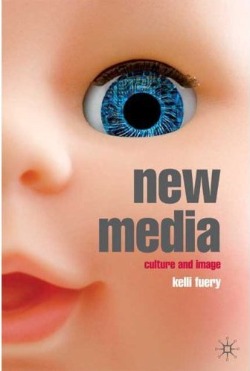
This week, Dr Kelli Fuery, author of New Media: Culture and Image, has given us her top tips for getting published organized around the theme of interdisciplinarity:

1. Interdisciplinarity: on Publishing

Previous tips in PhD2Published have emphasized the importance of learning the process of academic publishing. In my experience, I have divorced the world of academic publishing and Academia. Publishers, all publishers, have one main goal – to make money. So in very dry terms, you need to present them with a product that they can sell and the more people that they can sell that product to, the better. Academics rarely think about their research in that way but it is a great start when you begin to write monograph proposals. A PhD uncut needs reworking in order to become a product that can be sold.

Identifying the core claims of your Doctoral dissertation and connecting them to specific fields of publishers will also help you identify target market which publishers can pitch to. Learning which publishers sell textbooks and which don’t is a great asset.

Interdisciplinarity in publishing means presenting your product and making it appealing for more than one target audience. The subject, the methodology, the level of writing – all these things can be presented in such a way that offer variety, diversity and depth to publishers so that they become aware of how your research can be ‘sold’ to more than one market. How you present that and persuade them is up to you. Read more

It’s Official: PhD2Published Works!

ell, it’s official: the PhD2Published method works!

We’ve had our first success story: me (Charlotte Frost PhD2Published’s founder)!

Yes, that’s right, I’m writing this blog post as someone who has signed a contract to get their first academic book published! You may have already seen me get excited about this!

Around the time I set up this resource, I wrote my first book proposal and had an instant rejection. I licked my wounds and set about learning how to make a successful pitch (which led me to establish this site – why not pass on my research?!). I then wrote draft two, which did get sent out to another publisher, but before they had the chance to reply I made a third even sharper draft (after receiving some excellent advice from Gary Smailes of BubbleCow). It was this third version that received the following response from Gylphi editor Anthony Levings: Read more

Weekly Wisdom #28

Weekly wisdom #28

Write Something that expands upon one section of your thesis, rather than grapple with the whole thing.

Weekly Wisdom #27

Weekly Wisdom #27

Ask your supervisor whether they honestly think you’ve got the bones of a publishable book in your Ph.D research

How to Get Your First Academic Book Published

My five-point guide on how to get your first academic book published is out now at the Postgraduate Tool Box. I was delighted to be asked to contribute to their vast set of resources and hope it proves useful to other post-grads. They also have some useful resources you should check out for publishing.

It starts like this:

1. Learn About Academic Publishing. Unless you happen to be studying the publishing industry, it’s likely you don’t know enough about it to make a successful book pitch. What I mean is that, you need an idea of what academic publishing actually entails, so that you know exactly what you’re asking a publisher to do when you pitch to them. There are lots of ways of learning about publishing from, for example, industry websites including booktradeinfo, Publishers Weekly and theBookseller, but PhD2Published is also a good place to start…

Read more here…