Exact matches only
Search in title
Search in content
Search in comments
Search in excerpt
Search in posts
Search in pages
Search in groups
Search in users
Search in forums
Filter by Categories
Academic Practice
Academic Writing Month
AcWri
AcWriMo
Blogging and Social Media
Book Editing
Book Literature Review
Book Marketing and Impact
Book Planning
Book Proposals
Book Publishing
Book Writing
Books
Citations and Referencing
Collaboration
Community
Conference Paper Abstracts
Conference Paper Editing
Conference Paper Literature Review
Conference Paper Marketing and Impact
Conference Paper Planning
Conference Paper Presenting
Conference Paper Writing
Conference Papers
Digital Publishing
Experimental Digital Publishing
Grant Abstracts
Grant Completion Reporting
Grant Impact Statement
Grant Literature Review
Grant Methods Section
Grant Writing
Grants
Journal Article Abstracts
Journal Article Editing
Journal Article Literature Review
Journal Article Marketing and Impact
Journal Article Peer Review
Journal Article Planning
Journal Article Writing
Journal Articles
Networking
News
Open Access
Productivity
Reading and Note-Taking
Reseach Project Planning
Resources
Tools
Uncategorized
Website
Weekly Wisdom #79 by Paul Gray and David E. Drew

COLLABORATE AND COOPERATE. You are not alone either as a graduate student or as a young faculty member. You cooperate and collaborate with many others. Even the dissertation is not a one-person effort inasmuch as you work with an advisor and a committee, with people you study if your work involves human subjects as well as interacting on your topic with fellow graduate students.  When you begin your academic career, you need not sit off in a corner and try to do it all by yourself. You can collaborate and cooperate with peers, senior faculty, and even students. In a research institution, you will find you collaborate on projects with coauthors.  Most will be close by, but others are from your doctoral program or people whom you know through conferences and other professional interactions.  Your teaching assistants and your students will help you with specific tasks, including routine ones. You become part of an ongoing group that cooperates on projects, reads and critiques each other’s papers before submission, gives you ideas, and receives ideas from you.  It is a two-way relationship that you need to cultivate.  Although telecommuting is needed to obtain integrated blocks of time, you should allocate some time on campus for collaboration and cooperation.  It will make you more productive and enrich your life as an academic.

Writing Across Boundaries – introduced by Bob Simpson and Robin Humphrey

Today’s post, which includes some useful links to blogs about academic writing in the social sciences, introduces an exciting writing initiative currently being run by Project Leaders Bob Simpson [Durham University] and Robin Humphrey [Newcastle University]. The Writing on Writing link in particular provides great advice for doctoral students and academic writers alike. Bob tells us more about the project;

Doing a doctorate in the social sciences involves reading a lot of words, thinking up a good question and, in methodological terms, figuring out how to answer it, and then doing fieldwork or some other form of data collection and analysing it all and then comes the ‘writing up’.  In our experience, a lot of energy goes into preparing students for all these challenges, except, that is, the last one.  ‘Write me a draft of chapter three’ can be a very troubling request for a student perched at that tricky point between analysis and writing.

In recognition of the difficulties that might arise in negotiating this gap in the training of doctoral students we initiated  a series of workshops [with the help of an ESRC Researcher Development Initiative grant]. These were aimed at exploring some of the challenges faced by researchers writing a thesis which would draw on qualitative data of some kind.  The Writing Across Boundaries project held its first workshop in 2007 and for four years thereafter.  The workshops were extremely successful in bringing together researchers from a range of social science disciplines, who are all post-fieldwork, who could set about the specific task of reflecting on their own and others’ writing strategies.  From the feedback we have had, the opportunity to focus over two days on the business of writing and analysis has proved very useful for PhD students in their quest to produce texts that are engaging, accurate and analytically insightful.   Crucially, the workshops have dealt with some of the more personal challenges faced in producing text for others to evaluate as well as covering the practicalities of writing.  The workshops will now place annually, open to all, but organised within the ESRC North East Doctoral Training Centre.

Accompanying the workshops is a Writing Across Boundaries website which provides open access support for those writing up qualitative data.  The main sections are as follows:

  • Writing on Writing is an initiative in which scholars who have made a significant contribution to the social science literature offer personal reflections on the process of writing.
  • In Postgraduates on Writing, we publish short pieces from research postgraduates on any aspect of the process of writing in doctoral study.
  • In the Resources section are sections dealing with Drafting and Plotting, the Data-Theory Relationship, Narrative, Rhetoric, and Representation. We have also included a general section containing Hints and Tips on Writing.

Check it out!

Weekly Wisdom #78 by Paul Gray and David E. Drew

LEARN GRANTSMANSHIP. It is a skill like any other. If necessary, attend special workshops. Educate yourself about who funds your type of research. Don’t be snobbish! You may feel deep down that you did not train yourself for a life of the mind in order to become a peddler of slick prose to federal and foundation bureaucrats. But an ability to raise money can have a seismic effect on your career. Simply imagine yourself as one of two finalists for the plum aca­demic position you always dreamed about. Your competitor has a six-hundred-thousand-dollar grant and you don’t. What are the odds in your favor?

Weekly Wisdom #77 by Paul Gray and David E. Drew

DEVELOP A POOL OF RESEARCH REFERENCES STORED IN YOUR COMPUTER. It is one of the most useful things you can do. You will use the same references over and over as you do research, as you write pa­pers, and as you teach. You will add to this list as you read new articles and books in the literature. We personally recommend the software called EndNote although other similar kinds of software are on the market. Software for references contains three useful features: It provides a standard form for entering references so that you remember to include all the necessary data. Separate forms are provided for each type of reference (books, articles, newspa­pers, Internet URLs, etc.). It automatically converts the format to the reference style of the journal to which you are submitting. Lots of different styles are available. Since you may be sending an article to several journals sequentially before it is accepted, this au­tomated feature saves you hours of drudge work in converting reference formats. It provides space for including abstracts and notes so that you can record what the reference was about for future retrieval.

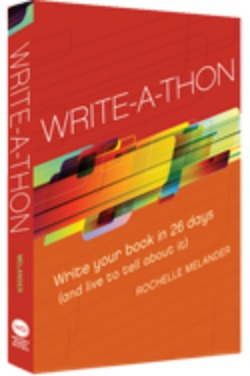
Rochelle Melander, ‘Write-A-Thon: Write your book in 26 days (and live to tell about it)’ – A Review by James Smith

“You have to do the work. Tired, angry, worried or overwhelmed: You need to write. You have to work in the midst of your complicated life. There will never be a perfect time to write the book bubbling within you. Sometimes you just have to work at the big things while the little ones pile up around you.” (p. 6)

I would like to take the time to explore Rochelle Melander’s Write-A-Thon: Write your book in 26 days (and live to tell about it) from the perspective of a PhD student. At the start of a new year and at the beginning of many new ventures in writing, this book has provided many timely pieces of advice. The merits of the Melander’s book for the PhD student are two-fold: First, Melander sets out to disabuse any potential writer of every excuse that one could possibly think of for delaying, procrastinating or otherwise sabotaging the decision to write. As I’m sure we can all agree PhD students are serial offenders in this regard. Second, the book sets out a veritable arsenal of tools for shaping and creating a book-length piece of writing, many (although not all) of which are highly relevant for PhD writing. The book shames the tardy writer into action while simultaneously encouraging strategies to ease the strain of writing. It is a toolbox full of useful devices for writing, some highly relevant to the academic, others less so.

During the month of November of last year, the PhD2published community embraced AcBoWriMo (Academic Book Writing Month for the uninitiated) with great gusto, featuring a series of blog posts and a vigorous #AcBoWriMo tag on Twitter. As part of the experience, Charlotte presented us with a series of four posts based around Write-A-Thon (i ii iii iv), each of which I highly recommend that you read. As you will apprehend, the book is extremely good at seeking out excuses and stripping them away, anticipating your paranoia and soothing it, pre-empting your mistakes, correcting your mistakes, anticipating your confusion and providing answers. Writing is an inherently uncertain endeavour, and yet Melander’s confidence in the power of human motivation provides many useful strategies for boosting one’s writing. The blurb promises to teach the reader how to start out well prepared, maintain their pace and bask in their accomplishment.

Although aimed at anyone interested in writing any kind of book and inspired by the annual NaNoWriMo (National Novel Writing Month) initiative, Write-A-Thon has several virtues that recommend itself to the graduate student, early career academic or seasoned academic in need of motivation and inspiration in the face of a writing project. This recommendation turned out to be highly convenient, for it helped me write this review. I turned (not without a certain amount of irony) to the first section of the book I was to review, entitled ‘Attitude Training: Get Rid of the Excuses’ (pp. 9-25). It helped; a fact to which the existence of this review can attest. Melander always seems to have something to say to the PhD student, a category of writers constantly plagued with motivational problems and doubts. We all need a constant stream of encouragement and exhortations to write when struggling with a thesis deadline. The section ends with a section on the healing power of writing, reminding us that writing need not be a chore. As Melander puts it, “Write now, get healthy!” (p. 25). On the topic of health, the PhD student will also be drawn to a section entitled ‘Life Training: Schedule the Marathon’ (pp. 103-129) in which the reader can find useful advice on shaping one’s writing environment, measuring one’s progress and maintaining one’s schedule.

Melander offers a great deal to any PhD student faced with one of those inevitable ‘crunch time’ moments when there appears to be far too many words to write and not enough hours in the day in which to write them. Open Write-A-Thon on any given page and you will find a tool to write coupled with games, tricks and strategies to avoid commonly encountered pitfalls in writing. In the second part of the book, entitled ‘The Write-A-Thon’, the book schools the reader in the avoidance of writing phenomena such as ‘Monkey Mind’ (p. 138). Although a great deal of the material in this section is perhaps more suitable for fiction writing, it covers many problems shared by all writers regardless of background. This was a refreshing dose of perspective, for it reminded me that all writers, any writers, experience these problems regardless of what they are attempting to write. The final section of the book, entitled ‘Recovery’ (pp. 202-218), contains some general information about revising your writing and pitching it to a publisher. Whereas the PhD student would perhaps be better served by the more specific advice in ‘How to Publish your PhD’ by Sarah Caro, there is some good common sense information in this section that should be of interest to the PhD student.

In summary, Melander’s book contains much of interest to the doctoral student in need of strategies specifically tailored to the purpose of writing a great deal in a very short amount of time. Melander functions as a writing guru and a source of moral support in equal measure. Although the timeframe and the nature of the project proposed by the NaNoWriMo style project of the book differs from the PhD experience, the reader will find that Write-A-Thon has a great many features that will appeal. I will leave you, as the book does, with a piece of advice that we should all keep in mind.

“And so, dear writers, the journey is not over. You have finished one race. Be proud and happy for what you have accomplished. But know this: You have more races to run, more books to write. Take a break, celebrate, and begin again!” (p. 219).

Weekly Wisdom #74 by Paul Gray and David E. Drew

AS A FULL PROFESSOR YOU MUST BE KNOWN FOR SOMETHING. When you reach the exalted state of tenured associate professor, the time has come to see the big picture and undertake large, long-term research projects so that you can become a full professor. Unfortunately, you spent the previous six years (and your dissertation time) doing small, short-term research projects, each designed to earn you a publication or two so that you could achieve tenure. The system never taught you how to conduct a large project. You are therefore put back into a learning situation. Merely doing more of what you did as an assistant professor doesn’t hack it in major institutions because the promotion committees ask different questions. Having survived the tenure process, everyone knows you can do research. But to be a full professor, you must be known for something.

7 Habits Of Highly Effective People: Part 2 by Julio E. Peironcely

Julio E. Peironcely is a PhD student in Metabolomics and Chemoinformatics at Leiden University, The Netherlands. In his free time he writes for his site juliopeironcely.com about his research, academic life, social media, and lifestyle design. You can follow him on twitter @peyron.

This is the second part of two that reviews the book 7 Habits of Highly Effective People, providing academic advice for PhD students and post-docs. To view the first article and the helpful tips it provides, follow the link here.

Interdependence

Now that you control yourself, start working with other people and get the most of it. How can we collaborate? How can we convince them to join us?


Habit 4: Think Win-Win

This sounds a bit business-like. You should seek for partnerships that are mutually beneficial, where both parties benefit after the interaction.

If no win/win can be achieved, realize that a no-deal is a perfect compromise.

For PhD students and academics: Are you a theoretician? Seek for an experimentalist and propose to collaborate on a project (and agree on the other of authorship in related publications). See it as a project that without the other person could not be performed.

Does somebody want you to process a lot of data and do some statistics? And they don’t plan to add you as co-author? This is a win/lose situation that should be answered with a “no-deal”.

Habit 5: Seek First to Understand, Then to be Understood

This chapter is not only about listening, but to listen using empathy. Do not rush into offering solutions when somebody is presenting a problem. Let them finish, make the effort to understand the problem at hand. If you do so, they will reciprocate with you.

Using empathy means putting ourselves in the perspective of the other person. Do not try to filter what they say with your own assumptions and way of thinking.

For PhD students and academics: Coming again to collaborations between theoreticians and experimentalists. Try to understand how the other person’s thoughts compare to yours in key topics.

Your approach to science might be different. Your timing as well. Maybe you care more about interpretation of results while another person cares more about describing a solid methodology. You might be data-driven and the other person hypothesis-driven. In any case, see what are the other person’s fears and hopes before exposing yours.

Habit 6: Synergize

Use trust and understanding to maximize the output of a group. With careful communication, leverage the differences of the individuals in the group, so the product is much larger than the sum of the individuals.

Identify in others what’s in them that is beneficial for the group. As well, you should detect what it is about them that sets you back so you can work on adapting yourself to that.

For PhD students and academics: In a large collaborative project you might find young motivated PhDs, busy supervisors, retired experts, and other people. Instead of getting frustrated, try to maximize what they have to offer: like the energy of the PhD students, the network amplification the supervisors, or the experience of the retired guru.

Next, use your empathy skills to minimize the effect on the team of what you don’t like: the chaos of the graduate student, the busyness of the supervisor, and the same old stories by the retired expert.

Self Renewal

It is not enough to work once on each habit and forget about them, in fact, it is a lifetime effort. Think of it as an iterative process, that you should evaluate and repeat every now and then.

Habit 7: Sharpen the Saw

Here, the author makes reference to habit 3 and encourages you to identify those things that might be keeping us from our goals. Step back, take a break, and decide what to do to renew yourself. It might be getting healthier by doing some exercise, meditating to clear your thoughts, or even re-write your mission statement.

In any case, schedule time to perform those activities that will keep your whole system running in the right direction.

For PhD students and academics: Senior scientists the sabbaticals. Since you are a PhD it might still be early for this. What you can do is to join a short side project, in order to try something new, recharge your motivation batteries, and collect new ideas.

You might want to  allocate some minutes a day to just think. What? Yeah, thinking, aren’t you paid to think? Spend time generating (and writing) ideas for future projects, grant applications, daydreaming, or simply to help others.

Conclusion

The 7 Habits Of Highly Effective People is a bit of a philosophical book; sometimes even religious. Despite this, it can be applied in many areas of life and it can definitely help PhD students and academics to organize themselves better. If used correctly, the learning’s in this book can help you to be more effective and motivated. At the end, you will create new habits, in a natural way.

7 Habits Of Highly Effective People: Part 1 by Julio E. Peironcely

Julio E. Peironcely is a PhD student in Metabolomics and Chemoinformatics at Leiden University, The Netherlands. In his free time he writes for his site juliopeironcely.com about his research, academic life, social media, and lifestyle design. You can follow him on twitter @peyron.

This is the first part of two that reviews 7 Habits of Highly Effective People, a book that provides advice relevant to PhD students and post-docs.

I have lost a lot of time during my PhD. On the one hand I waste time as everybody does; on the other hand, I waste time searching for the best tool to organize my time.

Initially I thought that I was not using the right tools to manage my projects, tasks, and time. Therefore, I tried all sorts of analog and digital tools, like a Moleskine, the GTD methodology, the pomodoro technique, Wunderlist, Remember The Milk, Google Tasks, Evernote … you name it. So much wasted time searching for the tools, implementing them in my workflow, and testing them. Can you imagine all I could have achieved if I had instead just, well, worked?

But something did not feel right. Once the new system was implemented I would not stick to it, by not creating the habit of using the tool and using it effectively. I would move on the next tool and start all over again.

I had to change myself.

I came to realize there was something deeper that needed to be changed, something within me. But all those time management books were talking about externalities that after hard experimentation were far from my control. This was when the 7 Habits Of Highly Effective People came my way. This book goes further than time management. It is about defining who you are and who you want to be. It presents the tools you need to define the rules you want your life to be based on. Although it is not aimed at PhD students and academics, it should be included in the Top 42 Books For PhD and Graduate Students.

I found out that these 7 general principles, outlined in these two posts could help me to be more effective during my PhD and in any writing projects I undertake.

Read more

Weekly Wisdom #68 by Paul Gray and David E. Drew

REUSE THE LITERATURE SEARCH FROM YOUR DISSERTATION. If you conducted a thorough literature search for your dissertation, you will never need to do one again as long as you write in the same area. If you write in an adjacent field or on an adjacent topic or want to include the latest reference, your cycle time for the literature search is much, much shorter. Remember too that your students or graduate assistants will perform some of the slogging that needs to be done.

Those Wonderous [Academic] Stories by Claire Warden

A few weeks ago I indulged another of my slightly off-the-wall passions by heading to Glasgow for a Yes gig. Progressive rock (at least the softer side of this movement) is one of my ever-growing interests. Before discovering these bands I only listened to classical music in the assumption that only poor musicians play rock. How wrong I was! I am always amazed by the dexterity, talent and incredible musicianship of these performers and, even as they get older, their commitment to creating challenging music. For these guys are risk takers. They do not hide behind G,D,C chords or 4/4 time signatures; their music is dangerous, unpredictable and exciting. Through all the perils of tough tempos and impossible lyrics, they strive for excellence while being aware that such risks might necessarily mean that perfection is impossible. As always, I find it inconceivable to disconnect my work from my passions and began to wonder how we might incorporate a level of risk taking into our daily academic lives.


It is certainly important to develop this strategy in teaching. Safe teaching, trudging over well-worn ground is as dull as it sounds. Risky teaching (exploring new methods of learning, asking students for feedback, incorporating new material on to the syllabus, making lectures more interactive) is exciting, though, of course, fraught with danger. Imagining the classroom/lecture hall/studio as a space of exploration, experimentation and constant learning on both sides of that artificial student-faculty divide transforms our teaching style.

Read more

Weekly Wisdom #66 by Paul Gray and David E. Drew

BACK UP, BACK UP, BACK UP YOUR RESEARCH. Don’t be victimized by unexpected electronic failures that could destroy your files. Always back up important electronic files, including your raw data and draft text for your research. If you have questionnaires or computer output, keep the originals at least until the dissertation is handed in. After editing or modifying a draft chapter, resave it on removable media.  Print out a copy from time to time.  Back up text material frequently. Similarly, keep all valuable devices (including computers and removable media) that hold important, valuable information secure from theft.  Do not assume that theft won’t occur in the ivory tower or when you travel.

Luc Reid – The Will to Write: Getting Past the 6 Most Common Obstacles

Luc Reid is an author and blogger specializing on  habits and motivation found in recent psychological and neurological research. Visit his website for more writing tips, or his Amazon page to see his work. You can also follow him on Twitter (@LucReid).

Having done the preparatory research or critical thinking for a paper, article, or book, it would seem as though the hard part should already be over. The rest is just putting things you already know or have available into words, something we all do regularly throughout the day. When we enter into the realm of writing, however, often new obstacles appear as though out of nowhere. By understanding these obstacles, we can gain a new ability to clear the path to successfully completing the work.

Below I’ll describe the six most common obstacles to successful writing along with tactics for getting past them.

Emotional conflicts

Why are you doing this project in the first place? Is it something for which you have enthusiasm on your own, or are you doing it because you feel you have to, because a colleague has railroaded you into it, or because you think it’s what someone in your position should be doing?

We all are sometimes faced with projects that we wouldn’t take on if it were entirely up to us, and typically it’s harder to find motivation to complete this kind of work. To improve focus, motivation, and enjoyment for these projects, it helps to list out our personal reasons for getting the project done, along with reasons for not doing it.

It’s important that the reasons we list are our own. For instance, if a senior colleague invites me to collaborate on a paper, my reasons for accepting might have little to do with my colleague’s reasons for inviting me, and could include “cultivate a professional relationship with my senior colleague” and “learn from collaborating with someone whose work I admire.” My reasons for being reluctant might include things like “Will delay work on my own project” or “Have differences of opinion with prospective co-author.”

Once reasons are listed out clearly, it’s easier to make a conscious choice to accept the drawbacks and to pursue the advantages—or to realize that the advantages don’t outweigh the drawbacks and so choose not to pursue the project at all.

Lack of belief

Whether for logical or emotional reasons, it can sometimes be difficult to believe on a gut level that a particular project is even possible. Belief can be undermined by past difficulties; by a long-term pattern of fearing failure; by hesitation about tasks that are new to us; by lack of support from family, friends, or colleagues; by organizational problems; or in other ways. If these concerns aren’t addressed, a continuing lack of belief that the project can be completed will sap enthusiasm and focus, sometimes to the extent that the project fails for that reason alone.

While the factors that can contribute to lack of belief are too numerous and substantial to address here, the essential task when belief is an obstacle is to recognize the reasons for lack of belief and to bolster belief by other means. Some ways of doing this include talking with supportive friends and colleagues, talking to someone who has completed the same kind of project in the past, putting in additional organizational effort, and visualizing a successful result.

Anxiety about the quality of the result

In the same way that it’s sometimes difficult to feel confident that a project can be completed, people are often impaired in their efforts by worries that the end result will reflect badly on them. Sometimes this can be a result of feelings of unworthiness, unfamiliarity with some of the subject matter or tasks, unsupportive comments from others, high stakes, and related pressures. As with lack of belief, it’s important to get clarity on the reasons for any concern about results and to marshal resources that increase confidence. It can also be helpful for this kind of concern to find a person or group who can review the work before it becomes widely available and can either allay concerns or offer constructive criticism.

Inability to focus

If you’re committed to the project and fairly confident that you can produce good results but still have trouble focusing when you sit down to write, your distractions may be internal, environmental, or both.

Internal distractions often include conflicting priorities or lack of a specific identified task to do next. It can help to set aside a specific block of time during which you have decided your writing project is the most important task. If concerns about other things that need to be done arise, a reminder to yourself that you’ve already considered doing other things and have chosen this as the most important task can sometimes help. If you find yourself stopped by not knowing exactly what to do next, shift into organizational mode: identify the tasks and sections involved in your project and put your efforts into ordering and clarifying them. While this kind of structure isn’t always needed, it’s very often much easier to work from an outline or task list than from a pile of notes.

To minimize environmental distractions, try to choose a place to work where you’re unlikely to be disturbed. A library or coffee shop may in some cases be a more productive choice than home or office, both because people are less likely to interrupt you and because you have fewer of your own distractions available.

In many cases it can be helpful to find a place to work where you don’t have ready access to the Internet, although admittedly this is becoming less and less possible over time.

Trouble finding the time to write

Writing is often not assertive in the way other tasks can be. Meetings and scheduled events have time frames during which they automatically occur. Preparation, for instance for a lecture or presentation, tends to have deadlines. By contrast, writing deadlines, when there are any, are often far enough in the future that the project can be delayed much longer than is reasonable or effective.

Finding the time to write, then, requires creating shorter-term deadlines or generating ongoing enthusiasm for the work. The latter approach is especially useful: by visualizing the benefits of completing the work or taking even a few minutes to dwell on the aspects of the project that are attractive to us, we can create situations in which it’s natural and pleasurable to work and make progress.  In terms of creating deadlines, it can help to enlist the assistance of someone who is willing to take a look at the work before it’s due for feedback. Another useful technique is to spend time at the very beginning defining tasks and milestones, with deadline dates for each milestone.

Lack of enthusiasm

Natural enthusiasm for a project is one of the strongest means of creating the will to write, so it’s unfortunate that this is often in short supply. Lack of enthusiasm for a project can point to emotional conflicts of the kind described earlier in this article or can simply be an unavoidable feature of work that’s necessary but not a particular favorite.

Some techniques for generating additional enthusiasm include

·         Visualizing positive results

·         Identifying a specific element of the project you’re looking forward to

·         Reflecting on the impact of doing the project well on your career as a whole

·         Reviewing the reasons you want to do the project in the first place

·         Talking with someone who shares some of your interests having to do with the project

·         Identifying changes or additions to the project that could make it more attractive

While there are any number of factors that can adversely affect willpower and drive, the underlying deception is that whatever mental state we’re in now is the real or permanent attitude we’ll have toward the goal we want to achieve. In truth, our mental state is subject to many influences that are under our own control, so that a state of confusion, pessimism, or dread can be replaced by one of  focus, anticipation, and satisfaction.

Weekly Wisdom #64 by Paul Gray and David E. Drew

REVISE PAPERS  QUICKLY. As an author, you don’t help through time to publication if you take a long time between receiving reviews of your paper and submitting the revised manuscript.


Michael C. Munger – 10 Tips on How to Write Less Badly
http://www.flickr.com/photos/smithsonian/2422570279/

http://www.flickr.com/photos/smithsonian/2422570279/

This post is by Michael C. Munger, chairman of political science at Duke University, a position he has held since 2000. 

Most academics, including administrators, spend much of our time writing. But we aren’t as good at it as we should be. I have never understood why our trade values, but rarely teaches, nonfiction writing.

In my nearly 30 years at universities, I have seen a lot of very talented people fail because they couldn’t, or didn’t, write. And some much less talented people (I see one in the mirror every morning) have done OK because they learned how to write.

It starts in graduate school. There is a real transformation, approaching an inversion, as people switch from taking courses to writing. Many of the graduate students who were stars in the classroom during the first two years—the people everyone admired and looked up to—suddenly aren’t so stellar anymore. And a few of the marginal students—the ones who didn’t care that much about pleasing the professors by reading every page of every assignment—are suddenly sending their own papers off to journals, getting published, and transforming themselves into professional scholars.

The difference is not complicated. It’s writing.

Rachel Toor and other writers on these pages have talked about how hard it is to write well, and of course that’s true. Fortunately, the standards of writing in most disciplines are so low that you don’t need to write well. What I have tried to produce below are 10 tips on scholarly nonfiction writing that might help people write less badly. Read more

Rochelle Melander’s Write-A-Thon Techniques Part IV

The following is an excerpt from Write-A-Thon: Write Your Book in 26 Days (And Live to Tell About It) by Rochelle Melander, now available from Writer’s Digest Books. Rochelle Melander is a certified professional coach and the author of 10 books, including a new book to help fiction and nonfiction writers write fast: Write-A-Thon: Write Your Book in 26 Days (And Live to Tell About It) (October 2011). Melander teaches professionals how to get published, establish credibility, and navigate the new world of social media. In 2006, Rochelle founded Dream Keepers Writing Group, a program that teaches writing to at-risk tweens and teens. Visit her online at www.writenowcoach.com.

Get Rewards

Before the reward there must be labor. You plant before you harvest.

—Ralph Ransom Read more