


 Weekly Wisdom #48 If the jobs aren’t out there, pour your energies into getting your book pitched and written!

Weekly Wisdom #48 If the jobs aren’t out there, pour your energies into getting your book pitched and written!

Sarah Caro, author of How to Publish Your PhD has kindly offered us this six-part guide on revising a thesis for publication as a book. Over the coming weeks she’ll be explaining how to understand what type of book you can produce as well as discover ways of shaping it up into a more book-like body of material.
As final summary of how to revise your thesis into a publishable book:
Sarah Caro, author of How to Publish Your PhD has kindly offered us this six-part guide on revising a thesis for publication as a book. Over the coming weeks she’ll be explaining how to understand what type of book you can produce as well as discover ways of shaping it up into a more book-like body of material.
How you decide to restructure your thesis will depend in part on the subject matter and discipline within which you are working but there are some more general points regarding style that are relevant whatever your topic and disciplinary background.
One of the most common problems is a too heavy reliance on the opinions of others – in other words too many direct quotes from other critics/theoreticians/scholars. While it is perfectly understandable that you will wish to position your own work in relation to those who have gone before you and show how your own work builds upon theirs, excessive direct quotation can distract from and weaken your own argument and even be quite confusing out of context. It can also become quite tedious if you are constantly referencing the same people and may give the impression that you are less well read than is actually the case (not a desirable outcome!). To avoid this pitfall read through your manuscript looking for opportunities to reduce the amount of direct quotation. Paraphrase or summarize arguments instead of reproducing them verbatim and perhaps cut them out altogether if they are not strictly necessary. Do make sure, however, that you still scrupulously reference any idea that is not your own – the last thing you want is to make yourself vulnerable to accusations of plagiarism. Read more
Sarah Caro, author of How to Publish Your PhD has kindly offered us this six-part guide on revising a thesis for publication as a book. Over the coming weeks she’ll be explaining how to understand what type of book you can produce as well as discover ways of shaping it up into a more book-like body of material.
Returning to the example thesis from last week, let’s look at content. Here’s the thesis outline:
Chapter 1: Definitions, Empirical Puzzle and choice of case studies
Chapter 2: Literature Review
Chapter 3: Timing, size and composition of X
Chapter 4: Social and political factors affecting X in the Netherlands 1975-1990
Chapter 5: Social and political factors affecting X in Austria 1975-1990
Chapter 6: Some additional factors affecting X in the Netherlands and Austria
Chapter 7: The impact of X in the Netherlands and Austria: a comparative perspective
Chapter 8: Consolidating X in the Netherlands and Austria References Appendix 1 a

This weeks guest post is one for the creative writers and arts scholars amongst us and comes from author Isabel Ashdown. Isabel has a first class degree in English & Creative Writing, and is the winner of the Hugo Donnelly Prize for Outstanding Academic Achievement. In 2010 she completed an MA in Creative Writing at the University of Chichester, passing with distinction. Her first novel Glasshopper (Observer ‘Best Debut Novels of the Year’, London Evening Standard ‘Best Books of the Year’) was published to critical acclaim in 2009 and an extract from the novel won the Mail on Sunday Novel Competition. Isabel Ashdown’s second novel Hurry Up and Wait is due out in June 2011. You can follow Isabel on Twitter @IsabelAshdown
One of the most valuable pieces of advice I received early in my writing career was from a tutor during my time at the University of Chichester. It was this: if you are to stand any chance of getting your writing published, you must work hard to get examples in print. This means entering competitions, sending your poetry and short stories off to magazines and journals, and sticking at it until you have a portfolio of successes to show to prospective agents and publishers. Read more
Weekly Wisdom #44 Prepare for the long haul, writing your book is going to be a lot like writing your PhD (with the possible difference of now having a full-time job to do too)!

This weeks post comes from Prof Matthew Paterson, University of Ottawa. He is co-editor of the journal Global Environmental Politics. His latest books are “Climate capitalism: global warming and the transformation of the global economy” (with Peter Newell) and “Cultural Political Economy” (edited, with Jacqueline Best). Here he looks at strategies for getting published from a journal editors perspective.
Getting published is one of the big sources of stress for many young scholars in the early stages of an academic career. It poses generalised anxiety as it is often determinant of getting a job, but it is one of the situations where you are forced to submit yourself to the vagaries of the review process.
After 4 years of co-editing a major Political Science journal (Global Environmental Politics, ranked 24th overall according to the Web of Science, if you like such figures), two things about the review and editing process seem to me really useful to think through as you work through the choices involved in preparing an article.
You may be used to getting As all the time and feel it is a failure. So you sit on an article until you feel it is so solid, whereas it could be out there in the review process. Read more

Last week, the Guardian Higher Education Network published a blog post I wrote for them about the origins of this very website. I discussed where the idea came from and noted that despite being engaged with all things digital, I set up the site because I was well aware books (and all manner of peer-reviewed publishing) still carry weight in academia.
Through much of the first year of PhD2Published, we featured sets of tips from well-known academic publishers on how to get published. In line with this, and the spirit of PhD2Published, which all about sharing, I also offered Guardian readers my own set of tips in the blog post. For example I said:
Think about your market.
If you want to end up with a printed book published by a reputable academic press, you will need to make a case for its economic viability. This means market research. Don’t just tell your publisher the book would appeal to course X, Y and Z, tell them why. What exactly does it do that other books in the field don’t? How will it transform teaching in this area? Why will course managers make students read your book over the others on their list? Show the publisher there’s a really good chance your book will sell – preferably in decent numbers. Read more

This weeks Top Tips are from Sarah Cook co-author of Rethinking Curating: Art After New Media
Publishing can be a waiting game, while you wait to hear if a publisher is going to accept a proposal or not, and then, hopefully, while your manuscript is being peer-reviewed.. Here are some tips (noted with the benefit of hindsight) for how to manage that waiting game.
1. When your dissertation is finished, don’t immediately publish all the best bits in the first invitation you get to contribute a chapter to another book, in case you later get the chance to write your own book! You don’t want to have contractually signed away the first-publishing-rights to that researched material and then have your own book proposal accepted at another publisher. This happened to me. If you do get asked to contribute a chapter to someone else’s edited anthology or journal of course do it, but pick a single idea from your thesis, or a single chapter (not the conclusion!) and rework it accordingly. Read more
Weekly Wisdom #39 Assess the extent to which publishing a book now will support your career plans over all!
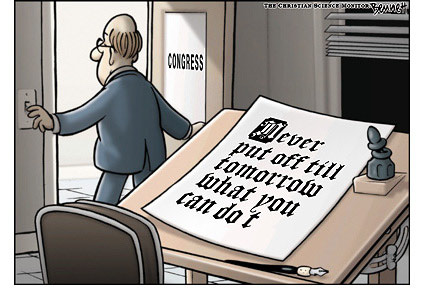
This weeks advice on how to finish your book on schedule comes from Lauren Bailey. Lauren is a freelance writer and blog junkie, who blogs about online colleges. Questions and comments can be sent to: blauren99 @gmail.com.
Submitting a proposal and getting it accepted can be difficult enough, but the real work comes along when you must deliver on your promise and complete the book on schedule. Whether you are publishing your dissertation or are writing a different work related to your research and expertise, it pays to nip procrastination in the bud and have a plan for finishing your book on schedule. Read more
Weekly Wisdom #37 Don’t set up a resource to help other people get published while working on your own first book. There isn’t time for both!
