Exact matches only
Search in title
Search in content
Search in comments
Search in excerpt
Search in posts
Search in pages
Search in groups
Search in users
Search in forums
Filter by Categories
Academic Practice
Academic Writing Month
AcWri
AcWriMo
Blogging and Social Media
Book Editing
Book Literature Review
Book Marketing and Impact
Book Planning
Book Proposals
Book Publishing
Book Writing
Books
Citations and Referencing
Collaboration
Community
Conference Paper Abstracts
Conference Paper Editing
Conference Paper Literature Review
Conference Paper Marketing and Impact
Conference Paper Planning
Conference Paper Presenting
Conference Paper Writing
Conference Papers
Digital Publishing
Experimental Digital Publishing
Grant Abstracts
Grant Completion Reporting
Grant Impact Statement
Grant Literature Review
Grant Methods Section
Grant Writing
Grants
Journal Article Abstracts
Journal Article Editing
Journal Article Literature Review
Journal Article Marketing and Impact
Journal Article Peer Review
Journal Article Planning
Journal Article Writing
Journal Articles
Networking
News
Open Access
Productivity
Reading and Note-Taking
Reseach Project Planning
Resources
Tools
Uncategorized
Website
Hackademic Guide to Networking: Be a Cerebral Stalker
Image by http://www.flickr.com/photos/fiddleoak/ under this licence: http://creativecommons.org/licenses/by-nc-sa/2.0/deed.en_GB
Image by http://www.flickr.com/photos/fiddleoak/  under this licence: http://creativecommons.org/licenses/by-nc-sa/2.0/deed.en_GB

Image by http://www.flickr.com/photos/fiddleoak/
under this licence: http://creativecommons.org/licenses/by-nc-sa/2.0/deed.en_GB

Hybrid Pedagogy’s Jesse Stommel and our very own Charlotte Frost continue their Hackademic series with a new set of hints, tips and hacks focused on academic networking.

BE A CEREBRAL STALKER. One of the wonderful things about social networks like Twitter is that you can find out about people’s work by watching and listening in on their public exchanges. Isn’t this precisely what platforms like Twitter and Facebook are for?* 😉 Certainly it makes the perfect way in for newcomers. So try this:

1. Find someone you admire on Twitter, follow them and the various topics that interest them – even follow some of the people they follow.

2. Lurk / listen for a few weeks, perhaps, before boldly @mentioning the person, directing a question their way, or asking them for some kind of feedback.

3. There are savvy and not so savvy ways of doing this, but we totally encourage tweets like this one, “Hey @charlottefrost, I noticed you’re working on a project about ______, what do you think of ______. Any advice?” OR, “@Jessifer, I just retweeted your new article, do you have any additional sources on _______?”

4. Rinse and repeat. Very meaningful conversations and even meaningful collaborative relationships can develop from this sort of educated (and polite) cold-calling. OK, that’s not really being a stalker is it?


* We don’t encourage stalking outside of social media channels (or even actual stalking within social media channels). There is a different set of ethics related to how we engage on social media and how we engage in face-to-face situations. Be careful to respect the boundaries of the medium in which you’re approaching someone.

Hackademic Guide to Networking: Buy a Domain Name
Image by http://www.flickr.com/photos/fiddleoak/ under this licence: http://creativecommons.org/licenses/by-nc-sa/2.0/deed.en_GB
Image by http://www.flickr.com/photos/fiddleoak/  under this licence: http://creativecommons.org/licenses/by-nc-sa/2.0/deed.en_GB

Image by http://www.flickr.com/photos/fiddleoak/
under this licence: http://creativecommons.org/licenses/by-nc-sa/2.0/deed.en_GB

Hybrid Pedagogy’s Jesse Stommel and our very own Charlotte Frost continue their Hackademic series with a new set of hints, tips and hacks focused on academic networking.

BUY A DOMAIN NAME. This is relatively simple. If you don’t own your own domain, buy it now. You don’t necessarily even need server space or a website to put up. In lieu of anything more elaborate, simply forward your domain to your work profile or Academia.edu page. Eventually you might build a blog or substantial website and use the domain for that. The point is to start laying claim to your online identity. You’ll be glad you did as your career grows, because you’ll have an easy-to-find web presence with some history that will help your work show up in google searches.

Hackademic Guide to Networking: Be a Good Blogger
Image by http://www.flickr.com/photos/fiddleoak/ under this licence: http://creativecommons.org/licenses/by-nc-sa/2.0/deed.en_GB
Image by http://www.flickr.com/photos/fiddleoak/  under this licence: http://creativecommons.org/licenses/by-nc-sa/2.0/deed.en_GB

Image by http://www.flickr.com/photos/fiddleoak/
under this licence: http://creativecommons.org/licenses/by-nc-sa/2.0/deed.en_GB

Hybrid Pedagogy’s Jesse Stommel and our very own Charlotte Frost continue their Hackademic series with a new set of hints, tips and hacks focused on academic networking.

BE A GOOD BLOGGER. Blogging is a genre and so it has certain conventions. On the other hand, while we’re full of tips, we’re also both fans of experimentation. Here are some suggestions on how to get started with blogging, but these are only a jumping off point, from which you should carve your own path:

  1. Make it as easy as possible to post to your blog. Many blogging sites allow you to email your content and add an image as an attachment. Or there are sharing widgets you can add to your desktop or smartphone so you can add content at the click of a button. This means you don’t have to login anywhere to write full blog posts. It also means you can recycle content. For example the usual email announcement about your upcoming talk can be speedily repurposed into a blog post.
  2. Help readers share your content. Most people can copy and paste a link from your blog post to their Facebook wall, but if you’ve added some sharing buttons (which can be done in seconds using a WordPress plugin) then you make it even easier. Likewise, consider setting up a ‘recipe’ tool like IFTTT so that when you upload a blog post you automatically post it to your own Facebook page, Twitter account, etc.

  3. If it’s too big a commitment to blog alone, set up a group blog with some friends/colleagues. This can be an even better idea than blogging alone because you’ll bring more readers to your site with the increase in volume and variety of content. It’ll keep the blog fresh and full of interest and take the pressure off each of you to be highly productive.

  4. Schedule staggered content. If you’ve got four big things planned in a month, write four posts and schedule them weekly. This will stop you ever having to even think about apologising for not posting. Likewise, if you’re suddenly feeling prolific, by all means write a whole bunch of posts, but spread out their publication. You might also bank a few posts in advance for quiet times.

  5. Plan ahead. Aim to feed your blog with varied content by keeping an eye out – in advance – for what that content is going to be and by taking advantage of every opportunity. For example, if you know you’re going to a conference, why not arrange to interview someone or report on a particular paper or session?

  6. Comment. Take time to read other people’s blogs and add your own comments to their posts. This will help you get a better idea of what other people are blogging about (and how) as well as directing them and their audience back to your own blog.

  7. Have a piece of stock content as your fall-back. It could even be light-hearted. Why not post a relevant video every Friday, or ask another academic the same set of questions every Wednesday? The goal is consistency, and what might otherwise feel like “filler” can actually help create bridges from one substantive post to the next. And sometimes its the stock content that draws in the bigger crowd, meaning more people will eventually discover the meat of your research.

  8. Other bits of regular content can include: book reviews; summaries for newcomers to the field; posts about your latest paper presentation, guest lecture, or journal article; profiles of your students and their work; and championing of contingent colleagues that might not otherwise have time to write about their own work.

  9. Recycle and reshare. As your blog grows popular pieces of content will become less visible. Periodically review your content and re-share (through Facebook and Twitter et al) good posts over a period of time. You might consider writing a new post that updates or expands on the older one (but definitely visibly links to it). Also, when reviewing your past content, notice which posts are thematically connected and take a second to add links back and forth between each post. Again this will make burried material more findable to new visitors.

  10. Look at your stats. Google Analytics will tell you how many people are visiting your website/blog and from where. Initially this might just be a nice ego boost and a way of forcing yourself to continue blogging when you feel stressed and over-stretched but eventually this is the type of data that can be used on grant applications and even CVs.

Hackademic Guide to Networking: Set Up a Blog
Image by http://www.flickr.com/photos/fiddleoak/ under this licence: http://creativecommons.org/licenses/by-nc-sa/2.0/deed.en_GB
Image by http://www.flickr.com/photos/fiddleoak/  under this licence: http://creativecommons.org/licenses/by-nc-sa/2.0/deed.en_GB

Image by http://www.flickr.com/photos/fiddleoak/
under this licence: http://creativecommons.org/licenses/by-nc-sa/2.0/deed.en_GB

Hybrid Pedagogy’s Jesse Stommel and our very own Charlotte Frost continue their Hackademic series with a new set of hints, tips and hacks focused on academic networking.

SET UP A BLOG. Having a blog or a website as a platform for your career is a really good idea. So often these days people will just plug your name into Google and work with whatever results come up. Having your own site allows you to have more control in how you’re perceived. It’s great for job-hunting as it can be your online dossier and you can also use your blog when you teach to communicate with students and share course materials. With a blog as part of your site, you can regularly broadcast what you’re doing, including posting abstracts for conferences and papers or sharing notes for lectures you’re giving. It’s also a really good way to reflectively share the work of your peers and work out ideas for forthcoming publications.

Hackademic Guide to Networking: Get a Twitter Account
Image by http://www.flickr.com/photos/fiddleoak/ under this licence: http://creativecommons.org/licenses/by-nc-sa/2.0/deed.en_GB

Image by http://www.flickr.com/photos/fiddleoak/ under this licence: http://creativecommons.org/licenses/by-nc-sa/2.0/deed.en_GB

Hybrid Pedagogy’s Jesse Stommel and our very own Charlotte Frost continue their Hackademic series with a new set of hints, tips and hacks focused on academic networking.

GET A TWITTER ACCOUNT.  And while you’re at it, sign up for every social media platform, even if you don’t intend to use them. Here’s why: you’ll secure your user name of choice (good for branding purposes to keep these consistent); you’ll have a history with the tool when you do go to use it (which helps your profile show up in search results); and you’ll start making connections, even if you aren’t actively massaging those connections. Remember that not everyone is on any single social media channel, so having a presence on them all will assure that no potential collaborators fall through the cracks. As with the bulk of the tips in this series, this is actually less about promotion and more about presence — making sure that you’re only one mouse click away from a potential editor, colleague, or co-author.

But why the Twitter account in particular? Twitter is actually one of the lowest-maintenance platforms you can engage with. Just write your mini profile, upload a picture and off you go. The best way to engage is to log on at certain times (or leave Twitter open while you work) and just dip in to read tweets and chat with others when you have time. You may never keep up if you try to read all the tweets so it’s best to think of it as listening in on a live conversation. In fact liveness is key to Twitter, many people think of it as a place you send boring life updates, but it’s much more of a discussion space – like an Instant Messenger but where (potentially) the whole world is listening.

Twitter also boasts a number of live chats that provide space to discuss a range of academic conundrums, which will also help you build an almost-instant network of supportive peers. Check out #phdchat for all things PhD, #digped for discussions on teaching in the digital age, #acwri for academic writing, #ecrchat for issues pertinent to early career researchers and #scholarsunday for recommendations on who to follow. Finally, if you teach, consider finding ways to incorporate twitter into your pedagogy.

Hackademic Guide to Networking: Go Public By Degrees
Image by http://www.flickr.com/photos/fiddleoak/ under this licence: http://creativecommons.org/licenses/by-nc-sa/2.0/deed.en_GB
How to be a hackademic picture

Image by http://www.flickr.com/photos/fiddleoak/
under this licence: http://creativecommons.org/licenses/by-nc-sa/2.0/deed.en_GB

Hybrid Pedagogy’s Jesse Stommel and our very own Charlotte Frost continue their Hackademic series with a new set of hints, tips and hacks focused on academic networking.

‘Networking’ is a word often made cold by its business associations. It’s easy to imagine CEOs on a golf course and think that’s a million miles away from what we do as educators and scholars. Perhaps a better way to think of networking — particularly in academia — is as yet another form of publishing. For example, each time we share information about our work we’re performing a valuable citation. In the same way that direct marketing takes an idea straight to the right audience, this form of citation is fast and efficient. And it goes both ways. Each time we find out details about someone else’s work we’re potentially saving ourselves hours of research time. And each time we boost that person’s work by sharing it on social media, we’re potentially saving someone else hours of research time. This info-thrift can be very potent and it’s why coffee breaks at conferences are often where the real work happens. So whilst there’s no need to take up golf… We are here beginning a new set of tips in our How to Be a Hackademic series focused specifically on academic networking. So, our first bit of advice:

GO PUBLIC BY DEGREES. The decision to go public on social media with our professional life is actually a very nuanced one. And it’s not a decision anyone should make all at once. We strongly encourage going public by degrees. Start with a professional site that houses a CV, links to syllabi, online publications, etc. Academia.edu is a great place to start or perhaps set up an about.me page. You might then decide to explore a platform like Twitter where you can dip your toe in by following lots of interesting people and gradually engaging them in conversation. Eventually you might decide to get a domain of your own and use a tool like WordPress to build a more personalised online space.

How to be a Hackademic #48 by Charlotte Frost & Jesse Stommel
Image by http://www.flickr.com/photos/fiddleoak/ under this licence: http://creativecommons.org/licenses/by-nc-sa/2.0/deed.en_GB
How to be a hackademic pictureHybrid Pedagogy’s Jesse Stommel and our very own Charlotte Frost rethink academic life and writing productivity in this on-going series of hints, tips and hacks.

HAVE A BIO. Write a concise bio (you might like to take the twitter bio word limit as your guide) and use it across all social media. It’s worth using the same profile picture everywhere too. You can write longer biographies to use for conferences etc but having a nice short one and a good memorable picture mean that people will easily find and remember you online. It’s a little like branding yourself, which sounds icky, but don’t think of it like that. Many of us are really bad at remembering people’s names and faces – let alone now that we live so much of our lives online and don’t always actually meet the person behind the avatar. Help everyone out by always looking and sounding the same online. And when you get to meet people IRL (in real life) who you’ve mostly known only in cyberspace, they’ll recognise you in an instant and feel like they’ve known you for years.


Besides Bio , there some other important tips to be a hackademic. 


How to be a Hackademic #46 by Charlotte Frost & Jesse Stommel
Image by http://www.flickr.com/photos/fiddleoak/ under this licence: http://creativecommons.org/licenses/by-nc-sa/2.0/deed.en_GB
How to be a hackademic pictureHybrid Pedagogy’s Jesse Stommel and our very own Charlotte Frost rethink academic life and writing productivity in this on-going series of hints, tips and hacks.
FOCUS. Disconnect from the internet for a while (or at the very least from social networking sites and email) and just write. My-oh-my this is so much easier said than done! But have you ever noticed how much more play time there is for Angry Birds if you get your work done first? If you can’t go cold turkey, then try logging off for half an hour at a time or if you need a bit of bullying, try loading an application that blocks the internet during working hours. Have you got those square eyes your mother always warned you about? Maybe you need some of what this tip has to offer?

Founding First Five – by Tamsyn Gilbert
Image from Mochimochiland.com

Image from Mochimochiland.com

This blog post by Tamsyn Gilbert (founder of First Five) is part of a series that asks after new forms of scholarship and demonstrates how academic out-put is changing in the digital age.

From blogs like the Thesis Whisperer to Twitter communities like #PhDchat there are a number of ways in which academics are harnessing digital communication technology to support each other and their work within and without institutions. And some are even outright reinventing what academic scholarship might be. We are well beyond the early phase of academic listserves and blogs and into a – perhaps third wave – of digital discourse design.

In this series I’ve invited the people responsible for these types of projects to share what their intentions were when they established them. How their projects have changed the way they (and we, as participants) work, research, share, support and interact with each other as global colleagues. And how they might describe what the emerging skill-sets are and their benefits and pitfalls.

As an idea, it’s pretty simple. First Five is a website that asks theorists, musicians and artists the first five websites that they visit each day and why. The contributors to First Five are people that I have asked to participate. They are the theorists, academics and artists who I am interested in or have influenced my own work in some way. In this sense, First Five is heavily curated towards my interests and research. I am concerned with how these people who are significant to my way of thinking use the web (a space that I use and participate in/with so often) as both a space of function and a knowledge building space.

So what can we read from these websites that these theorists visit daily? Most contributors’ websites include those for research, work, play and entertainment. News websites (The Guardian, The New York Times) are prominent, along with social networking sites (Facebook, Twitter, Flickr) and then there are usually one or two websites that are ‘unique’ to that person. In a space where there is an abundance of content, economies of attention are crucial, it seems vital to know what websites theorists are spending their time on and why, for at least at one point in time.

In relation to my own work, the instinct to create First Five was to think of it as a time capsule of interests of influential people. For me, First Five acts as an archive of web knowledge, practices and sensibilities. The Internet is not only a space for learning and gaining information, but also sharing it. But what has been interesting about First Five is not only how eager people are to share, but also to learn and form relationships with those that have similar interests. I am not sure what may come from the website, but I am interested in collecting the data, sharing the sites that others visit and learning along the way.

In a more general sense, First Five has taught me how to engage on the Internet, how to communicate with other academics around an idea and the skills that are required to do so (whether through email, or twitter). First Five has shown me what it means to engage with people online around an idea. Although it is my website, I am not the only author. I am simply the curator. The ability to collect information, display and share that information with others and to critique that information are not only useful skills found in web activity, but also for the life of an academic. Further, the website would not exists without the people who are willing to contribute. It is not paid work, these people take their own time and energy to participate in my project. Collaboration and participation are the keywords of the Internet and with this, intellectuals need to understand that these components are essential to the productive sharing of knowledge and acting in this space. I hope by creating First Five I can share just one part of this knowledge.

When is a Hashtag a Journal Article? by Charlotte Frost
picture by my Dad

hashtag in a squareRight that’s it, I’ve done it, I’ve gone and put my money where my mouth is. Or rather, I’ve put my open access politics where my REFables should be.

I’ve written a journal article on the nature of art historical knowledge and its philosophical relationship to its physical archives. But rather than present that article all nicely peer-reviewed and in a high impact journal, I’m publishing it free online and inviting anyone and everyone to peer review it – publicly. I wanted my first full-length academic journal article to be in line with the online areas of art history that I research, where art and art history are freely shared. Because I am interested in the on- and offline networks that create and support our ideas about art, I wanted other people’s opinions to be integral to the piece. And as I run an academic book series that experiments with the relations between the form and content of art history books, I wanted to dig my own publishing sandpit (or rather, extend the one I already built when created PhD2Published).

As it’s not enough that I’ve gone all open access on art history’s ass, I also wanted to consider – along with the media-aware ideas in my article – what post-digital art history might be. Partly this is reflected in the fact the article is not print-published but it is also reflected in my decision to work with media artist Rob Myers to manifest what might be best described as a physical version of the article. Embedded within the text itself are links to a project where you can order your own version of a 3D printed hashtag of the phrase ‘art history’. This draws attention the fact all art historical writing takes some sort of physical form – whether it’s printed words on pages or tweeted hashtags on Twitter – and re-enforces my argument that art historians need to better understand our own media. It also allows the article to generate a number of new research objects. That is, as #arthistory is interacted with beyond the space of the article itself, it can become new things – crowdsourced things – which also (if not quite directly) support the article’s theories about the value placed on participative modes in online art contextual activity.

So here’s what happens. To read the article itself you can go here: http://www.gylphi.co.uk/artsfuturebook/

Or if that’s too long winded, you can also get the gist of the #arthistory component here: http://hasharthistory.net/

Ideally you’ll then either offer your peer review comments on the article and or you’ll purchase your own hashtag and start sharing photographs of it in use.

And then let’s all meet back here or on Twitter (I’m @charlottefrost) and discuss what we think of this as a project. Does it represent a step in the right direction for open access scholarship, the digital humanities and new forms of publication and research, or does it try to do too much at once? Does the theory at the heart of the article suffer due to the playfulness of the #arthistory project? Should such projects be evaluated and if so, how?

Baby on board, so time to take my leave (at least for a little while!)…by Anna Tarrant

baby-on-boardThe time has come to announce that this is my last post for PhD2Published for a little while (boo! 🙁 because I am going to be taking some time off to have a baby! 🙂 She (yes apparently it’s a girl!) is due at the end of April 2013 so my attentions will be re-directed elsewhere for a while.

I have thoroughly enjoyed being the Managing Editor for PhD2Published and given that my body is being incredibly productive, I thought I would also take this opportunity to reflect on my time with PhD2Published to share some of the things I have learnt.

Becoming Managing Editor was a ‘seize the moment’ type affair (my first tip; seize any opportunity that you can – but be strategic!). I was working as a Senior Teaching Associate at Lancaster University (a teaching only position) at the time and I felt really disconnected from the world of academic publishing and research. In identifying a need for support and guidance in publishing I embarked on an online search for resources and that was when I came across PhD2Published.  As luck would have it, Charlotte was looking for someone to fill the Managing Editor role so I jumped at the opportunity and just over a year later I am so grateful I did. Here’s why:

I have learnt about how and where to publish

One of my roles as Managing Editor is to source material relating to topics relevant to academic publishing. With a desire to publish myself I sought information that would not just help me, but others too, in all our publishing journeys. This helped me to collate useful material that also built a strong personal, but openly accessible narrative about publishing.  In the past year I have invited academics of various career stages to write blogs, ranging in focus and including (but not limited too): contemporary publishing models such as Open Access; developing academic writing (see the benefits of writing in groups and collaborative writing); and reflection on publishing and emotion (e.g. Publish or Perish). I have even written my own resources for the site (see my series of #acwri summaries and what not to send for peer review) and for other reputable blogs including Guardian Higher Education.

As well as publishing blogs, I have gained a great deal of knowledge and confidence in publishing in more traditional ways. In the past year I have had three journal articles accepted, have had a book chapter published, with another on the way, and have been asked to peer review for several journals – all skills I needed to acquire but felt less able to in my teaching post. Needless to say, I am now a Research Associate at the Open University and can boast a much-developed CV.

I have upskilled

  • I have learnt how to blog, how to set up a blog site and how to write for different audiences,
  • I have learnt how to use Twitter, to network, to establish a professional identity, to share resources, to chair and manage a live chat (#acwri) and a large scale online project (#acwrimo),
  • I have also learnt how to use a range of different social media and applications including Twitter, Storify, Paper.li, Dropbox and Google Docs.

Networking: online and off

Networking and contacting academics from a variety of backgrounds, disciplines, geographic locations and so on has also launched me into a supportive, active and engaged community across multiple social media platforms; the website itself, Twitter and Facebook. Meeting people at conferences who know of me through Twitter has undeniably enhanced my ability to network and to meet people in my fields of research. Get known on Twitter, it helps to enhance your networking skills and visibility at conferences!

I have become involved in emerging academic debates about publishing/writing

Finally, PhD2Published has also expanded my research interests and expertise, so much so that I gave a conference paper about it at the SRHE Annual Conference 2012. This has afforded me the opportunity to reflect critically on academic use of social media for knowledge production and there is even a publication in the pipeline about this very topic, so watch this space!

Last but not least, as well as acquiring a range of skills I have also found a great colleague and friend in the one and only, charismatic and creative, Charlotte Frost. She is a quirky, selfless lady (with a penchant for pretty, purple, glittery things) and a true inspiration. I have the utmost respect for her and she has truly shown me that respect is earned; through hard work, tenacity, friendship, intelligence and a lust for life. I have a lot to thank her for and everyone who I have had the pleasure of working with/meeting in the past year or so.

Of course, I am not disappearing completely so hope to see you online soon!!

OMFG! I just got re-tweeted by Justin Beeber!?!?! Social Media Academia by Ben
Image from Mochimochiland.com

Image from Mochimochiland.com

This blog post by Ben (author of the Literature HQ blog) is part of a series that asks after new forms of scholarship and demonstrates how academic out-put is changing in the digital age.

From blogs like the Thesis Whisperer to Twitter communities like #PhDchat there are a number of ways in which academics are harnessing digital communication technology to support each other and their work within and without institutions. And some are even outright reinventing what academic scholarship might be. We are well beyond the early phase of academic listserves and blogs and into a – perhaps third wave – of digital discourse design.

In this series I’ve invited the people responsible for these types of projects to share what their intentions were when they established them. How their projects have changed the way they (and we, as participants) work, research, share, support and interact with each other as global colleagues. And how they might describe what the emerging skill-sets are and their benefits and pitfalls.

Today’s celebrities are more accessible than ever before. It’s not uncommon for me to see my friends gushing after being mentioned by a minor (or sometimes major) celebrity on Twitter. While this may seem trivial, for me it’s amazing. I think it represents the shrinking of oceans between us and people who we thought were totally inaccessible. This includes vacuous celebrities, but more importantly, it also includes the greatest minds of the 21st Century. This incredibly powerful phenomenon has become the new focus of my growing blog.

So where did it all begin? Well, I suppose my site is first and foremost an experiment. Now I have some idea of how I want it to progress but at the start I certainly didn’t. I just wanted to make a “complete” resource for people doing an academic literature review. By complete I mean that I didn’t just stop half way through but made it into something that someone could ultimately use to succeed with their own project.

Based on my early goal and the vision that I had the site has far surpassed my initial expectations. However, as the site has grown so have my ideas hopes for the future of the project. It has been a great vehicle for me to experiment and learn about communicating useful information through digital media such as Twitter, You Tube and Webinars.

Initially it was just me rattling around on the blog, not much of a community or input from others. Now I think that the community and the other contributors are the most important part. Perhaps the most influential section of the blog is a podcast that I use to talk to experts from all different academic fields to try and help my readers/listeners with their literature review. This was popular when it first started but I’ve recently been hosting the podcasts live with input from the audience which has been a huge success. I think it highlights the changing tide of media in general. It is no longer acceptable to just preach to crowds from a pulpit. Our audiences expect to be engaged by the people who are providing them with information.

Is this novel? Am I feral, hybrid and outstitutional? When Charlotte asked me this I couldn’t help but smile. I’ve never really thought about it before but yes, this is how I feel at the moment. I feel that what I do is provide an alternative to the way that a lot of skills training (especially writing) is done in universities. I feel like I’m providing an education that I needed myself about 3 years ago! I’m ok with this. It’s certainly not that the academic institutions are doing a bad job, but it’s very difficult to cater to everybody. That’s why I like what I do and I like providing an alternative resource and an alternative point of view. I think it’s ok to be feral as well. This way we are all a little bit leaner and meaner, ready to adapt to the ever-changing tides as larger institutions simply can’t be.

How would I describe Literature Review HQ now? Well I’d say deep down it hasn’t really changed. I still want to make a “complete” resource for anyone doing an academic literature review. However my definition of “complete” has changed. Now it’s not just about me sharing my experiences and advice. I feel like now it is my responsibility to find the very best experts in the world and to try get them to impart their wisdom to my audience. In the future I also want to focus even more on engagement. I think it’s really exciting how we can deliver information online. I also think it’s exciting how accessible people genuinely are. We really have the best information within reach. If we want we can talk to experts and learn an awful lot. I feel that it is my responsibility to use my blog as a platform to aggregate all this information for the benefit of anyone who wants to really write an amazing literature review.

#PhDchat – a Doctoral and Academic Research Community – by Nasima Riazat
Image from Mochimochiland.com

Image from Mochimochiland.com

This blog post by Nasima Riazat (an instigator of the ‘#PhDchat’ Twitter discussion) is part of a series that asks after new forms of scholarship and demonstrates how academic out-put is changing in the digital age.

From blogs like the Thesis Whisperer to Twitter communities like #PhDchat there are a number of ways in which academics are harnessing digital communication technology to support each other and their work within and without institutions. And some are even outright reinventing what academic scholarship might be. We are well beyond the early phase of academic listserves and blogs and into a – perhaps third wave – of digital discourse design.

In this series I’ve invited the people responsible for these types of projects to share what their intentions were when they established them. How their projects have changed the way they (and we, as participants) work, research, share, support and interact with each other as global colleagues. And how they might describe what the emerging skill-sets are and their benefits and pitfalls.

#phdchat is a twitter hashtag for doctoral researchers and early career researchers which was set up by a group of doctoral researchers in December 2009. #Phdchat is a professional community for academics and researchers to share resources, highs, lows, pieces of blogging to get feedback and to tentatively test thoughts and ideas with like-minded colleagues. I have been asked to write this post by Dr Charlotte Frost reflecting on what the chat is about, why I started it, discuss the nature of the chat and to offer some personal thoughts and reflections on the degree of its success.

The #phdchat hashtag was established when a few tweets were posted by doctoral students and a live chat was organised to be held each Wednesday evening for all UK doctoral researchers to enable us to have a community to share the journey with. As word spread about the hashtag to people’s networks, a large community was contributing informally and partaking in the live chats.

Reflecting back in 2013, the hashtag has flourished beyond all expectations and #phdchat has gone from strength to strength. On the 14th March 2013, an analysis of the #phdchat hashtag showed that it had reached an audience of over 650,000 people and had over 560 posts within 24 hours (info gathered via https://www.hashtracking.com). I am both thrilled and humbled by the worldwide success and how #phdchat has become an invaluable and useful community to researchers. We have people at various stages of their research careers contributing regularly, whether they are starting their PhD journey, are early career researchers, supervisors, lecturers or Professors.

When I started my own doctoral degree it became apparent that a support network was needed for the much anticipated joys and lows of PhD life. I had a busy full-time career as a Curriculum Leader in a high school and it was not feasible to make long journeys to network with PhD students or to regularly attend research conferences to build up my research network. My supervisor (@janshs) suggested using Twitter to make links with other researchers to test my thoughts and ideas for my grounded theory research design. Initially I was extremely wary and came across very few doctoral researchers on social media. Having located a few PhD students, an ‘online’ conversation (albeit not in live time) about grounded theory inspired the desire to start chatting more regularly with PhD students in live time and #phdchat was born.

The idea of a hashtag and a live chat was not originally my own idea and evolved through tentative discussions by myself, @janshs, @ianrobsons, @janedavis13 and @lizith before others such as @jefferykeefer, @emmaburnettx and @andycoverdale started to join in and make this the vast research community it has now become. At this time the only ‘live chat’ on Twitter that I was aware of was the #ukedchat hashtag where teachers ‘met’ online at the same time each week to discuss a topic of relevance. I particularly liked how this chat inspired me to get involved and bravely put out a few tweets and thus gaining a few followers and colleagues to share thoughts and ideas with and used this experience to adopt the same model for #phdchat.

A poll was posted for the community to choose a topic and a time was collectively chosen so we could get together each week and share our research thoughts and ideas. The chat element of the hashtag is, in my opinion, what has made the thread so resoundingly successful as this is when the community really started to develop professional relationships and, what were to be long term friendships, which enabled us all to quickly gel with each other. The chat element also provides a ‘safe’ place for those who are new to Twitter and don’t have any connections as yet to build their network and feel confident to talk. The live chat gives us all a topic to focus on (whether we contribute regularly to #phdchat or not) and a chance to ‘test the water’ of social media before launching straight into posting tweets and links of our own. People often are a little wary of contributing when they don’t have a common topic, don’t know the community, or feel worried that someone may not reply to them and I feel a live chat encourages them to be drawn into the conversation. It was a challenging task as moderator in the early days to get everyone involved and drawn into the discussion but now the chats tend to run themselves.

Most of my professional development as a teacher and researcher has been through the knowledge I have gained through #phdchat. I know many of us have become lifelong friends, there have been some #phdchat meet-ups and great friendships have been born due to this hashtag. Due to the immense global success of #phdchat, people from other time zones indicated that this model was a good idea and that they too wished to start a version phdchat of their own which was more convenient for their time zones which resulted in Dr Inger Mewburn (@thesiswhisperer) launching an Australian version of live #phdchat and there has been some discussion around possibly launching an American version.

Another great success of #phdchat is that as the community has grown people have started their own versions of live chats more focused to their field or stage in their research career which is fantastic to see. I have also seen other twitter chats take on the similar setup of #phdchat (such as #sltchat started by @teachertoolkit) which follow the same model of informal posts throughout the week and a live chat once a week to develop a real active live community.

Although all members of the community are equally valuable, I feel that a special mention must be made to @lizith for setting up and maintaining the #phdchat wiki and to @gawbul for uploading the #phdchat tweets to the wiki.

As I approach the final few months of my own thesis I feel thankful to all who have helped, supported and advised me through the #phdchat thread – too many of you to mention here personally. It has been wonderful to share my thesis journey with my doctoral colleagues on #phdchat and to see many of you come through at the end with your degrees. As the first generation of #phdchatters come to the end of their degrees, I hope that #phdchat continues to flourish and provide support, friendship and thesis-related knowledge to the next generation of PhD students.

On Independent Arts Scholarship – by Hasan Niyazi

DURERSPThis blog post by Hasan Niyazi (independent art history blogger/originator of the ‘3 Pipe Problem’ blog) is part of a series that asks after new forms of scholarship and demonstrates how academic out-put is changing in the digital age.

From blogs like the Thesis Whisperer to Twitter communities like #PhDchat there are a number of ways in which academics are harnessing digital communication technology to support each other and their work within and without institutions. And some are even outright reinventing what academic scholarship might be. We are well beyond the early phase of academic listserves and blogs and into a – perhaps third wave – of digital discourse design.

In this series I’ve invited the people responsible for these types of projects to share what their intentions were when they established them. How their projects have changed the way they (and we, as participants) work, research, share, support and interact with each other as global colleagues. And how they might describe what the emerging skill-sets are and their benefits and pitfalls.

In the year 1500, the German artist Albrecht Dürer inscribed the following on a self-portrait:

“I, Albrecht Dürer of Nuremberg portrayed myself in everlasting colours aged twenty-eight years.”

Writers of art history view this work as a significant turning point, or “moment” in Western civilisation.[1] The wildly gifted artist portrayed himself in not only a manner resembling traditional depictions of Christ, but added the force of his own presence to the work with the inscription, including his own “AD” monogram, which to many reading (to this day) recalled “Anno Domini” – the Year of Our Lord. From a perspective perhaps best granted by hindsight, Dürer’s inscribed portrait heralded the age of the individual. Dürer may have been the possessor of a large ego, yet he was also a capable disseminator of his work. His engravings and etchings, mechanically reproduced as prints on paper traveled across Europe, spreading the fame of his skill, and often encouraging copyists.[2]

Dürer not only embraced technology to aid in the distribution of his work, he was also an able networker. Eager to reach out to others, Dürer traveled to meet and learn from other artists. He sought Martin Schongauer and Andrea Mantegna, missing both shortly after their death, but did meet an aged Giovanni Bellini in Venice. By 1515, Dürer sought to exchange gifts with the most celebrated Italian artist of the age, Raphael of Urbino, then at the height of his powers in Rome, his career overshadowing both Michelangelo and Leonardo da Vinci.[3]

In whatever context one seeks to frame Dürer’s life and career, it is evident that he was successful at spreading an awareness of himself and his work across Europe. I wished to introduce Dürer’s use of technology to spread his work, and seeking personal connections to improve his knowledge as a precursor to a discussion about blogging. At the very least, Dürer’s example provides some interesting and relevant historical parallels.

I have been asked by Charlotte Frost to provide an account of my experiences in the blogosphere, exploring Renaissance art history in a level of detail than was not occurring in an open forum on the web. I presently spend my days working as a clinician and most nights reading and writing about art history. In late 2009, after having spent over a decade online, on message boards and advice forums dedicated to technology, I found my mind always wandering back to art history, a topic I had studied at a younger age. Hence, with little more than a vague notion of wanting to write about “cool art stuff” I began “art history blogging.” I created a free blog using Google’s “Blogger” platform, which I found favourable compared to WordPress as it allowed users full access to the blog’s underlying html code, allowing me to learn about this along the way.  Three years on, I find myself pleasantly occupied. My clinical work continues, yet my reading and writing in art history has wrought great changes to me and my writing. I maintain regular contact with important Renaissance scholars, and am working on an ambitious project dedicated to the artist Raphael.

My blog, 3 Pipe Problem (3PP), became a platform to disseminate the idea that a more detailed appreciation of Renaissance art history is not restricted to those who can access universities, expensive books and journals, or belong to a particular community. Many bloggers have a personal motivation. For some, this motivation comes foremost as an intellectual pursuit that captivates the mind. Applying it to art history, I sought to understand its narrative of the past, and the evidence that had formed the common perception of this period in history.

Raphael Uffizi in Frame

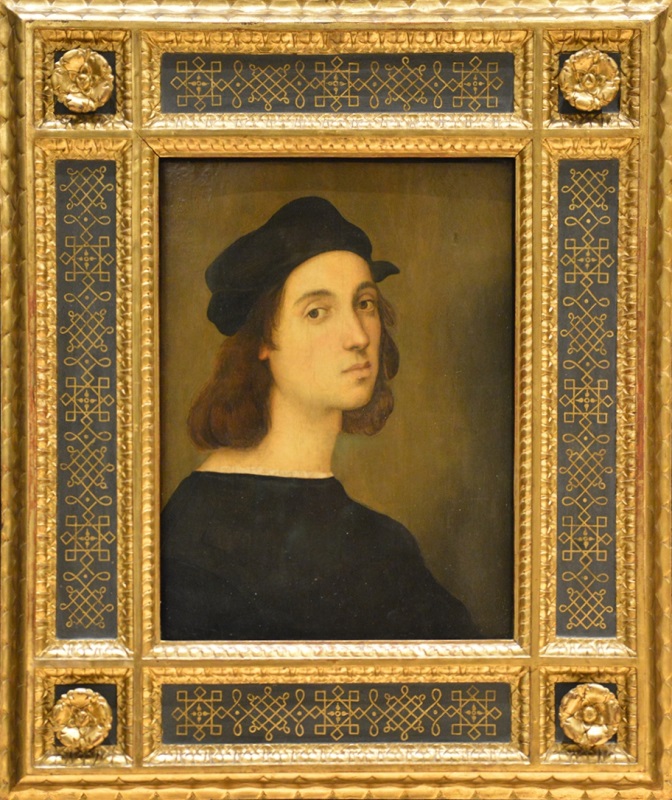
Raphael’s famous self-portrait at the Uffizi has a complex attribution history, with a number of scholars disagreeing on it author, and likely date of creation.

This search for understanding – to my mind at least – arrived in its purest form when examining the attribution of a Renaissance artwork. It is a magical experience to walk into a gallery and stand before a work on panel or canvas labelled to be by the great Raphael, Leonardo, Titian or Giorgione (etc). Purchasing the catalogues offered by museums and galleries for these works often brushes past attribution issues entirely. It is only when one is brave enough to wade into the scholarly literature that we find an almost endless procession of heated debate about the authorship of a work. In Raphael studies in particular, this discussion is protracted across many works attributed to an artist whose style dramatically changed across the short span of his professional life.

Because Raphael had acquired great fame during his own lifetime, we are blessed with a greater number of surviving sources on his movements and actions than can be found for other artists of the period. It is the evaluation of these sources, and the physical characteristics of the works themselves that enable us to describe a painting “by Raphael” in full. Indeed in the scope of Renaissance workshop, Raphael’s involvement in a particular work needs to measured against visual evidence gleaned from observation of the work itself, and related technical images and preparatory works  – a mode of analysis traditionally known as connoisseurship.

It is the distillation of these complex quantities of information that I attempt to bring to my posts at 3PP, and inform my work on the Open Raphael Online project. In doing this work online, I found I gained the most when openly sharing my learning experiences as they happened. The most efficient way to do this was via the social media platform twitter, where I encountered a range of individuals with similar interests, including professionals and students engaged in the study of art and history. This resulted in an ongoing exchange of information and resources, and a pleasing type of social interaction that occurs when one encounters kindred spirits.

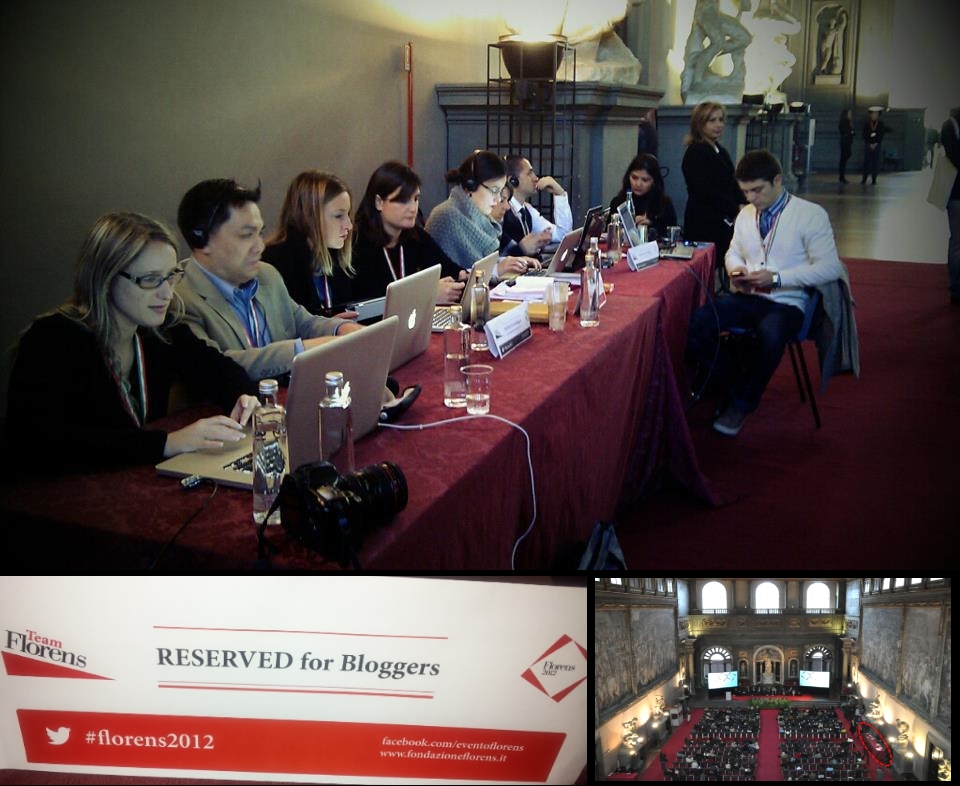
In November 2012, I was pleased to be awarded the honour of representing “art history bloggers” at the Florens cultural heritage event in Florence. Traveling back to the heart of the Renaissance is a perennially emotional experience, and in my mind the city of innovation and endeavor that Florence once was seeks to regain its place again, with an increasing number of progressive online voices discussing the art and culture of the city.

Florens Reserved Teampic

Being part of the team of bloggers covering the Florens2012 event was a rewarding experience, providing insights into the great potential for new media to inform and promote a deeper experience of Italian culture than is presently being achieved.

What is blogging and where is it headed?

It is at times daunting finding oneself working in a space populated by very few others, and without a real sense of the activity being viable as anything other than an intellectual exercise. The blogs I admire the most are mostly written by academics as an independent exercise that fed off their experiences in teaching and research. Although I had started blogging “for fun” I quickly found myself wanting to occupy a similar space as far as the quality of detail and critical analysis being offered at blogs such as Thony Christie’s The Renaissance Mathematicus and Monica Bowen’s Alberti’s Window. Hence, each post became a research project in its own right. I would often start at scratch, or from an idea sparked by another blog post or discussion on twitter and develop a post from there. This process allowed me to further develop my own style, and improved my research skills – which of course are still evolving.

There is an increasing amount of discussion about the roles bloggers have in the space traditionally occupied by specialists and journalists. A recent post at the London School of Economics (LSE) Impact Blog specified “academic blogging” as defining a new space between academic writing and journalism.[4]

With specific reference to art history, the 2012 Kress Foundation report into digital art history and its research centers also identified the role of an “instigator”:

“A more radical suggestion is to bring in “instigators” or individuals from outside the research center who possess a unique set of technology, humanities, and people skills. Their role would be to push against institutional barriers without being intimidating to others nor easily thwarted themselves.”[5]

These descriptions seemed to describe blogging being recognised as a new space, and sought to address why blogging exists and whether it is important. It also became apparent that communicating ideas within the context of a blog also demanded a new mode of language, where the individual acting as “instigator” must be able to address both specialists and the interested public alike. This form of writing has no real precedent in art history, the closest analogues being reviews of exhibitions or publications penned by art critics/historians in newspapers and magazines.

Anthropological excursus

Of the various academic disciplines that are bravely experimenting with or observing blogging, that which tended to more completely grasp the “what and why” or meta of blogging was the field of media anthropology, and the related area of cyber-anthropology.[6] This relatively new branch of study, which seems to have forged its presence somewhere between media studies and the social sciences has burgeoned into a thriving discipline, with a proliferation of case studies demonstrating use of blogging and social media being used in social activism. The events around the Arab Spring and Occupy movements seem to be of most enduring interest to the media anthropologists I have encountered, with those tracing the impact of blogging in a broader, cultural sense quite rare.[7]

While many studies/books (of varying quality) can be found on the impact of blogging in a political sense, primarily in the American context, there is at present no study that seeks to track the impact of blogging on elements of cultural discourse, which is arguably the most globally inclusive human activity.[8] From art and archaeology, to regional variances in customs and language, the definition of “culture” is now so broad and complex, that such a study would be daunting to any investigator considering tackling its interaction with the forms of new media represented by blogging and social media. Until such studies are completed, this small excursus, embedded within this account of my role as an art history blogger, will hopefully be a marker for the consideration of new media’s impact on cultural discourse in an anthropological sense.

Conclusion – evolving beyond the primordial ooze

We are still in the primordial ooze of blogging and social media acting to serve a mired field of study, which art history can unfortunately be described in certain contexts. In some cases, quality blogs are helping to demystify aspects of cultural discourse to a global audience.

It is always pleasant to hear from readers who have been to museums and have questioned the assigned label of a work, and have been unsatisfied with the explanations offered in their catalogues. This desire to seek more detail in an independent sense is the true blessing of the information age. This gift of access to knowledge the web can provide recalls the famous, if not grandiose point made by Timothy Leary in Pataphysics in 1990,

“Today the role of the philosopher [and the artist, we might add] is to personalize, popularize, and humanize computer ideas so that people can feel comfortable with them…In every generation I’ve been part of a group of people who, like Prometheus, have wrestled with the power in order to hand it back to the individual.”[9]

Comparisons to mythological titans aside, what can be taken from Leary’s statement is that those with experience navigating the seemingly disparate fields of technology and cultural historiography are ideally suited to analyse and interpret the seemingly rapid changes being experienced by all disciplines defined by large slabs of text and images, traditionally locked within the confines of books. Blogging is just one of many available means of re-purposing and amplifying these images and texts to a more global, and potentially dynamic audience.

I would like to emphasise that my example represents a combination of circumstances that has occurred naturally, and is only a snapshot taken at this point in time. At present, art history blogging exists because it does, and discussing it from the perspective of becoming a viable business model seems a point no one is yet prepared to deliberate on. For academics and students trying to figure out how a blog may fit into their workflow, there is no easy answer other than trying it and finding what works for you, and ruling out what does not.

Ultimately, blogging does not need to supplement anything else. It is its own form of expression,  requiring a mixture of skills. Blogging is a mode of communication where any individual with a passion to work hard and have their voice heard can participate in a global dialogue that attracts scholars and laypersons alike. Art, culture and knowledge transcends boundaries, and so does the web. As such, they are a perfect match.

References

1. Koerner, JL. The Moment of Self-Potraiture in German Renaissance Art. University of Chicago Press. 1997. pp.40-46 preview available at Google Books link ; the author is aware of the antecedent self portrait by van Eyck and its comparatively boastful frame inscription. Less is known about Jan van Eyck’s travels and how widely his work was disseminated.

2. Pon, L. Raphael, Dürer and Marcantonio Raimondi – Copying in the Italian Renaissance. Yale University Press. 2004. pp.62-68.

3. Nesselrath, A. Raphael’s Gift to Dürer. Master Drawings. Vol. 31. No. 4. Essays in Memory of Jacob Bean (1923-1992). Winter, 1993. pp. 376-389 JSTOR link

4. Carrigan, M. By opening up a distinctive space between academic research and journalism, a thriving academic blogosphere mediates between them. London School of Economics Impact Blog. February 4 2013. Accessed March 6 2013. link

5. Zorich, D. Transitioning to a Digital World: Art History, Its Research Centers, and Digital Scholarship. Kress Foundation website June 1. 2012. Accessed March 6 2013. link

6. Rothenbuhler, E. Media Anthropology as a Field of Interdisciplinary Contact. E-Seminar October 22 – November 05 2008, European Association of Social Anthropologists (EASA), Media Anthropology Network. http://www.media-anthropology.net nb. An excellent overview of media anthropology and its history as a field of study. (pdf link) ; another recommended overview paper is presented by Mihai Coman (pdf link) ; A foundational article introducing the concept of “cyber-anthropology” was published in 2005 by Libin and Libin: Cyber anthropology: a new study on human and technological co-evolution. Studies in Health Technology and Informatics. 2005. 118. pp. 146-55. (link)

7. There are a number of well known blogs dedicated to anthropology – Savage Minds, and its blogroll is a great starting point (link). Less prevalent are blogs dedicated to media anthropology, with the site maintained by Dr. John Postill a notable source of information and resources (link). Blogs exploring specific examples of culture and their impact in a new media and anthropological context are more rare at this stage. Some quality examples include:

  • University College London has an project index(link) and blog(link) exploring the anthropology of social media.
  • Cyber Anthropology – a blog maintained by Diana Harrelson, exploring the anthropology of social media, gaming and online communities (link) ;
  • The Cultural Magazine (link), primarily in Italian, with articles in French and English, maintained by Melissa Pignatelli. Explores cultural anthropology and social media’s impact on contemporary society.

8. Baldwin, J. (ed.) Redefining Culture: Perspectives Across The Disciplines. Routledge. 2006. This landmark publication identified over 300 prevailing definitions of “culture”, highlighting the challenges in demarcating the parameters of culture as a field of study.  For more on this in a new media and reporting context see Niyazi, H. The convergence of culture and new media – Florens 2012. Posted at 3 Pipe Problem. November 22 2012. (link)

9. Leary, T. Pataphysics quote is included in premable of Chaos and Cyberculture. 1994 edition online at archive.org  (link)


A Scholarship of Generosity: New-form Publishing and Hybrid Pedagogy by Jesse Stommel
Image from Mochimochiland.com

Image from Mochimochiland.com

This blog post by Jesse Stommel (Co-founder and Director of Hybrid Pedagogy) is part of a series that asks after new forms of scholarship and demonstrates how academic out-put is changing in the digital age.

From blogs like the Thesis Whisperer to Twitter communities like #PhDchat there are a number of ways in which academics are harnessing digital communication technology to support each other and their work within and without institutions. And some are even outright reinventing what academic scholarship might be. We are well beyond the early phase of academic listserves and blogs and into a – perhaps third wave – of digital discourse design.

In this series I’ve invited the people responsible for these types of projects to share what their intentions were when they established them. How their projects have changed the way they (and we, as participants) work, research, share, support and interact with each other as global colleagues. And how they might describe what the emerging skill-sets are and their benefits and pitfalls.

The idea for the name of Hybrid Pedagogy came from a job talk I gave in October 2011. The thesis of that talk now sits on the journal’s homepage: “All learning is necessarily hybrid.” The line is inspired by a blog post from February 2010, in which I write: “The teacher 2.0 must shift the focus from individual learners to the community of learners, drawing new boundaries that reflect a much larger hybrid classroom.” This sentence also describes the work of new-form academic publishing, which draws new boundaries by upsetting the distinction between scholarship and teaching — between the work we do in journals and the work we do in classrooms.

When Pete Rorabaugh and I began discussing what would become Hybrid Pedagogy in early 2011, we wondered if what we were describing was a “journal” or something else entirely. At various points, we flirted with calling the project a “symposium,” “colloquium,” “collective,” or “school.” It was clear to us, from the start, that what we were creating was not a traditional academic publication. What we wanted to build was a network, a community for engaging a discussion of digital pedagogy, critical pedagogy, open education, and online learning. At the same time, we wanted to build a collection of resources to help facilitate conversations within that community.

We worked from the start to develop the journal openly, gathering together an advisory board that had virtual “meetings” on the web via the discussion forum on the site. The goal was to interrogate academic publishing practices by making them transparent — to lay bare our process while it was in formation. We published articles about peer-review before we had established our own peer-review process, inviting feedback and commentary. We crowd-sourced the majority of our initial decisions, down to the layout and design of the site.

Hybrid Pedagogy has become a publication that combines the best aspects of an open-access journal with the best aspects of a group blog (timeliness, a nimble publishing schedule, and direct engagement with readers). Through the articles we’ve published and events we’ve hosted (like MOOC MOOC and regular #digped chats), we’ve brought together higher education teachers, K-12 teachers, the open education community, students, and lifelong learners. We’ve worked to disrupt the conventions of academic publishing, while still maintaining a careful attention to detail, context, and critical engagement.

Based on input from our initial advisory board, we’ve developed what we call “collaborative peer review,” in which editors engage directly with authors to revise and develop articles, followed by post-publication peer review. Once an article is accepted for review, we partner a new author with an editorial board member (myself, Pete, Sean Michael Morris, and Robin Wharton) and a guest editor (usually someone that has already published an article in the journal). Editorial work is done both asynchronously and synchronously in a Google Doc that evolves through an open dialogue between author and editors.

We fully expect our process will continue to evolve. Kathleen Fitzpatrick argues, “Peer review is extremely important — I want to acknowledge that right up front — but it threatens to become the axle around which all conversations about the future of publishing get wrapped.” Going forward, I think it’s vital that every academic publication continuously (and even publicly) interrogates its own practices. Given how rapidly education is changing, we need to keep pushing ourselves to innovate — to learn from our mistakes — and to stay nimble in our approaches. We need to actively overturn the existing hierarchies and power dynamics that fuel unethical practices like blind peer-review, the proliferation of overpriced and barely read monographs, closed-access publishing, and business models that rely insidiously on the free labor of contingent faculty.

I’m glad Pete and I ultimately decided to describe Hybrid Pedagogy as a “journal,” exactly because this designation allows us to push on the boundaries of what, when, and how academic work gets published. The notion of an “academic journal” needs dismantling and reimagining. This isn’t to say that we shouldn’t continue to have traditional academic journals, but that we need to considerably broaden the landscape to make way for dynamic collaboration, new media, and participatory culture.

Since launching Hybrid Pedagogy in January 2012, we’ve published 94 articles by 17 authors. The majority of these have been peer-reviewed by at least two reviewers (all but the earliest articles and #digped announcements). We’ve worked especially hard to encourage collaboration; 21 of the 94 articles we’ve published was written by two or more authors, including one article by five authors, one article by twelve authors, and one article by hundreds of authors. Articles have covered a wide range of topics, from MOOCs to digital writing — from intellectual property to personal learning networks.

Shortly after we launched Hybrid Pedagogy, Pete and I wrote an article about the changing nature of citation in the digital age — an article in which we made nods to the various sources for our work on the journal. In that article, we write, “In digital space, everything we do is networked. Real thinking doesn’t (and can’t) happen in a vacuum. Our teaching practices and scholarship don’t just burst forth miraculously from our skulls. The digital academic community is driven by citation, generosity, connection, and collaboration.” I believe generosity is what will drive the future of digital publishing.

Check out the most recent articles on Hybrid Pedagogy: Decoding Digital Pedagogy, pt. 1 and pt. 2 and follow @hybridped on Twitter.