Exact matches only
Search in title
Search in content
Search in comments
Search in excerpt
Search in posts
Search in pages
Search in groups
Search in users
Search in forums
Filter by Categories
Academic Practice
Academic Writing Month
AcWri
AcWriMo
Blogging and Social Media
Book Editing
Book Literature Review
Book Marketing and Impact
Book Planning
Book Proposals
Book Publishing
Book Writing
Books
Citations and Referencing
Collaboration
Community
Conference Paper Abstracts
Conference Paper Editing
Conference Paper Literature Review
Conference Paper Marketing and Impact
Conference Paper Planning
Conference Paper Presenting
Conference Paper Writing
Conference Papers
Digital Publishing
Experimental Digital Publishing
Grant Abstracts
Grant Completion Reporting
Grant Impact Statement
Grant Literature Review
Grant Methods Section
Grant Writing
Grants
Journal Article Abstracts
Journal Article Editing
Journal Article Literature Review
Journal Article Marketing and Impact
Journal Article Peer Review
Journal Article Planning
Journal Article Writing
Journal Articles
Networking
News
Open Access
Productivity
Reading and Note-Taking
Reseach Project Planning
Resources
Tools
Uncategorized
Website
Should You Make Your Thesis More Widely Available Online? Part 2: Fear of Idea Theft

Following my first post that introduced my musings on the debate about making a PhD thesis or dissertation available online, this blog explores the issue of fear in relation to the theft of your ideas. This is an issue that is fairly central in Alex Galarza’s article for @GradHacker. The student in question feared that their ideas may be more susceptible to being stolen if they were to be made available online; a reasonable assumption given that, if the intention to put your thesis online is to make it more widely accessible, then the more likely it is that the ideas can be accessed and potentially lifted.

For me, this fear is not altogether unfounded and essentially boils down to a lack of knowledge about how online material is managed and regulated. In university teaching in the UK at least, students are taught about plagiarism, or the use of someone else’s work without acknowledgement, and are warned of the need to avoid doing it. Not only is it considered bad academic practice, but a plagiarised essay or piece of coursework is more likely to be of poor standard. As academics this becomes deeply ingrained in everyday working and writing practices, and is currently regulated through the processes of peer review and assessment. How this may be regulated online however, is less clear and the boundaries of citing and discussing the work of others is increasingly blurred.  Similarly if the aim of publishing online is to reach broader audiences, there is potential that those audiences are unfamiliar with referencing practices or maybe unwilling to use them.

A research paper about electronic theses by Copeland et al (2005, pg 195) suggests however that ‘it is easier to detect instances where this activity [plagiarism] has taken place when the material is published on the web. Electronic detection software is available’. My university in the UK uses Turn-It in for student essays for this purpose.

While this is comforting to know to some extent, an important thing to do before making your thesis available online is to check the copyright regulations of the archive you post to and to ensure that you own those rights as primary researcher. This should discourage any potential theft, protect your property rights and discourage the potential for idea theft by others. Where you make the thesis available online is also a consideration. The chances of having your ideas stolen and reproduced online or elsewhere are much less likely if you post to a university online archive than a personal blog for example because these are better regulated. It is also recommended that you seek advice from your PhD supervisor before posting online to check if there are any issues with copyright that you hadn’t thought of (especially important if the work is funded). You could also protect your work using a Creative Commons license. These allow ‘everyone from individual creators to large companies and institutions a simple, standardized way to grant copyright permissions to their creative work’ (Creative Commons website).

Fear of theft of your work when making it more readily available online is reasonable, and was something that led me to research and produce this series of blog posts. However there are frameworks and laws in place that are designed to protect your ideas and your intellectual property, as well as new technologies that are detecting plagiarism online. Make sure you are aware of these before you make your research outputs available online however. If you want to disseminate your work more widely to broaden its impacts, you should be able to, and it is important that academic work is accountable but also used in appropriate ways.

A recent hashtag on Twitter that has been used in relation to these ideas (and also Will’s post) is #notopenenough (thanks @ThomsonPat). Publishing online is becoming more popular, and hopefully fear of theft won’t stand in your way in your quest to make your research more widely known.

Join the conversation at #onlinethesis.

Reference

Copeland, Susan,  Penman, Andrew and  Mime Richard (2005) “Electronic Theses: The Turning Point.” Program: Electronic Library & Information Systems 39, no. 3 : 185-197.
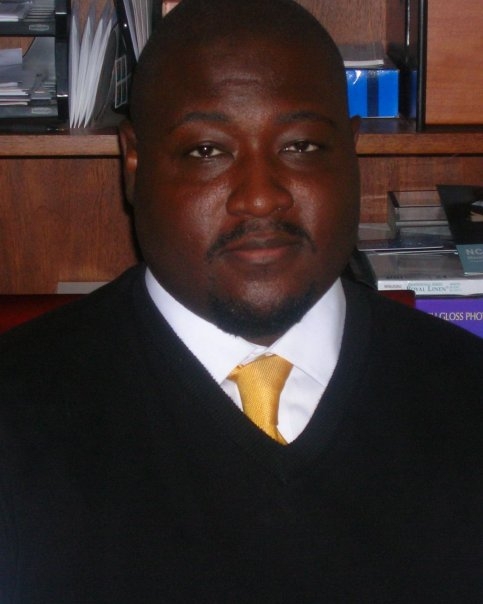
The Now Frontier: Posting Dissertations Online

A note from Anna: As part of a series of blogs on PhD2Published about Online Theses, Will Deyamport, III explains why he will definitely post his dissertation online. To engage in this conversation on Twitter please use the Online Thesis hashtag #thesisonline

Will Deyamport, III is an Ed.D student in Educational Leadership and Management at Capella University. He is the founder of peoplegogy.com, a blog that focuses on life and career developments. He is a monthly contributor to MyPathfinder Career Blog, where he writes about higher education. Currently, Will is writing his dissertation on how Twitter can support the professional learning needs of teachers.  You can follow him on twitter @peoplegogy.

This digital world we live in isn’t going anywhere. We pay bills online, we shop online, we make phone calls online, we date online, and now we’re streaming movies and going to school online. So why wouldn’t I post my dissertation online?

Has the academy become so insular that it has failed to understand and embrace the realities of this digital age? Has it become so arrogant that it believes that it can remain the sole guardian of academic knowledge? Or has the academy so blindly held on to its beliefs of what scholarly work is that it refuses to see this work being published on a daily basis on blogs around the globe?

Whatever its reasons, I plan to publish my dissertation online and here’s why:

  • I happen to have a passion for digital media and most of what I read is read online.
  • What I do and want to do for a career is done online. I’ve been a social media strategist, I blog, and I am earning my doctorate online. So for me the online space is a place of isn’t some separate entity. It’s a part of who I am and how I express my ideas.
  • I am a digital citizen. As such, I see the online world as the way for mobilizing the world towards a common humanity.
  • I routinely seek out information online. Whether it is via Youtube, LinkedIn, or my personal learning network on Twitter, I am able to gain access to experts from a variety of fields and disciplines.
  • I believe that academic knowledge belongs to the masses and should be made available and given freely to those who seek it.
  • My dissertation is on teachers using Twitter to support their own professional development.  The topic doesn’t belong is some bound book. It was meant to be posted online and shared with scholars and practitioners alike.

The ivory tower and those who worship at its feet need to understand that education is no longer insular. Holding information hostage does nothing for the academy or the betterment of society. In order to truly build a thriving academic knowledge-base and further the continued and expansive research expected in academia, technology has to be a part of how that research is shared and disseminated. Using emerging technologies, schools have the capacity to expose its students’ research to every corner of the globe. It is with this type of free exchange that the academy can reinvent itself and lead the way in today’s growing global economy and workforce.

Moving forward, I would like to see every doctoral student publish their dissertation on ProQuest or some other online platform. Just like TED has revolutionized the conference model, as current and future scholars, we have an opportunity to revolutionize the way people think, learn, and are taught about academic research.

Should You Make Your Thesis More Widely Available Online? Part 1

A brief note from Anna: Being Managing Editor of PhD2Published has been a fantastic opportunity for me so far. It has introduced me to lots of interesting people and has helped me to think about key issues I am facing post-PhD. My current thinking is about whether or not to make my PhD thesis more readily available online. This post, which is the first in a series, explores this idea in more detail.

Impact has increasingly become an academic buzzword and requirement, which has led me to think much more about my PhD thesis, its accessibility and the impact it could (and should) have on a variety of audiences, both academic and public. I have heard from several colleagues that the only people who are ever likely to read the actual thesis are yourself and your supervisor (my family and friends certainly haven’t read it!). Frankly this seems wasteful and a bit sad (just look at the picture!), especially considering all of the hard work that went into it, including by myself, my participants and my supervisors. Even with the potential of developing publications and monographs from it in different formats, later on, in its unpublished form, my thesis is meaningful to me and took time and effort to construct.

This thinking prompted me to consider how I could make my thesis more accessible and more widely read, particularly in an age of social media and open access. Before launching into making it available online however, I wanted to do some research into the potential barriers to publishing online and the current debates that will inform this decision.

Following these musings, I posted this question on Twitter: “What are people’s opinions on making theses available online?” Several interesting and important issues and questions were raised. While limited,  there is already an emerging debate about the digital dissertation, which you can read about in this interesting and informative post by Alex Galarza for @GradHacker. There are several positives for doing this, and indeed many universities are now making it a requirement, if it isn’t already. @Gradhacker outlines that online material such as the unpublished thesis for example is still protected by copyright, useful to know if there is concern about the acknowledgement of your work. At the same time, in being overly cautious about protecting your thesis/dissertation you may risk restricting the development of your academic identity, online and otherwise. Furthermore (and some publishers may vary on this) putting your thesis/dissertation online may actually aid in the communication and appeal of your research to a variety of audiences and may even encourage sales of subsequent published work should you wish to publish it elsewhere in a different form. Twitter follower Christina Haralanova (@ludost11) has also received positive replies from people who have read hers.

Despite the many positives, I still think it is important to consider the range of different issues relating to putting a PhD thesis out there; issues that I will explore in a short series of blogs that will be posted here on PhD2Published in the coming weeks. These include posts I have constructed myself, and also opinion posts, and feedback from academic publishers. If any of this resonates and you have anything to add that has occurred to you, please do get in touch, either by Email or Twitter (@PhD2Published). Should you wish to join an online discussion on Twitter about the debate please use hashtag thesisonline (#thesisonline).

Weekly Wisdom #65 by Paul Gray and David E. Drew

PREPARE AN “ELEVATOR SPEECH”. Throughout your PhD studies, your professors grounded you in your discipline and taught you all the caveats and disclaimers that must accompany your scholarly research.  Then, in the dissertation defense, and afterwards, for example when you seek a job, you will be asked to succinctly summarize your work and what it means. Imagine that you are attending a national conference.  You step into an express elevator on the 45th floor of the building, and push “lobby”.  the only other person in the elevator is, say the senior Federal policy maker in your area of interest, for example, the National Endowment for the Humanities or the President’s Science Advisor, or the chair of the department you really want to interview for a job.  He or she says that they heard that you completed an important dissertation study.  S/he explains that s/he would like to know about your research, but,given a packed schedule, only has this elevator ride to learn about your work.  What do you tell them?


Charlotte Frost on Academic Blogging
Image from: http://www.flickr.com/photos/notionscapital/2965186113/sizes/m/in/photostream/

Image from: http://www.flickr.com/photos/notionscapital/2965186113/sizes/m/in/photostream/
Leonard Cassuto said in the Guardian: ‘If a graduate student asks me, “Should I blog?” my answer, at least right now, would still be, “Probably not “’. Just weeks ago I gave a talk at the British Library saying very much the opposite. Cassuto is a more established academic than myself, but I still think I have a point – and so did the people who invited me to give that opinion.

To discuss the fact that I came across Cassuto’s article and talked about it on Twitter would be to open another – if related – can of worms. Suffice to say that engaging with twitter for this type of academic commentary is the way I work. I’ve said time and again that Twitter and blogging allow me to usefully interact with so many academics – and non academics I hasten to add – whose opinions I value. I stand by this method of working as it helps me find great new people and ideas on a daily basis and this regularly directly informs my work.

I do recognize that my subject area lends itself particularly well to this type of information exchange. I’m currently writing a book on art mailing list culture and social media and my area of expertise is in art forms that thrive in these networks of sharing. I have had many people point out to me that they themselves aren’t working in a field where social media is considered appropriate and/or they are handling sensitive data that can’t be shared. However, I still take issue with much of what Cassuto says and I still think online discussion platforms have their place in academia.

Like Cassuto, I will divide my response into two sections. The first deals with form because I would argue that he doesn’t credit blogging or any other type of online communication with being anything other than ‘unpublished’, ‘unedited’, ‘unofficial’ writing. There is much about his tone that indicates he sees it as a lesser form of writing and I take issue with that. Read more

Weekly Wisdom #51

Weekly Wisdom #51 Keep your name out there by writing reviews of related books for key publications!

Lucy Wickens – Using Facebook for Networking & Research

As part of our week devoted to social networking here we present the second in the two part guest post by our intern Lucy Wickens on how to use Facebook for networking and research, you can see her previous post here.

Welcome back!

So hopefully by now you have successfully set up an account and are eager to become avid Face- bookers! Read more

Eloise Zoppos – The Virtual for the Professional: How Postgraduate Students can Manage their Professional Social Media Use

This is the second of our social media week posts. Here Eloise Zoppos examines how postgraduate students can manage their professional social media use. Eloise Zoppos is now embracing the virtual for the professional and you can find out more about her on her website http://eloisezoppos.com or follow her on Twitter @eloise_z.

Lately it seems like everything virtual is now normal: using Facebook to contact friends, reading the news online, calling people through Skype, online banking. Over the last few years, this rise in online activities has slowly begun to seep into the academic world with online conferences, virtual internships and online resumes (hosted on both LinkedIn and personal websites) just to name a few. This got me thinking about whether as a postgraduate student interested in getting published I should be investing more time into using social media for professional purposes. Read more

Using Social Media for Research & Researcher Development

This week we are running a series of posts on different aspects of social media use in relation to conducting research and for researcher development. It appears to be particularly relevant as the Wall Street Journal Health published an article yesterday (25th April 2011) that illustrated the value of social media in research:

A new clinical trial found that lithium didn’t slow the progression of Lou Gehrig’s disease, but the findings released Sunday also showed that the use of a social network to enrol patients and report and collect data may deliver dividends for future studies. Read more

Hello! We would like to publish your thesis … (Note of Caution)

Isn’t that what we all want to hear? Well yes and no as it depends who wants to publish it. Most PhD students I know have received at least one email with the exciting title ‘We want to publish you thesis’ or words to that effect and the follows this kind of line …

Dear ….

I am Joe Bloggs and I work for (insert name of random company here). We would like to offer you the possibility of making your academic paper / thesis available as printed book.

I would appreciate if you could confirm your interest in our publishing house and I will be glad to provide you with detailed information about our services.

I am looking forward to receiving a positive response from you

Read more

Lauren Bailey – A Procrastinator’s Guide to Finishing Your Book on Schedule

This weeks advice on how to finish your book on schedule comes from Lauren Bailey. Lauren is a freelance writer and blog junkie, who blogs about online colleges. Questions and comments can be sent to: blauren99 @gmail.com.

Submitting a proposal and getting it accepted can be difficult enough, but the real work comes along when you must deliver on your promise and complete the book on schedule. Whether you are publishing your dissertation or are writing a different work related to your research and expertise, it pays to nip procrastination in the bud and have a plan for finishing your book on schedule. Read more

PhD2Published will be at ReSkIN Spring 2011

On Saturday 12th March I’ll be representing PhD2Publsihed and Arts Future Book at UCL’s Spring ReSkIN event. ReSkIN is a compulstory  seminar and support scheme for PhD students working in the field of Art History and Visual Culture. This means it unites students from  six different colleges within the university who all work across the same discipline so that they can meet each other and find out more about the issues they face going forwards. The spring event looks closely at writing and publishing in the arts and I’m delighted to be on a panel with a diverse range of expertise.

I’m going to do two things in my talk that reflect aspects of my  projects. One is that I’ll look at how you can use the web and social media in particular to build your platform as a researcher and author. The other is that I’ll provide a quick tour though some inovative uses of technology in academic publishing. Anything from Open Humanities Press to Gamer Theory. I’m really looking forward to this event and hope to see you there!

PhD2Published Contributes to Digital Researcher 11

Digital Researcher is an interactive event run by Vitae and the British Library for postgraduate researchers and research staff to help researchers make the most of new technologies in their research.

The interactive event, which will be held at the British Library, is for postgraduate researchers and research staff. It will include presentations and interactive sessions on subjects such as microblogging, RSS feeds, social networking and social citation sharing.  Participants will explore and develop the skills needed for research in an increasingly digital world and gain ideas for managing information (DR11 site)

Phd2Published will be attending this event ‘virtually’ , contributing to the discussions and the DR 11 blog, see our first post here. We will also be tweeting using the hashtag #DR11

How to Get Your First Academic Book Published

My five-point guide on how to get your first academic book published is out now at the Postgraduate Tool Box. I was delighted to be asked to contribute to their vast set of resources and hope it proves useful to other post-grads. They also have some useful resources you should check out for publishing.

It starts like this:

1. Learn About Academic Publishing. Unless you happen to be studying the publishing industry, it’s likely you don’t know enough about it to make a successful book pitch. What I mean is that, you need an idea of what academic publishing actually entails, so that you know exactly what you’re asking a publisher to do when you pitch to them. There are lots of ways of learning about publishing from, for example, industry websites including booktradeinfo, Publishers Weekly and theBookseller, but PhD2Published is also a good place to start…

Read more here…

Video Blog: P2P Episode 6

This is the one where I tell you some exciting news (so exciting my hair went curly)!