Exact matches only
Search in title
Search in content
Search in comments
Search in excerpt
Search in posts
Search in pages
Search in groups
Search in users
Search in forums
Filter by Categories
Academic Practice
Academic Writing Month
AcWri
AcWriMo
Blogging and Social Media
Book Editing
Book Literature Review
Book Marketing and Impact
Book Planning
Book Proposals
Book Publishing
Book Writing
Books
Citations and Referencing
Collaboration
Community
Conference Paper Abstracts
Conference Paper Editing
Conference Paper Literature Review
Conference Paper Marketing and Impact
Conference Paper Planning
Conference Paper Presenting
Conference Paper Writing
Conference Papers
Digital Publishing
Experimental Digital Publishing
Grant Abstracts
Grant Completion Reporting
Grant Impact Statement
Grant Literature Review
Grant Methods Section
Grant Writing
Grants
Journal Article Abstracts
Journal Article Editing
Journal Article Literature Review
Journal Article Marketing and Impact
Journal Article Peer Review
Journal Article Planning
Journal Article Writing
Journal Articles
Networking
News
Open Access
Productivity
Reading and Note-Taking
Reseach Project Planning
Resources
Tools
Uncategorized
Website
Academic publishing query letters: should you bother? by Joanna Hare

Joanna Hare is currently a Subject Librarian at City University of Hong Kong. As a research-practitioner, Joanna’s interests include information and digital literacy, research support for Humanities and the Arts, and innovative models of customer service. She continues Dave Hare’s series blog posts in the AcWriMo 2016 series.

dave_3_1As a librarian, I often attend presentations by representatives of academic publishers about ‘how to get published.’ These usually cover broad, basic advice like checking the journal’s scope before making a submission and using the correct academic style. One thing that is mentioned is to ‘pitch’ your article to the editor directly via a query letter. Book authors use query letters and academics can use them too. These letters typically include a brief (usually one to two paragraphs) synopsis of your academic writing, which is then sent to the journal’s editor asking if it is something they might publish. You can see a sample here.

Query letters are work. Thinking about them prompted me to reflect on whether they are actually worth the effort and if the letters actually do lead to higher publication rates. To find out, I contacted the editors of a few of the highest ranked Communication journals according to the Scimago Journal Rankings (SJR) and asked them about their thoughts on query letters:  

Steve Jones, editor of New Media and Society, does not mind receiving query letters. However, he makes it clear that he ‘cannot “pre-review” manuscripts on the basis of a query, which is something writers often seem to want’. Jones adds that ‘there is no advantage to sending a query letter, ultimately, unless an author is truly uncertain about whether a manuscript’s topic is or isn’t a fit with the journal.’

Jonathon Hess, editor of Communication Education, is ‘happy to get letters from people who are familiar with the journal… and are asking about specifics that couldn’t be answered by looking online.  But general emails pitching papers for which it’s clear the author has no familiarity with the journal aren’t a good use of my time.’ Hess goes on to say that if after reading the journal’s scope statement the author is still unsure if their work is suitable, he would ‘prefer that she or he just submit the article rather than sending an inquiry.  It’s much easier for me to see the paper and offer a clear response than to try to guess based on a description. I screen most submissions within a week, so authors will find out promptly if the paper doesn’t fit or isn’t strong enough for review.’

Tuen A. van Dijk, editor of Discourse Studies, says he does not receive query letters that often, which is perhaps due to his journal’s practice of pre-review: ‘prospective authors get an automatic reply when they submit a paper, in which they are asked to pre-review their own paper on the basis of very detailed criteria of the journals… so they already know what kinds of paper we publish or not.’

Rasmus Nielsen, editor of The International Journal of Press/Politics (IJPP), says ‘the majority of the query letters I receive are not very helpful, because they either (a) reflect that the author has not actually read the journal, or just consulted our aim and scope or (b) is trying to flog a sub-standard manuscript. A minority of query letters are interesting and useful for me, but in that case almost always reflect the fact that the author already knows that a given manuscript may not be a good fit for IJPP.’ ’

So, what should you do?

It is clear from these responses that if you only do one thing before reaching out to an editor prior to submitting your article it is:

Read the journal’s aims and scope first!

An editor’s receptiveness to a query letter has a lot to do with personal preference, with most stating that they do not mind receiving letters. However, it is critical that you demonstrate that you have an understanding of what the journal is about. You can make this clear in your letter (for example, ‘I have read your journal’s aims and scope and my work fits these guidelines for reasons A, B and C’).

If you are not already very familiar with the journal you are submitting to, I would recommend going further than reading the aims and scope to reading several of the articles published in the journal. This will give you an idea of the writing style and topics covered, and how your article would fit in an overall volume. Referring to specific articles in your email to the editor is also evidence that you are familiar with the journal and committed to publishing with them.

A caveat: in my experience it can be worth reaching out to the editor for advice on writing an article if they are producing a ‘special edition’ of the journal, such as a special topic or an edition dedicated to a recent conference. The scope and type of article accepted for special editions may be slightly different and the editor might be able to guide you in a direction that is more likely to lead to publication. But of course, check the website to make sure this information isn’t already easily available!

Thank you to the editors who provided valuable advice for this post.

dave_3_2

A simple start to a publishing strategy: journal lists by Dave Hare

Dave Hare is currently a part-time lecturer at City University of Hong Kong. His research work concerns film studies, specifically contemporary cinema stereoscopy. This is his second blog post in the AcWriMo 2016 series.

https://www.flickr.com/photos/internetarchivebookimages/14594792869/

https://www.flickr.com/photos/internetarchivebookimages/14594792869/

So, following last week’s post, you’ve decided to use AcWriMo to finalise and submit your work to a journal. The next thing to do, according to almost every academic blog ever, is to create a ‘publishing strategy’ or ‘publishing agenda’. You can read about strategies and agendas here, here, here, here, here and here, and also here (and basically everywhere else*).

Publishing strategies don’t always come about in the prescribed way. For me, it was made clear in a job rejection email that I wasn’t being considered for a position because I didn’t have enough Arts & Humanities Citation Index (A&HCI) and Social Sciences Citation Index (SSCI) publications. I knew that I needed more work published, but I applied for the job anyway and (Surprise) got rejected. The upside of that downside was that I got specific feedback on how to shape my publishing strategy: to look to journal ranking lists, which university departments obviously use to gauge job candidates (as well as a bunch of other stuff, as in exchange knowledge, apply for funding grants, evaluate staff performance, build careers etc.).

There are issues, however, with this type of publication strategy. Tseen Khoo, one half of The Research Whisperer blog team, discussed a few of these issues in a post back in 2014. She concluded the post with the thought that ‘you may still end up “publishing to appease” every so often, but don’t let it be your life’; which is to say there are particular times to focus your attention on journals that others favour. For me, given the response to my job application, the time is now.

For the uninitiated, journal ranking lists are LONG. The A&HCI, for example, is almost 200 titles across multiple fields of study. So, you need to start by filtering out irrelevant titles. A friendly academic librarian can help you with this task; I know, because one helped me. Here is a summary of that librarian’s advice:

  • Step one: Create a spreadsheet to list the journal titles you are going to target for your publications. The spreadsheet should include all the relevant information about the journals you plan to target, such as the name, links to the Aims and Scope, recommended article word counts and a ‘Notes/Comments’ column for any extra details about the vibe of the journal.
  • Step two: Skim the title lists to identify titles relevant to your field. My field is contemporary cinematic stereoscopy, so keeping my outlook broad I selected any titles that seemed to be about film or media studies, as my work spans both aesthetic and industrial aspects of contemporary cinematic stereoscopy.
  • Step three: As you find a title that seems relevant, visit the journal website and find their ‘Aims and Scopeinformation. This should tell you if your work will fit in the existing scope of the journal. Add any titles that seem promising to your spreadsheet. At this stage be prepared to be both disappointed and surprised: you may find that the well-regarded journal you were hoping to publish in is actually not ideal, while the scope of journals you are less familiar with might end up being the perfect fit.
  • Step four (optional): Email the editor/s of the journal/s and ask if your work sounds appropriate for their publication (more on query letters in the coming weeks). Suffice to say this email should be short and to the point, with a brief description of your work. A typical response to this email will (1) note that your work is interesting and (2) that you should submit it for consideration, providing that (3) you have followed the journal’s style guide. It may not provide too much information, but it might just help you decide which journal you’ll submit to first.

After following these steps, my list included about 25 relevant journals, five of which stood out as being clear targets. In addition to these, I also included journals that might be useful for future research. Now, I am ready to get on with the task of editing, re-writing, and proofreading. A quick note for those AcWriMo-journal-writing peeps that already have a publishing strategy: Your target journals may have posted a recent call for papers, redefined their aims or have a new editorial board. A quick check to see if journals have changed is a good idea before settling down to write.

https://www.flickr.com/photos/usnationalarchives/3903230097/

https://www.flickr.com/photos/usnationalarchives/3903230097/

Forming a publishing strategy (or agenda), conducting research into a journal index, and creating lists, all count toward your AcWriMo success as well as the goal of journal article publication. If you’re doing these tasks, please share your experiences on Twitter and Facebook using the AcWriMo hashtag.

*because the interwebs is loaded with academic blogs talking about strategies … including this one.

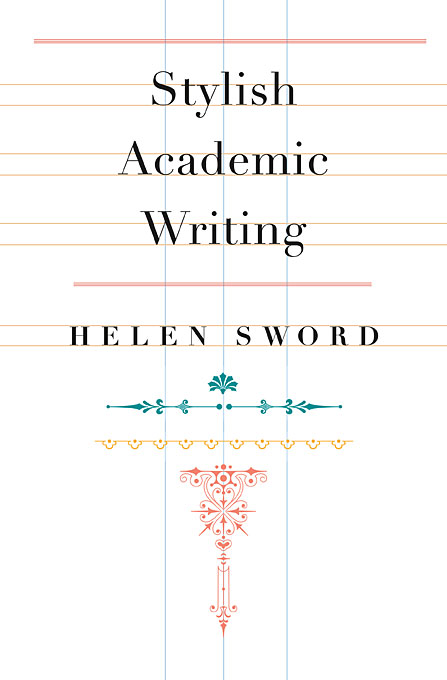
Tempting Titles by Professor Helen Sword


helen sword book coverProfessor Helen Sword (The University of Auckland) is the author of the hugely popular Stylish Academic Writing. Below is an excerpt from her book which offers her top 10 tips on titles.

1.  What first impression do you want to make on your chosen audience? Remember, your title announces your intention to be serious, humorous, detailed, expansive, technical, or accessible—possibly several of those things at once. Double-check that your title matches your intention.

2.  Take a look at the publication list on your curriculum vitae. How many of your past titles contain colons? In each case, can you clearly articulate your reason for needing both a title and a subtitle?

3.  If you use colons frequently, try crafting a colon-free title. As an extra challenge, see if you can come up with a colon-free title that is both engaging and informative.

4.  If you seldom or never use colons, or if your titles are informative but not engaging, try out the “catchy: descriptive” trick. First, formulate a snappy but appropriate title (for example, “Snakes on a Plane”) to go with your not-so-snappy descriptive subtitle (“Aggressive Serpentine Behavior in a Restrictive Aeronautical Environment”).

5.  Next, ask yourself whether your title would still make sense without the subtitle. In some situations – for instance, a disciplinary conference or a special issue of a journal, where the context may supply all the extra information that is needed – you might find you can get away with just “Snakes on a Plane” after all.

6.  Identify some typical titles in your discipline and analyze their grammatical structure: for example, “The Development of Efficacy in Teams: A Multilevel and Longitudinal Perspective” becomes “The Abstract Noun of Abstract Noun in Plural Collective Noun: An Adjective and Adjective Abstract Noun.” Now see if you can come up with a title that does not use those predictable structures.

7.  For inspiration, find an engaging title from a discipline other than your own and mimic its structure. No one in your discipline need ever know.

8.  Make sure your title contains no more than one or two abstract or collective nouns. (Many academic titles contain seven, eight, or more!) Abstract nouns (analysis, structure, development, education) and collective nouns (students, teachers, patients, subjects) have a generic, lulling quality, particularly when they occur in journals where the same noun is used frequently, as in a criminology journal where most of the titles contain the nouns crime and criminology.

9.  Avoid predictable “academic verbs”, especially in participle form: for example, preparing, promoting, enforcing (law); engaging, applying, improving (higher education); rethinking, reopening, overcoming (history); predicting, relating, linking (evolutionary biology).

10.  Include one or two words that you would not expect to find in any other title in the same journal. Concrete nouns (piano, guppy, path) and vivid verbs (ban, mutilate, gestate) are particularly effective. Proper nouns (Wagner, London, Phasianus colchicus) can also help individualize your title and ground your research in a specific time and place.