Exact matches only
Search in title
Search in content
Search in comments
Search in excerpt
Search in posts
Search in pages
Search in groups
Search in users
Search in forums
Filter by Categories
Academic Practice
Academic Writing Month
AcWri
AcWriMo
Blogging and Social Media
Book Editing
Book Literature Review
Book Marketing and Impact
Book Planning
Book Proposals
Book Publishing
Book Writing
Books
Citations and Referencing
Collaboration
Community
Conference Paper Abstracts
Conference Paper Editing
Conference Paper Literature Review
Conference Paper Marketing and Impact
Conference Paper Planning
Conference Paper Presenting
Conference Paper Writing
Conference Papers
Digital Publishing
Experimental Digital Publishing
Grant Abstracts
Grant Completion Reporting
Grant Impact Statement
Grant Literature Review
Grant Methods Section
Grant Writing
Grants
Journal Article Abstracts
Journal Article Editing
Journal Article Literature Review
Journal Article Marketing and Impact
Journal Article Peer Review
Journal Article Planning
Journal Article Writing
Journal Articles
Networking
News
Open Access
Productivity
Reading and Note-Taking
Reseach Project Planning
Resources
Tools
Uncategorized
Website
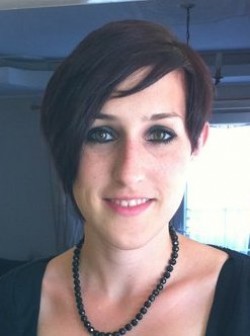
Introducing Our New Managing Editor: Dr Anna Tarrant

Introduction to Me

Hello everyone,

I am delighted to announce that I am the new Managing Editor of phd2published! Just by way of introduction, here is a bit about me and my intentions for this role:

Anna 2011: Questions galore!

I am a human geographer by training and my thesis examined the social geographies of contemporary familial identities in a British context. I completed my PhD in July 2011 and have since realized my ambition to stay in academia. Currently I am a Senior Teaching Associate at Lancaster University, teaching a broad range of topics at both undergraduate and postgraduate levels. This is a short term, 10 month post and I view it as my opportunity to fill in the gaps of my knowledge, to get established as an academic and to develop my networks. So how do I asked? Read more

Changes Afoot…

Image from: http://www.flickr.com/photos/pumpkincat210/with/3416918382/

We’re changing a few things here so please bear with us.

You may have seen that Sarah-Louise, our managing editor since January, has moved onto pastures new (she’ll like that metaphor, she’s mad about sheep!). The idea behind editing this site is to provide useful research into academic publishing for the wider PhD2Published community and in doing such, move your own career forwards. Sarah has managed to achieve a mind-boggling amount over the last 9 months and it seemed high time she focus on her new projects and give someone else a go. As a result, we’re interested to hear from anyone who fancies either running or contributing to the site. You’ll get all the support you need and don’t need to bring a single skill to the table – just a desire to build a shared knowledge base for us early-career academics. Just drop us a line and we can have a chat and see what works best for you. And bear in mind that the first two editors of the site (founder/director Charlotte, and Sarah herself) both now have book contracts (and more than one journal article published or in the pipeline) so we can guarantee that getting involved works!

Our amazing designer Sam Beddoes is also helping us tighten up the design a bit, and make sure buried content is more accessible. So the look and feel of the site is about to change just a little bit too. And then we’ll be back on track with lots more useful info!

“The Time Has Come” The Walrus Said …

To write my last post for phd2published. I have thoroughly enjoyed my time as the managing editor of this site but it is now time for me to move on to new things. When Charlotte offered me this opportunity just after my viva last year I wasn’t sure what I could contribute or whether it was a good idea but I have always taken every opportunity that has come my way so I said yes and saw it as a fabulous learning curve, and that’s exactly what it has been.

I have learnt a great deal about academic publishing and academic career development over the last 9 months and a great deal has happened for me on the back of being here thus, I shall use this last post to review my achievements through giving you my top tips:

Put Some Thought into Your Journal Choice and Don’t Be Scared of Top Ranked Journals:

For a variety of reasons I came to the end of my PhD not having published anything as a sole author. I had contributed to a number of policy reports but I had not got any peer reviewed publications out. this was a conscious decision which made sense at the time but at the same time when I got to the end of my PhD I was playing catch-up and this does impact upon your ability to get a post-doc position. Academic departments in the UK are now looking at what potential new staff can or will be able to offer toward the REF. For early-career researchers this is two publications in ‘good’ journals. ‘Good’ generally relates to impact factor and many early-career researchers are scared off from aiming at the top ranked journals in their field. One of the key messages from the Royal Geographical Society Post Graduate Forum Annual Conference Training Symposium (PGF-ACTS) was that if you have a piece which you think is relevant to that high ranking journal you should go for it! they treat everyone the same, even the big names get rejection letters! Read more

Weekly Wisdom #56 by Paul Gray and David E. Drew

EVALUATE A POSTDOC CAREFULLY, particularly if you are in the sciences. You should think of a postdoc in cold, hard economic terms. It is an investment (or speculation, depending on your point of view) just like buying stocks or real estate. You will certainly be paid less than if you took a teaching position, but you may gain additional knowledge and experience to make more money in the long run in your chosen field. The anticipated benefits must exceed the short-run costs to make the investment worthwhile. A postdoc is appropriate under the following conditions:

You are in a field where jobs at good places are scarce and you delayed too long in starting your job search. You feel you need to gain specific research tools (or, if a scien­tist, experience with specialized equipment) to be able to move your research past your PhD dissertation. You want to work with a specific individual who will further your growth. You want to build up your publication list without using up your seven-year tenure clock. A postdoc is not appropriate if you are afraid of teaching or talking in front of people. You are merely delaying the inevitable. A postdoc is also not appropriate if you lived on a shoestring for years and/or support a family.

Weekly Wisdom #55 by Paul Gray and David E. Drew

MAKE SURE YOU HAVE A MENTOR early in your career. The old apprentice system still exists. Try to find mentors who were success­ful with others, who will support you, and who believe that further­ing your career helps their own career. Such a mentor is preferable to the internationally famous Nobel Prize winner who exploits you.

Claire Warden – Interdisciplinarity: Variety Is the Spice of (Academic) Life

In this post Claire Warden, lecturer in Drama at Lincoln University, returns with another guest post, this time looking at the issues surrounding interdisciplinarity. You can follow Claire on twitter here. Recently I went to an Iron Maiden gig in Nottingham. Earlier in the day I had attended a yoga class and had then grabbed some sushi for lunch. Not owning an ‘Eddie’ top I decided to wear my Peter Gabriel 2003 tour t-shirt instead. An insightful friend called me ‘eclectic’ and I must admit that in all areas of life I rejoice in my slightly unusual day-to-day combinations: a lover of progressive rock but also a former classical soprano, a devotee of professional wrestling but also a reader of verbose Victorian novels. My friend is clearly right…I am nothing if not eclectic. This approach (call it eccentric if you will) actually impacts my work daily and I am starting to feel its effects more and more keenly.

In my last article for ‘PhD2published’ I briefly mentioned the importance of developing an interdisciplinary approach, of connecting our work with (or at least reading it alongside) the ideas of others outside of our immediate field. In this article I want to briefly begin to explore why and how this can be done. Read more

Weekly Wisdom #54 by Paul Gray and David E. Drew

Welcome to our exciting new set of tips filling the regular Weekly Wisdom slot. We’re lucky enough to be featuring a year’s worth of tips sampled from a great book called What They Didn’t Teach You In Graduate School, by Paul Gray and David E. Drew. The book itself features over 200 hints and tips for a successful academic career and it’s a really enjoyable read to boot (with some very amusing illustrations)!

Weekly Wisdom #54:

MOST ACADEMIC FIELDS ARE DOMINATED BY FEWER THAN 100 POWERFUL PEOPLE.

These people know one another and determine the course of the field. Early in your career you should get to know as many of them as possible. More to the point, they should know who you are. You want them to see you as a bright young person at the forefront of your field. Although this tactic is important, be aware of the dangers associated with it. You should not begin the process until after you mastered the literature (particularly the papers they wrote!) and developed some ideas of your own. If they get to know you and conclude you have no ideas, you’re finished.

Kevin Ward – Writing an Academic book – Some Thoughts

Following on from my appearence on the panel at RGS Postgraduate ForumAnnual Conference Training Symposium (PGF-ACTS) last week I present the first of three posts from the speakers on publishing. Todays post looks at writing and academic book and is brought to you by Professor Kevin Ward. Kevin is Professor of Human Geography at Manchester University and has been the Editor of Area a journal published on behalf of the Royal Geographical Society (with The Institute of British Geographers) since 2010.

So, you’ve decided that you are going to write an academic book.  Well, here are five tips:

1. It is worth considering the sort of book you want to write.  Look at publishers’ websites and consider the following: 

– Does the publisher produce the type of book that you want to write in your field?

– Are hardback and paperback versions of the book published simultaneously?  If not, how many hardbacks does your book have to sell before the publisher will commission a paperback run?

– What marketing and distribution system does the publisher have?

– Does the publisher send out copies to academic journals for review?

– Does the publisher attend large academic conferences and participate in book exhibitions? Read more

Charlotte Frost on Academic Blogging
Image from: http://www.flickr.com/photos/notionscapital/2965186113/sizes/m/in/photostream/

Image from: http://www.flickr.com/photos/notionscapital/2965186113/sizes/m/in/photostream/

Leonard Cassuto said in the Guardian: ‘If a graduate student asks me, “Should I blog?” my answer, at least right now, would still be, “Probably not “’. Just weeks ago I gave a talk at the British Library saying very much the opposite. Cassuto is a more established academic than myself, but I still think I have a point – and so did the people who invited me to give that opinion.

To discuss the fact that I came across Cassuto’s article and talked about it on Twitter would be to open another – if related – can of worms. Suffice to say that engaging with twitter for this type of academic commentary is the way I work. I’ve said time and again that Twitter and blogging allow me to usefully interact with so many academics – and non academics I hasten to add – whose opinions I value. I stand by this method of working as it helps me find great new people and ideas on a daily basis and this regularly directly informs my work.

I do recognize that my subject area lends itself particularly well to this type of information exchange. I’m currently writing a book on art mailing list culture and social media and my area of expertise is in art forms that thrive in these networks of sharing. I have had many people point out to me that they themselves aren’t working in a field where social media is considered appropriate and/or they are handling sensitive data that can’t be shared. However, I still take issue with much of what Cassuto says and I still think online discussion platforms have their place in academia.

Like Cassuto, I will divide my response into two sections. The first deals with form because I would argue that he doesn’t credit blogging or any other type of online communication with being anything other than ‘unpublished’, ‘unedited’, ‘unofficial’ writing. There is much about his tone that indicates he sees it as a lesser form of writing and I take issue with that. Read more

Getting from PhD to Published at InterFace 2011
I was really excited to speak at the amazing InterFace 2011 humanities and technology conference on the 29th July at UCL. It was organised by a really diverse and highly-skilled group of PhD students and it was such a pleasure to be involved with.
I spoke on ‘Getting from PhD2Published’ as part of a session on publishing. My Prezi is below and for the rest of the contributors head over to the publishing page on the InterFace website.

Weekly Wisdom #52

Weekly Wisdom #52 Don’t forget to work on your CV, it needs to be just as pretty as the rest of your pitch!

Charlotte Frost Interviewed in Adventures in Career Development

I was recently interviewed about PhD2Published for the excellent blog Adventures in Career Development by Tristram Hooley. It was great to reflect on how PhD2Published started and has grown over the last eighteen months or so. And I was really honoured Tristram was interested in the project.

My interview starts like this:

AiCD: Who are you?

My name is Dr Charlotte Frost I’m the 2011/2012 International Post-Doctoral Fellow at the Center for 21st Century Studies, University of Wisconsin-Milwaukee. I’m a broadcaster and academic interested in the relationship between art and technology. My particular specialism is the impact of digital technologies on art historical discourse, but I’ve also been studying and writing about the developing field of Digital and New Media art for over ten years. I teach art contextual modules at Writtle School of Design and the University of Westminster. And I run a range of projects that support my research objectives while creating platforms for knowledge exchange and experimentation – particularly with reference to publishing.

AiCD: Tell us a little bit about PhD2Published? Read more

Ernesto Priego – On Collaborative Blogging as Scholarly Activity. The Case of The Comics Grid. Part II.

This is the second part of Dr Ernesto Priego’s series on collaborative blogging as a scholarly activity.

“Every moment has its discontents, its challenges and failures. Yet no moment is every truly last, at least not so long as we persist in human conversation.”

Stuart Moulthrop, 2005 [PDF]

From the start I knew that if The Comics Grid project was attractive to others it was going to grow fast. I therefore considered essential to design specific guidance documentation, that was later reviewed by the core editorial team. What started with one person, then five, has become now thirteen active contributors, including reviewers and editors. We have published 52 posts since January 2011, and have since maintained our publication schedule of two original posts per week. The blog has been viewed almost 28,000 times, and our analytics reveal that most readers find us by making comics research-related queries on Google.

A sense of mission is what has kept editors and contributors working together in spite of the logical challenges imposed by lack of face-to-face interaction (all work is done online, by email, on shared Google docs and on the blog’s dashboard). In what follows I’d like to share with you one the points that summarise our mission:

Read more

Ernesto Priego – On Collaborative Blogging as Scholarly Activity. The Case of The Comics Grid. Part I.

This week we are exploring different types of publishing with posts from Dr. Ernesto Priego. Dr Ernesto Priego is an editor, journalist, translator, poet, curator and researcher. He has been writing and teaching about comics since 1994. He lives in London. You can follow him on twitter here

“If collaboration and team working are going to be expected more of humanities researchers in future, then we need to think about how to make it seem more normal.”

Claire Warwick, 15 June 2011

One of the most satisfying and challenging projects I’ve been involved with recently is The Comics Grid. When people ask me what it is all about, I say “collaboration.” After I submitted the final draft of my PhD dissertation (ambitiously titled “The Comic Book in the Age of Digital Reproduction”), I couldn’t wait any longer to to create an actual platform, a research and teaching tool, something concrete (online resources are very much concrete and not “virtual” in the sense of “unreal”) with which to address a lack I perceived in the field.

This field is actually a multiplicity of fields. Since what has been called “comics scholarship” studies multimodal texts the methodologies employed to study them should equally be multmodal, i.e., combining different disciplines until not too long ago perceived (and in some cases still perceived) as essentially different. Media studies, communication studies, information studies, cultural studies, film studies, archeology, library science, history, geography, you name it: people studying comics within and outside academia have always employed a combination of approaches and terminologies produced and transmitted from these disciplinary areas. Read more

Weekly Wisdom #51

Weekly Wisdom #51 Keep your name out there by writing reviews of related books for key publications!