Exact matches only
Search in title
Search in content
Search in comments
Search in excerpt
Search in posts
Search in pages
Search in groups
Search in users
Search in forums
Filter by Categories
Academic Practice
Academic Writing Month
AcWri
AcWriMo
Blogging and Social Media
Book Editing
Book Literature Review
Book Marketing and Impact
Book Planning
Book Proposals
Book Publishing
Book Writing
Books
Citations and Referencing
Collaboration
Community
Conference Paper Abstracts
Conference Paper Editing
Conference Paper Literature Review
Conference Paper Marketing and Impact
Conference Paper Planning
Conference Paper Presenting
Conference Paper Writing
Conference Papers
Digital Publishing
Experimental Digital Publishing
Grant Abstracts
Grant Completion Reporting
Grant Impact Statement
Grant Literature Review
Grant Methods Section
Grant Writing
Grants
Journal Article Abstracts
Journal Article Editing
Journal Article Literature Review
Journal Article Marketing and Impact
Journal Article Peer Review
Journal Article Planning
Journal Article Writing
Journal Articles
Networking
News
Open Access
Productivity
Reading and Note-Taking
Reseach Project Planning
Resources
Tools
Uncategorized
Website
How to be a Hackademic #14 by Charlotte Frost & Jesse Stommel
Image by http://www.flickr.com/photos/fiddleoak/ under this licence: http://creativecommons.org/licenses/by-nc-sa/2.0/deed.en_GB

Hybrid Pedagogy’s Jesse Stommel and our very own Charlotte Frost rethink academic life and writing productivity in this on-going series of hints, tips and hacks.

SHARE. Pay it forward by sharing your own writing and publishing experiences. Over the last few years, academics at all stages of their careers have been able to network more and more widely using new digital communication technologies and social media. This work is not only useful but necessary. Frankly, there is still too much gate-keeping and secrecy in academia, so the more transparent we all are about our processes the better. As educators, it really is our job to foster the growth of others. If you help someone else get published, that is a career-success for you too.

What else does it takes to be a hackademic ? Click here to find out.

How to be a Hackademic #13 by Charlotte Frost & Jesse Stommel
Image by http://www.flickr.com/photos/fiddleoak/ under this licence: http://creativecommons.org/licenses/by-nc-sa/2.0/deed.en_GB

Hybrid Pedagogy’s Jesse Stommel and our very own Charlotte Frost rethink academic life and writing productivity in this on-going series of hints, tips and hacks.

ATTEND TO YOUR BODY. Do some exercise or get a massage. When you’re doing lots of writing you will have no idea how much you are asking of your body until aches and pains set in. Even if you have perfect posture when you sit at your computer, you’re still putting some muscles under strain and leaving others strangely inert. A wise academic once told Charlotte that the only treat she never gave up no matter how hard she was working or how little money she had coming in was a massage. Years later, when it took months of physiotherapy for Charlotte to untangle herself from the pose she’d adopted to complete her PhD, she understood. If you’d rather be more active in stretching out your muscles then Yoga and Pilates are another very good option. But it is not just about easing physical tension, doing exercise and getting away from your work will pay dividends in the writing stakes too. Any exercise which clears your mind and forces you to think about something else – or nothing at all, if meditation is more your thing – will allow you to return to writing with fresh perspective and bags more energy. And both walking or swimming are great options for any fitness level.


Maybe this tip can help your hackademic writing as well!

How to be a Hackademic #12 by Charlotte Frost & Jesse Stommel
Image by http://www.flickr.com/photos/fiddleoak/ under this licence: http://creativecommons.org/licenses/by-nc-sa/2.0/deed.en_GB

Hybrid Pedagogy’s Jesse Stommel and our very own Charlotte Frost rethink academic life and writing productivity in this on-going series of hints, tips and hacks.

PREPARE. We are professional researchers and being under-prepared is never an excuse. Learn as much as you can about every academic undertaking in advance of tackling it. This sounds obvious but it is easy to forget when you’re stressed about deadlines, doing a good job, and all the other things you’re trying to juggle. It’s not enough to just research the subject you’re writing about, you need to know as much as possible about how to write that article, the audience for it, and the ways it will be evaluated. So think around every task and know that you’ve got it covered from all angles. Feeling stressed and over-stretched? Try out this tip instead.

Want more tips on Hackademic? Click here!

How to be a Hackademic #11 by Charlotte Frost & Jesse Stommel
Image by http://www.flickr.com/photos/fiddleoak/ under this licence: http://creativecommons.org/licenses/by-nc-sa/2.0/deed.en_GB

Hybrid Pedagogy’s Jesse Stommel and our very own Charlotte Frost rethink academic life and writing productivity in this on-going series of hints, tips and hacks.

HACK YOUR PRODUCTIVITY. There are all sorts of ways you can be extra efficient with your writing time. Setting specific writing times and sticking to them can be very effective in boosting your output, but here are some other hacks: 1) Write first thing when you get up before you have time to be distracted by email or the newspaper. 2) You can even harness your addictions by writing a certain number of words before allowing yourself coffee or tea; 3) Write last thing at night when everything is done and it’s quiet. 4) Use a writing app that helps filter out distraction. After just a few minutes of use, full-screen mode can feel like you’ve gone to writing heaven, and there are many apps that will even pare your screen down to just words on a page relieving you of all that urgent and endless formatting. 5) Write collaboratively with someone in the same document – even at the same time – halving the writing time and stress. What else do you need to do ?


How to be a Hackademic #10 by Charlotte Frost & Jesse Stommel
Image by http://www.flickr.com/photos/fiddleoak/ under this licence: http://creativecommons.org/licenses/by-nc-sa/2.0/deed.en_GB

Hybrid Pedagogy’s Jesse Stommel and our very own Charlotte Frost rethink academic life and writing productivity in this on-going series of hints, tips and hacks.

DON’T OVER-PREPARE. Do not self-sabotage by putting so much time into preparing for something that A) you lose confidence in your abilities, constantly second-guessing the choices you’ve made or B) you run out of time for all the other things you need to get done. Spreadsheets and Gantt charts can be useful ways of reminding yourself you have multiple commitments and need to allocate the right portion of time to each. And besides, if you’re clever (which we’re guessing you are), even if you feel under-prepared you’re really, really not!


What else does it take to be a Hackademic? Click here to find out!

How to be a Hackademic #9 by Charlotte Frost & Jesse Stommel
Image by http://www.flickr.com/photos/fiddleoak/ under this licence: http://creativecommons.org/licenses/by-nc-sa/2.0/deed.en_GB

Hybrid Pedagogy’s Jesse Stommel and our very own Charlotte Frost rethink academic life and writing productivity in this on-going series of hints, tips and hacks.

STAY AWAKE. Learn to live with getting less sleep. If you have children you’ll already be familiar with this feature of adulthood. It’s all well and good insisting that you need eight hours sleep to get stuff done, but how on earth can you get everything done in the sixteen hours you have left if some of that time is taken up by eating, washing and doing chores? Your years of pulling all-nighters are over, but so too are your years of long uninterrupted sleep – if you want to be really successful that is. Two solutions to this can be either getting up just half an hour earlier and/or going to bed half an hour later and using that extra pocket of time to race through email correspondence, thus freeing up more of your day for more productive work. Alternatively, try an afternoon nap. This of course won’t work if you’re supposed to be teaching or seeing students in your office, but many people find just twenty minutes of sleep in the afternoon reinvigorates them like no double espresso ever could, resulting in an afternoon/evening of faster and more targeted work. Pulled too many all-nighters already? Starting to lose the ability to string a sentence together, let alone write a book? Maybe you’re better off with this tip.

How to be a Hackademic #8 by Charlotte Frost & Jesse Stommel
Image by http://www.flickr.com/photos/fiddleoak/ under this licence: http://creativecommons.org/licenses/by-nc-sa/2.0/deed.en_GB

Hybrid Pedagogy’s Jesse Stommel and our very own Charlotte Frost rethink academic life and writing productivity in this on-going series of hints, tips and hacks.

BE SLOW TO REACT. Remember that you’re not responsible for how someone else chooses to interpret your work, only for how you choose to react to them. It’s very easy to get all worked up when people misunderstand you and/or launch into unjustifiable criticism. Online this is sometimes the work of so-called ‘internet trolls’, people who are just hell bent on endlessly playing devil’s advocate or arguing for the sake of arguing. Sometimes you are talking at cross-purposes and though you might find common ground in a face-to-face discussion, it may utterly elude you online. In these instances it’s best not to react or at least to take a bit of time to ponder your response. If someone is trying to get your goat they’ll continue to get it no matter what, so save your energy for something more worthwhile. Similarly, the old adage about today’s news being tomorrow’s fish and chip wrap holds an even faster truth online – although there it might be tomorrow’s LOLcat. And also, quite unlike an in-person argument, if you do think of the perfect answer days later, you’ll still be able to use it.

Want more tips on Hackademic? Click here!

How to be a Hackademic #7 by Charlotte Frost & Jesse Stommel
Image by http://www.flickr.com/photos/fiddleoak/ under this licence: http://creativecommons.org/licenses/by-nc-sa/2.0/deed.en_GB

Hybrid Pedagogy’s Jesse Stommel and our very own Charlotte Frost rethink academic life and writing productivity in this on-going series of hints, tips and hacks.

SLEEP. Things always look worse when you haven’t had enough sleep. It’s often the best medicine you can give yourself. Getting a good night’s sleep can completely transform both your general outlook and a specific piece of work. Remember that as you sleep your brain is working away to solve all sorts of problems and people often report waking up with the answer to a life or work issue. So remember that it has its place and can even be a bit magical when you’re most in need.

Also, this tips can help your hackademic life!

How to be a Hackademic #6 by Charlotte Frost & Jesse Stommel
Image by http://www.flickr.com/photos/fiddleoak/ under this licence: http://creativecommons.org/licenses/by-nc-sa/2.0/deed.en_GB

Hybrid Pedagogy’s Jesse Stommel and our very own Charlotte Frost rethink academic life and writing productivity in this on-going series of hints, tips and hacks.

GO SHOPPING. For some people, buying clothes is a powerful way to de-stress and release endorphins. That’s great, but not true for everyone. For some, buying clothes is stressful. But here’s the problem, you’re going to need some clothes and, in fact, if you’re going to be a success, you’re probably going to need some new clothes. There are two main times academics need to look smart, one is at conferences and the other is at job interviews. What we’re suggesting here is that you buy these sorts of clothes well in advance of either of these events and have them ready and waiting. When you’re writing your job talk for your campus interview the last thing you need is to have to rush around finding a couple of suitable outfits. But if you go out shopping with a clear head – and perhaps a good friend – it can be one less thing to think about when you should be writing. Perhaps you should  go shopping with your team ?

How to be a Hackademic #5 by Charlotte Frost & Jesse Stommel
Image by http://www.flickr.com/photos/fiddleoak/ under this licence: http://creativecommons.org/licenses/by-nc-sa/2.0/deed.en_GB

Hybrid Pedagogy’s Jesse Stommel and our very own Charlotte Frost rethink academic life and writing productivity in this on-going series of hints, tips and hacks.

STAY FOCUSED. Don’t have too many hobbies. And to be clear, an “academic project” that is not leading to fruitful production (in the classroom or as a publication) is actually a hobby. Cut the majority of those out of your life. And, if necessary, stamp them out violently, because the longer you let them linger, the more energy they will take from your real academic work…Does the idea of ditching all your hobbies and pastimes fill you with horror and make academia sound like a mountain you just don’t want to climb? Try this tip on for size instead.

How to be a Hackademic #4 by Charlotte Frost & Jesse Stommel
Image by http://www.flickr.com/photos/fiddleoak/ under this licence: http://creativecommons.org/licenses/by-nc-sa/2.0/deed.en_GB

Hybrid Pedagogy’s Jesse Stommel and our very own Charlotte Frost rethink academic life and writing productivity in this on-going series of hints, tips and hacks.

CHOOSE YOUR BATTLES WISELY. We’re principled beings us academics and biting your tongue every time you feel something is wrong or unjust is going to get painful. We don’t want you to shy away from a fight that is important to you. Actually, we’re hugely in favor of fighting for what you believe in. We just want you to recognise which battles are the most important. If you argue over everything, you’re going to get a reputation for being difficult. If you pick a fight carefully, your colleagues will be more likely to listen (and respond well) because it’ll be clear to them that this really is an important issue for you. Besides, a lot is built on bright “hellos” and coffee runs. Very little is gained by making enemies. If you fall out with someone, even if you don’t agree with them or are having an all-out personality clash, try your hardest to create a convivial working relationship. If you make an enemy, not only can it jeopardize your career growth (they might sit on a panel deciding your fate some day) but you’ll make your work day a lot less pleasant.

Want more tips on Hackademic? Click here!

How to be a Hackademic #1 by Charlotte Frost & Jesse Stommel
Image by http://www.flickr.com/photos/fiddleoak/ under this licence: http://creativecommons.org/licenses/by-nc-sa/2.0/deed.en_GB

[Photo by Flickr user fiddle oak]http://www.flickr.com/photos/fiddleoak/6908080437/

Hybrid Pedagogy’s Jesse Stommel and our very own Charlotte Frost rethink academic life and writing productivity in this on-going series of hints, tips and hacks. 

WRITE. Establishing a writing lifestyle is perhaps the most important step you can take in securing your successful academic career. If you devise a routine right from the start, it’ll seem like second nature. There are all sorts of ways of doing this, but suffice to say you must build writing into your working week. In fact, preferably, you should make writing a part of your daily routine. Once you’ve gotten into the swing of things, writing will no longer seem like a chore, your productivity will increase, and you’ll excel in your field. And it really can be as simple as just pulling up a chair and writing. In fact, we’re guessing there’s a writing project you should be doing right now, so our first tip is to stop reading this and write at least 250 words on any project you have underway. And, yes, we do mean right now! Want more tips on Hackademic? Click here!

Publishing as Pedagogy by Jesse Stommel
http://www.flickr.com/photos/sindykids/3989867654/

http://www.flickr.com/photos/sindykids/3989867654/
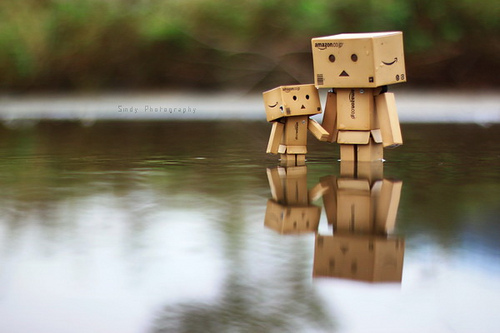
Publishing and teaching can both terrify new academics, often to the point of paralysis. Their mutual support for one another is often frustrated by institutional demands. For example, the traditional workload split for full-time faculty at R1 institutions in the US is: 40% teaching, 40% research, 20% service. This division and its usual inflexibility highlights the ways that teaching and scholarly production are kept separate and distinct as forms. Yet, by looking at how publishing is teaching and teaching is publishing, we can lessen the anxiety around these activities and begin to notice how they are, in fact, co-constitutive practices. More than that, we can start to think about the open ends of these aspects of our work. The word “publishing” often implies some sort of finality, research that is finished or complete. This misses something vital about academic work.

This article on PhD2Published, “Publishing as Pedagogy” by Jesse Stommel, is both implicitly and explicitly linked to “Pedagogy as Publishing” by Charlotte Frost on Hybrid Pedagogy: A Digital Journal on Teaching & Technology. As publishing venues, both PhD2Published and Hybrid Pedagogy, work to build scholarly community by creating open and ongoing conversation.These twinned articles, which were written together in a Google Doc, combine to introduce communities, points of convergence, and to create a collaborative dialogue on publishing and pedagogy from two complementary perspectives.

Since I first started teaching in 2001, I’ve spoken the words almost like a mantra, “my scholarship and teaching are married.” And it isn’t just that the academic writing I do is influenced by the work I do in the classroom, even though I’ve put some version of this statement in nearly all of the 200ish academic job applications I’ve submitted. Here it is, right out of my mouth (er, fingers), in the job letter that led to my recently being hired as an Assistant Professor at Marylhurst University: “My research has considerable influence on my teaching.” To speak frankly, this line is bullshit, something I felt pressured to write by colleagues and in a half-dozen academic job search workshops.

And by “bullshit,” I don’t mean that what I said was false. I mean that the phrasing was disingenuous. Put simply, my research is my teaching. For me, the two practices are inextricable from one another. When I was finishing my PhD, I didn’t “teach to my dissertation” as so many academics recommend. My dissertation was born out of my teaching, out of interactions I had with students and out of my witnessing countless interactions between students.

It would be an oversimplification, though, to say just that my teaching is a source (or even the primary source) for my published writing. I would go even further than this to say that teaching itself has become, for me, my most important act of writing and publishing. There is a way in which I author myself and my work in the classroom, but I also produce countless tangible artifacts in the service of (or as part of) the act of teaching. The syllabi I publish to the web (like this or this) are an example, living documents that evolve over the term (and hopefully even after the term is over).

I will even go so far as to say that my syllabi are peer-reviewed, not only approved by the various department chairs I’ve worked for but also reviewed by the colleagues I share my work with and by the larger scholarly community that use (and sometimes cite) the work I’ve done. The syllabi I create also evolve through careful work with students (who I consider my closest learning community peers).

The scholarly work I produce in collaboration with students doesn’t stop there. I create class projects that have students working closely with each other and with me. In 2011, while teaching multimodal composition at GA Tech (a required course for Freshman), I had classes of 25 students working together to produce a short horror film. One student, Ben Lambeth, chose to continue working on his class’s film after the semester was over, and I worked with him as an assistant editor (not as his teacher but as an artistic collaborator). Here’s a preview for the finished film, Zombie Proof, and a short behind-the-scenes documentary about its creation. At the same time,  I also worked on GA Tech It Gets Better, a documentary film I co-produced with yet another former student, outside any assigned class project.

As I’ve continued to evolve as a scholar and teacher, I’ve become more and more concerned with thinking about ways to make what I do in the classroom and what I do in the safe confines of a word-processing window more public. The impetus for my scholarly work and publishing is to do my pedagogy in much larger and more open spaces. I teach, because I have to, because it’s in my bones. I write, because it allows me to teach more and to teach more people.

One way I’ve worked to bring my teaching and scholarly lives into closer public conversation is to have my CV and Teaching Portfolio exist alongside one another on my personal homepage. I’ve also begun publishing more about pedagogy and my teaching practices, something I’ve formalized through Hybrid Pedagogy. Finally, I force myself to build my scholarly writing out of the work I do in the classroom and to share my scholarly work in the classroom. This is particularly possible when I’ve taught writing, where I am able to work with my students as part of (not just facilitator of) a community of writers. It is students in writing classes I’ve taught, in fact, that I credit for the completion of my dissertation.

It’s important for me, as a teacher and scholar, to be open not just with my intellectual and pedagogical products but even more so with my academic process and pedagogical practices. This intention has been the driving force behind my most recent scholarly writing / pedagogical project, Hybrid Pedagogy: A Digital Journal on Teaching & Technology. An open-access networked journal, Hybrid Pedagogy creates meaningful connections between discussions of critical pedagogy, digital pedagogy, and online pedagogy. The journal also invites its audience to participate in (and be an integral part of) the peer review process, and thus makes transparent (and interrogates) academic publishing practices. In this way, Hybrid Pedagogy is a journal about pedagogy while also taking a pedagogical approach to publishing, by allowing its readers to peek behind the proverbial curtain of the publishing machine. In the wake of rapid changes in publishing, education, and technology, this kind of openness and transparency is becoming less and less an experimental indulgence and more and more a brunt necessity.

[Charlotte Frost’s companion-piece (“Pedagogy as Publishing”) offers a peek into the process of the creation and publishing of this article by Jesse and the one Charlotte wrote simultaneously for Hybrid Pedagogy.]